Last Updated 2 months ago by Kenya Engineer
As Kenya’s renewable energy landscape continues to evolve, local innovators and engineers are exploring new ways to make clean power more reliable and accessible. Among them is Eng. Robert Gitemi Munene, CEO and co-founder of Cytek Solar Limited, who has been steadily contributing to Kenya’s energy transition through customized solar and hybrid solutions.
In a conversation featured in the upcoming issue of Kenya Engineer Magazine, Eng. Munene reflects on his journey from employee to entrepreneur, the early challenges of starting a solar business, and the company’s next big move — introducing wind turbine technology into Kenya’s renewable energy mix.
“Solar generation is naturally limited to daylight hours,” he explains. “Many of our clients, particularly farmers and resort owners, have often asked how they can harness the constant wind around them. That curiosity inspired us to explore wind technology as a natural complement to solar.”
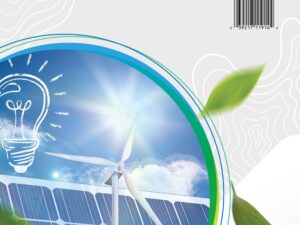
According to Munene, Cytek Solar’s decision to integrate wind and solar solutions stems from a practical need — ensuring power availability round the clock. “The goal is continuous generation, day and night,” he says. “When solar production drops, wind can take over. Kenya enjoys good wind speeds across several regions, and the synergy between these two technologies will make renewable energy not just sustainable, but dependable.”
Cytek Solar plans to roll out its first large-scale wind turbine systems in Kenya in 2025, targeting counties such as Turkana, Mandera, Isiolo, Kajiado, and Konza — areas with strong, consistent wind potential. These turbines will serve both independent installations and hybrid setups where wind complements existing solar systems.
Beyond introducing new technology, Eng. Munene emphasizes local empowerment as a critical part of the company’s approach. Cytek is working to train and equip 75 technicians across the country, building on its existing pool of solar experts. The company has also signed partnerships with GoodWe for inverters and batteries and Archimedes Wind for efficient, windsock-designed turbines that are well suited to local conditions.
He also points out that local assembly would reduce wind turbine costs by up to 50% while creating jobs and strengthening Kenya’s position as a renewable energy hub in Africa.
“While wind power has higher initial costs than solar, local assembly and regional partnerships will make it far more affordable,” he notes. “Our goal is to provide reliable clean energy solutions while stimulating local industry and innovation.”
Cytek’s hybrid systems are already transforming lives and businesses. From solar water heating systems at Elmer Hotel Naivasha to borehole-powered irrigation in Bomet and a fully solarized farm in Sagana, the company’s portfolio demonstrates how renewable energy can drive both economic and social impact.
Looking ahead, Eng. Munene sees Kenya’s renewable energy journey as a shared mission — one that will require innovation, collaboration, and bold thinking. “We must believe in our capacity to innovate locally,” he says. “Every challenge we face — from access to power to cost barriers — is an opportunity for creative solutions.”
In the full interview, Eng. Munene discusses Cytek’s broader vision, including partnerships with technical institutions, capacity-building initiatives, and his hope of seeing African universities one day develop and own renewable energy technologies.
Read the full interview with Eng. Robert Gitemi Munene in the upcoming issue of Kenya Engineer Magazine.
-
Product on sale
 AWEBook Volume 2Original price was: KShs 3,500.00.KShs 3,000.00Current price is: KShs 3,000.00.