

Last Updated 4 hours ago by Kenya Engineer
When conservation was largely understood as protecting forests, wildlife and other natural ecosystems, the boundaries of the debate appeared relatively straightforward. Today, the picture is considerably more complicated.
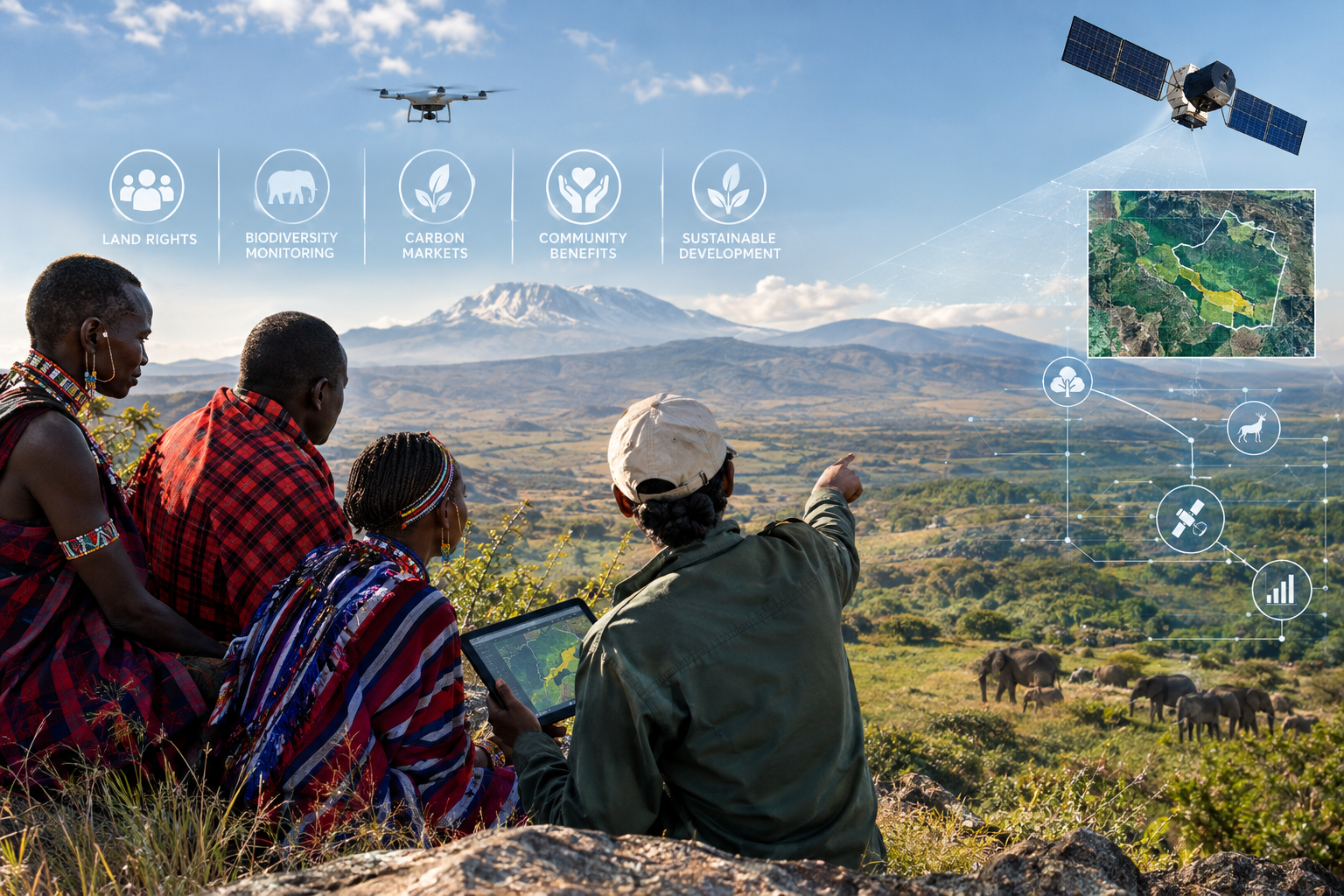
Land is increasingly becoming part of a new environmental economy in which carbon, biodiversity and ecosystem restoration can be measured, monitored and converted into financial assets. Satellites can track changes in vegetation. Sensors can monitor wildlife. Digital platforms can map land use. Carbon standards can quantify emissions reductions and removals, while emerging biodiversity markets seek ways of attaching economic value to ecological outcomes.
For Kenya, this is no longer a theoretical discussion. The country has established a regulatory framework for carbon markets, while government agencies, communities, conservation organisations and private-sector actors are developing systems for monitoring land, ecosystems and environmental projects.
It is against this backdrop that an international gathering of Indigenous representatives in Nairobi has challenged established approaches to conservation and called for greater control by Indigenous Peoples over their ancestral territories.
The gathering, organised by Conservation Solutions Afrika and Survival International, brought together representatives from 16 countries. Kenyan participants included representatives of the Ogiek, Samburu, Rendille, Maasai, Borana and Sengwer communities.
At the end of the gathering, the newly formed Indigenous Land Alliance issued what it called the Nairobi Declaration, arguing that conservation initiatives, carbon markets and other environmental schemes can threaten Indigenous land rights when communities do not have meaningful control over projects affecting their territories.
The declaration’s language is deliberately forceful. It describes what its authors call “conservation cartels” and rejects conservation models based on land grabbing, market systems and what they describe as greenwashing.
Those are the views of the declaration’s authors. But beneath the rhetoric lies a question that is increasingly relevant to engineers, environmental scientists, planners, policymakers and technology companies: as environmental protection becomes more data-driven and financially structured, who owns the land, the data and the environmental value being created?
When nature becomes measurable
Carbon markets illustrate the transformation taking place.
A carbon credit represents a quantified reduction or removal of greenhouse gases. For such a credit to have value, however, somebody must establish what happened, where it happened, how much carbon was involved and whether the claimed reduction or removal can be independently verified.
That requires infrastructure.
Land-based projects may require geographical information systems, satellite imagery, field measurements, remote sensing, monitoring equipment, data platforms and verification systems. Projects also need clearly defined boundaries, ownership or use rights, monitoring plans and mechanisms for recording the resulting carbon units.
Kenya’s Climate Change (Carbon Markets) Regulations, 2024 recognise land-based carbon projects as projects involving land use, land management or ecosystem conservation and restoration intended to reduce greenhouse-gas emissions or enhance carbon sequestration.
The regulations also provide for community development agreements where projects are developed on community or public land.
Kenya’s National Environment Management Authority has been developing a national carbon-market registry intended, among other things, to improve transparency, track carbon units and reduce the risk of double counting or double issuance.
In other words, the carbon economy is not simply a matter of planting trees or protecting forests. It increasingly depends on an information architecture capable of connecting a physical landscape to a quantified environmental claim.
The community-land question
That creates an important issue in Kenya because a substantial portion of the country’s landscape is held as community land.
The National Land Commission has already been engaging with communities on the implications of carbon markets. At the 2024 Community Land Summit in Isiolo, whose theme focused on strengthening Indigenous Peoples’ collective bargaining power in carbon markets, the Commission emphasised the importance of community ownership, transparent benefit sharing and meaningful participation.
The same debate is reflected in Kenya’s carbon-market regulations. For projects on community land, the regulatory framework provides for community representation within the structures responsible for community development agreements.
This does not eliminate the underlying questions. It makes them part of the design of the system.
Who defines the project boundary? Who supplies the underlying land-use information? Who verifies the environmental outcome? Who owns the data? Who receives the financial benefits? And what happens when the interests of a carbon project, conservation initiative, pastoralist community, farmer, developer or infrastructure project overlap?
These are increasingly technical questions, but they are also questions of governance and land rights.
From Indigenous knowledge to digital monitoring
An important development in Kenya is that communities are not simply being treated as subjects of environmental monitoring.
A recent biodiversity-monitoring initiative involving the Government of Kenya, FAO and other partners has highlighted the role of community-generated data in national biodiversity reporting.
The work includes community mapping of land use, customary territories, sacred sites, grazing areas, seasonal movements and other features that may not be adequately represented in conventional datasets. Communities have also been using digital technologies including EarthRanger, SMART, camera traps and acoustic sensors alongside Indigenous knowledge to monitor landscapes and wildlife.
This is significant because it changes the relationship between technology and conservation.
A conventional model might see a community as providing information to an external conservation organisation. A more community-centred model can treat residents as producers, custodians and users of environmental data.
That raises the emerging concept of data sovereignty.
Information about a community’s territory is not necessarily just another dataset. It can contain information about customary boundaries, cultural sites, grazing patterns, water resources and historical land use.
The question therefore becomes not only whether technology can produce better environmental information, but also who has the authority to decide how that information is collected, stored, shared and used.
Conservation beyond the fence
The issue is particularly relevant to Kenya because much of the country’s wildlife exists outside conventional protected areas.
The pressure is visible around Nairobi National Park, where wildlife corridors increasingly intersect with privately and communally occupied land. A 2025 report on the park’s southern corridor described Maasai landowners maintaining open areas that allow wildlife movement, while also facing economic costs associated with living alongside wildlife.
This illustrates an important shift in conservation thinking.
A national park can be mapped, fenced and managed as a defined protected area. A wildlife corridor is different. It may pass through agricultural land, grazing areas, settlements and private or community property.
Maintaining such a corridor therefore requires more than wildlife management. It can involve land-use planning, compensation mechanisms, ecological monitoring, remote sensing and increasingly sophisticated methods for measuring biodiversity.
The same report described a pilot programme that pays landowners for keeping land open for biodiversity, with remote-sensing technology being used to measure ecological conditions.
The underlying idea is straightforward: if society benefits from an ecosystem service, those who maintain the ecosystem should have a mechanism through which they can share in that value.
But the effectiveness of such models depends heavily on how the environmental benefit is measured, who controls the measurement and how the resulting revenue is distributed.
Engineering the green economy
This is where the conversation becomes relevant to the engineering profession.
Engineers have traditionally been associated with physical infrastructure — roads, buildings, power systems, water networks and industrial facilities.
The emerging environmental economy is creating another category of infrastructure: systems for measuring and managing natural assets.
A modern conservation or carbon project may involve geographic information systems, satellite data, drones, sensors, communications networks, databases, artificial intelligence, field equipment and verification platforms.
The engineering challenge is to make these systems sufficiently accurate and reliable to support decisions involving real financial and environmental consequences.
If a carbon project claims to have avoided a certain quantity of emissions, the measurement methodology must withstand scrutiny.
If a biodiversity project claims that a landscape is supporting a particular ecological outcome, there must be a defensible way of measuring that outcome.
If a community’s territory is mapped digitally, the data must accurately reflect the agreed boundaries and governance arrangements.
And if environmental information is used to determine payments, the underlying data becomes part of the economic infrastructure of the project.
A different model of conservation?
The Nairobi Declaration challenges the conventional conservation model by arguing that Indigenous Peoples should have a much greater role in determining what happens on their ancestral lands.
Its authors oppose conservation approaches that they believe convert territories into protected areas, carbon projects or other environmental assets without adequate consent or control.
The declaration should not, however, be treated as a comprehensive assessment of Kenya’s conservation or carbon-market system. Its claims represent the position of the Indigenous representatives and organisations behind the gathering.
There is also a broader policy context in which Kenya’s government is attempting to establish rules that can attract climate finance while protecting national climate interests and community rights.
The regulatory framework requires projects to address land-use rights, stakeholder participation and benefit sharing, while Kenya’s environmental authorities are developing systems for project approval and carbon tracking.
The challenge is therefore not necessarily choosing between conservation and development, or between technology and traditional knowledge.
It may be designing systems in which the two can operate together.
The next frontier is trust
The most important infrastructure in the emerging conservation economy may ultimately be neither a satellite nor a sensor.
It may be trust.
A carbon project depends on confidence that the carbon being claimed exists. A biodiversity project depends on confidence in its measurements. An investor needs confidence that the project has legitimate land rights. Communities need confidence that their rights will be respected and that promised benefits will reach them.
Technology can improve transparency, measurement and monitoring. It cannot by itself resolve disputes over ownership, consent or the distribution of benefits.
That is why the debate emerging from Nairobi matters beyond the conservation sector.
As Kenya expands its participation in carbon markets, biodiversity finance and ecosystem restoration, the country is also building a new form of infrastructure around its natural resources — one based on data, measurement, verification and financial transactions.
The engineering question is how to make that infrastructure technically credible.
The governance question is who gets to design it.
And the question raised by the Indigenous representatives gathered in Nairobi is whether the people living on and managing these landscapes will have a sufficiently strong position in answering both.

-
Product on sale
 AWEBook Volume 2Original price was: KShs 3,500.00.KShs 3,000.00Current price is: KShs 3,000.00.