

Last Updated 2 hours ago by Kenya Engineer
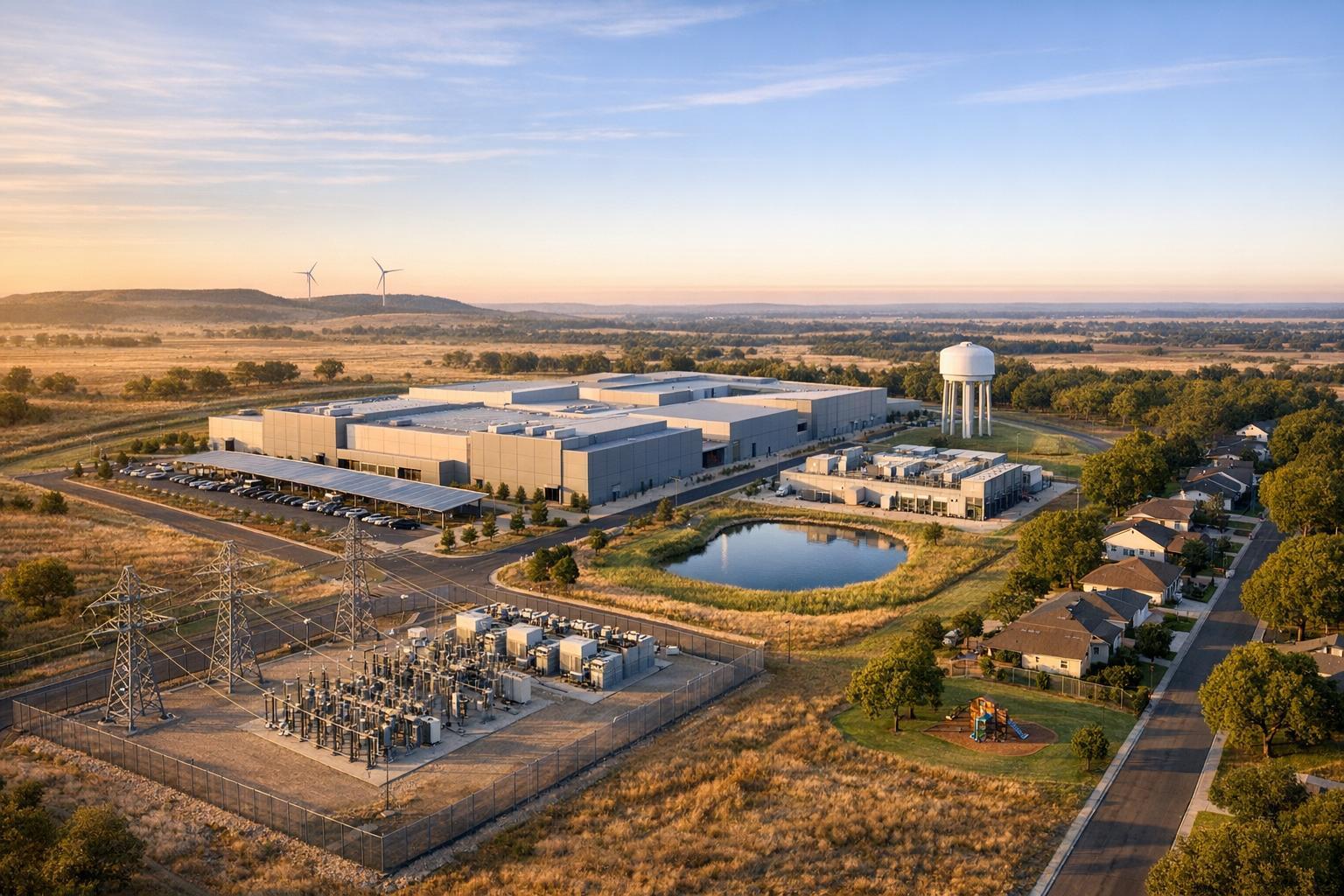
The next generation of African data centres may have less in common with conventional office buildings than with power stations. That may sound exaggerated, but the numbers are beginning to make the comparison difficult to ignore.
Egypt is developing a sovereign AI data-centre project that will begin with 20 MW of capacity and is planned to scale to 200 MW. Nigeria is studying two AI-ready facilities with an initial combined capacity of 60–70 MW and an eventual target of 100 MW. Kenya is developing a 44 MW AI-ready facility at Tatu City while expanding its position as one of Africa’s principal digital infrastructure markets.
These are no longer just buildings filled with servers. They are concentrated electricity loads requiring high-capacity power connections, sophisticated electrical systems, thermal management, energy storage, redundant infrastructure and, increasingly, dedicated approaches to electricity supply.
The International Energy Agency estimates that global data-centre electricity consumption will roughly double from 485 TWh in 2025 to around 950 TWh by 2030. AI-focused data-centre consumption is expected to grow even faster.
For Africa, the implications are particularly important because the continent is trying to expand digital infrastructure while still dealing with major electricity-access and grid-capacity constraints.
The question is no longer whether Africa can build data centres but whether its energy systems can be designed around them.
The AI rack is becoming an electrical engineering problem
Much of the public conversation about AI infrastructure concentrates on processors. For engineers, the more revealing metric may be power density.
The IEA reports that the power density of AI servers increased elevenfold between 2020 and 2025. By 2027, an individual advanced AI server rack could have peak power demand equivalent to approximately 65 households.
That changes the engineering of the data centre.
Higher electrical density means larger power-distribution systems, more demanding UPS architecture, greater requirements for transformers and switchgear and much greater heat rejection.
It also changes the behaviour of the load.
Traditional data-centre loads were already large, but AI workloads can produce much faster changes in power consumption. The IEA notes that AI training and model use can induce large and rapid power swings, increasing the importance of energy storage in maintaining reliable supply.
The problem therefore extends outside the data centre. A utility connecting a large AI facility has to consider what happens when that load ramps up, changes its operating profile or suddenly disconnects.
For the electricity network, the data centre becomes a significant system participant.
Africa is moving towards hyperscale
The scale of the African market is still modest by global standards, but it is expanding rapidly.
The World Economic Forum, citing McKinsey, estimates that African data-centre demand could rise from about 0.4 GW today to between 1.5 and 2.2 GW by 2030. The associated construction requirement is estimated at between US$10 billion and US$20 billion.
The same analysis notes that installed capacity across Egypt, Kenya, Morocco, Nigeria and South Africa remains below 500 MW, while demand in those leading markets could grow several-fold by the end of the decade.
This growth is being driven by cloud computing, digital services, data-sovereignty requirements and increasingly by AI.
The infrastructure race is therefore already underway. But Africa’s electricity systems were not designed around large numbers of hyperscale digital loads.
That creates a fundamental planning question; Should a 100 MW or 200 MW AI facility simply be treated as another electricity customer? Or should it be treated as a strategic infrastructure project in which power generation, transmission, cooling, fibre, land and computing are designed together?
Recent African projects suggest the second model may become increasingly attractive.
Egypt is building for sovereign AI
Egypt’s latest project provides one of the clearest examples.
In September 2026, Vodafone Business, Elsewedy Electric and Cassava Technologies announced a partnership to establish Africa Data Centers Egypt, including the country’s first sovereign AI data centre.
The facility is planned to begin with 20 MW of capacity over three years and ultimately expand to 200 MW. Initial foreign direct investment is expected to be about US$200 million, with total investment projected at approximately US$1 billion at full scale.
The project is also designed around data sovereignty, allowing organisations to host and process data locally while accessing NVIDIA technologies and GPU-as-a-Service.
The engineering significance lies in the scale.
A 200 MW data-centre campus is no longer merely an IT facility with a large electricity bill. It represents a major load that has to be incorporated into national power planning.
Its electrical connection becomes a transmission and distribution question. Its cooling requirement becomes a mechanical and potentially water-resource question. Its resilience becomes a power-quality and storage question.
And its location becomes a strategic infrastructure decision.
Nigeria is taking another route
Nigeria provides a second example.
The U.S. Trade and Development Agency is supporting a feasibility study for two proposed data centres in Lagos and Delta State under the AFRIDATA platform.
The facilities are planned to have combined initial capacity of 60–70 MW, with expansion to 100 MW. The proposed design includes 3,600 conventional 10 kW CPU racks and 480 50 kW GPU-capable racks intended to handle AI workloads.
The project is particularly interesting because the developer is considering a broader African platform, with planned special-purpose vehicles in countries including Kenya, Angola, Cameroon, Côte d’Ivoire, Egypt, Ghana and South Africa.
This points towards another emerging model.
Instead of treating each data centre as an isolated facility, infrastructure investors are beginning to think in terms of networks of facilities distributed across several African markets.
That approach could allow operators to match locations with available electricity, fibre connectivity, customers and regulatory conditions.
But it also means that energy infrastructure becomes an integral part of the investment decision.
Kenya is already confronting the power question
Kenya’s own experience provides perhaps the clearest illustration of the challenge.
Construction of Nxtra by Airtel Africa’s 44 MW data centre at Tatu City began in 2025. The facility is designed to support cloud and AI services and is scheduled for completion in 2027.
Digital Realty also opened its NBO2 facility in Nairobi in September 2026, adding 6.4 MW of capacity to its campus. Kenya’s ICT Principal Secretary John Tanui has publicly encouraged the operator to consider expanding towards 20 MW as demand for AI and other data-intensive services grows.
The country’s ambitions, however, have also exposed the limitations of existing power infrastructure.
Plans for a major Microsoft-G42 data-centre development in Kenya have encountered difficulties related to available electricity capacity. Data Center Dynamics reported in May that the project had stalled over power-capacity issues.
The episode illustrates the central problem.
It is possible to announce a data centre much faster than it is possible to build the generation and transmission infrastructure required to support it.
The physical infrastructure moves at different speeds.
Servers can be procured relatively quickly. A data-centre building can be constructed within a few years. A transmission corridor, however, can take considerably longer because it requires land acquisition, environmental assessment, approvals, procurement and construction.
That mismatch is precisely the problem the IEA identifies globally.
The alternative is to bring the power to the data centre
Kenya’s proposed Hercules project in Mombasa illustrates another possible direction.
The proposed US$1.5 billion project has been presented as an integrated AI data-centre and energy system, with GE Vernova involved in the proposed LNG-powered generation platform.
The concept is notable because it seeks to put generation alongside the computing load rather than depending entirely on the national grid. The project remains a proposal, however, and its financing, final capacity, construction schedule and customer commitments should not be treated as settled.
Whether or not the project ultimately proceeds, the concept reflects a broader trend.
Large data-centre developers are increasingly asking whether the most reliable way to obtain electricity is to build or contract dedicated generation, combine it with storage and connect to the grid as a supplementary rather than sole source of supply.
That could have major implications in Africa.
A hyperscale facility could become the anchor customer around which a new renewable-energy project, transmission line or battery system is developed.
In other words, the data centre could help finance the energy infrastructure.
AI could therefore become both a new load and an infrastructure catalyst
It would be easy to view data centres simply as another threat to already constrained African electricity systems.
There is another possibility.
AI infrastructure could provide the commercial demand needed to justify new generation and transmission investments.
NJ Ayuk, Executive Chairman of the African Energy Chamber, has argued that data centres could become a catalyst for African power-sector investment, rather than simply another source of electricity demand.
The idea is not without precedent.
The DRC’s Kamoa Copper project demonstrates how a large industrial customer can anchor new renewable generation and storage. The 233 MWp solar plant and 526 MWh battery system provide the mine with 30 MW of firm power, reducing its dependence on an unreliable grid and diesel generation.
A similar model could emerge around digital infrastructure.
A data centre has several characteristics that make it attractive as an anchor load: it needs electricity continuously, requires high-quality power, and can support long-term contracts.
If structured properly, that demand can underpin investment in generation and storage.
The engineering challenge is to make sure the resulting infrastructure also benefits the wider system rather than creating an isolated electricity island.
Cooling is the other half of the equation
Electricity is only half the physical problem. Every watt consumed by an AI processor ultimately becomes heat that has to be removed.
The rapid increase in rack power density therefore changes the economics and engineering of cooling.
Traditional air cooling becomes increasingly difficult at very high densities, pushing the industry towards liquid cooling and hybrid cooling systems.
This is an area in which the design of the electrical and mechanical systems can no longer be separated.
Power density determines heat density. Heat density influences cooling architecture. Cooling architecture affects water consumption, pumping requirements and building design. All of those factors affect the site’s electricity demand.
That is why AI data-centre engineering increasingly involves electrical engineers, mechanical engineers, civil engineers, ICT specialists and energy specialists working as one design team.
Kenya Engineer’s recent conversation with Vertiv Africa Managing Director Wojtek Piorko highlighted precisely this convergence of power, cooling and computing infrastructure.
The next step is to take that engineering discussion outside the data-centre building and into the national grid.
The grid has to accommodate a new kind of customer
The International Energy Agency’s latest analysis suggests that data-centre electricity consumption is only one part of the emerging challenge.
The organisation says AI-focused facilities can experience rapid power swings and that the growing concentration of data-centre loads is creating new pressure on electricity networks, transformers, power electronics and other equipment.
For African utilities, this creates several questions. Should large data centres pay for dedicated grid reinforcement? Should developers contribute directly to transmission infrastructure? Should data centres be encouraged to install batteries that can reduce their impact on the grid? Can they participate in demand response? Can their backup generation and storage contribute to system resilience? Could data centres locate close to geothermal, hydro or solar resources and enter long-term power-purchase agreements? And how should utilities price the cost of providing extremely reliable electricity to a customer whose load may be equivalent to a small town?
These are not merely commercial questions. They are engineering and system-planning questions.
A new infrastructure bargain
There is also a broader African development issue.
The IMF has estimated that AI could raise sub-Saharan Africa’s economy by around 4 per cent over the next decade if the region improves electricity, connectivity and digital skills. Without such improvements, the potential economic gain could be dramatically smaller.
That creates an unusual infrastructure bargain. Africa needs more computing infrastructure to participate in the AI economy. But it also needs more electricity and better grids to run that infrastructure.
The investment in data centres could therefore help stimulate investment in the electricity system.
The risk is that the opposite happens: scarce electricity capacity becomes concentrated around a handful of hyperscale facilities while millions of households and smaller businesses remain poorly served.
The engineering question therefore has an economic and social dimension. Where should the power go? Where should the data centres be located? How much new generation should be dedicated to them? How much should be connected to the wider grid? And how can the infrastructure serve both the digital economy and the broader electricity system?
The data centre of the future may be an energy project
Africa’s data-centre market is still young enough for these questions to be answered through design rather than retrofitting.
That is an advantage.
The continent does not have to reproduce every infrastructure problem encountered by mature data-centre markets.
It can design new facilities around renewable generation, storage, high-efficiency cooling, resilient transmission, fibre connectivity and flexible loads from the beginning.
The engineering opportunity is therefore much larger than building rooms full of servers.
The next generation of African data centres may sit at the intersection of five infrastructure systems: electricity generation, transmission and storage; computing; telecommunications; cooling; and industrial land and water resources.
That makes the data centre something considerably more important than a technology building.
It becomes part of the country’s critical infrastructure.
And as Egypt’s proposed 200 MW sovereign AI facility, Nigeria’s 100 MW target and Kenya’s expanding data-centre market demonstrate, that transition is already beginning.
The question Africa now faces is not whether it will build data centres.
It is whether it will build the energy and engineering systems around them intelligently enough to make them engines of wider development rather than just very large electricity consumers.

-
Product on sale
 AWEBook Volume 2Original price was: KShs 3,500.00.KShs 3,000.00Current price is: KShs 3,000.00.