

Last Updated 1 hour ago by Kenya Engineer
Africa’s electric-mobility transition is beginning to move beyond the question of how many electric motorcycles can be put on the road. The more consequential engineering challenge is emerging behind the vehicles: how to build and operate the energy infrastructure capable of keeping hundreds of thousands of them moving.
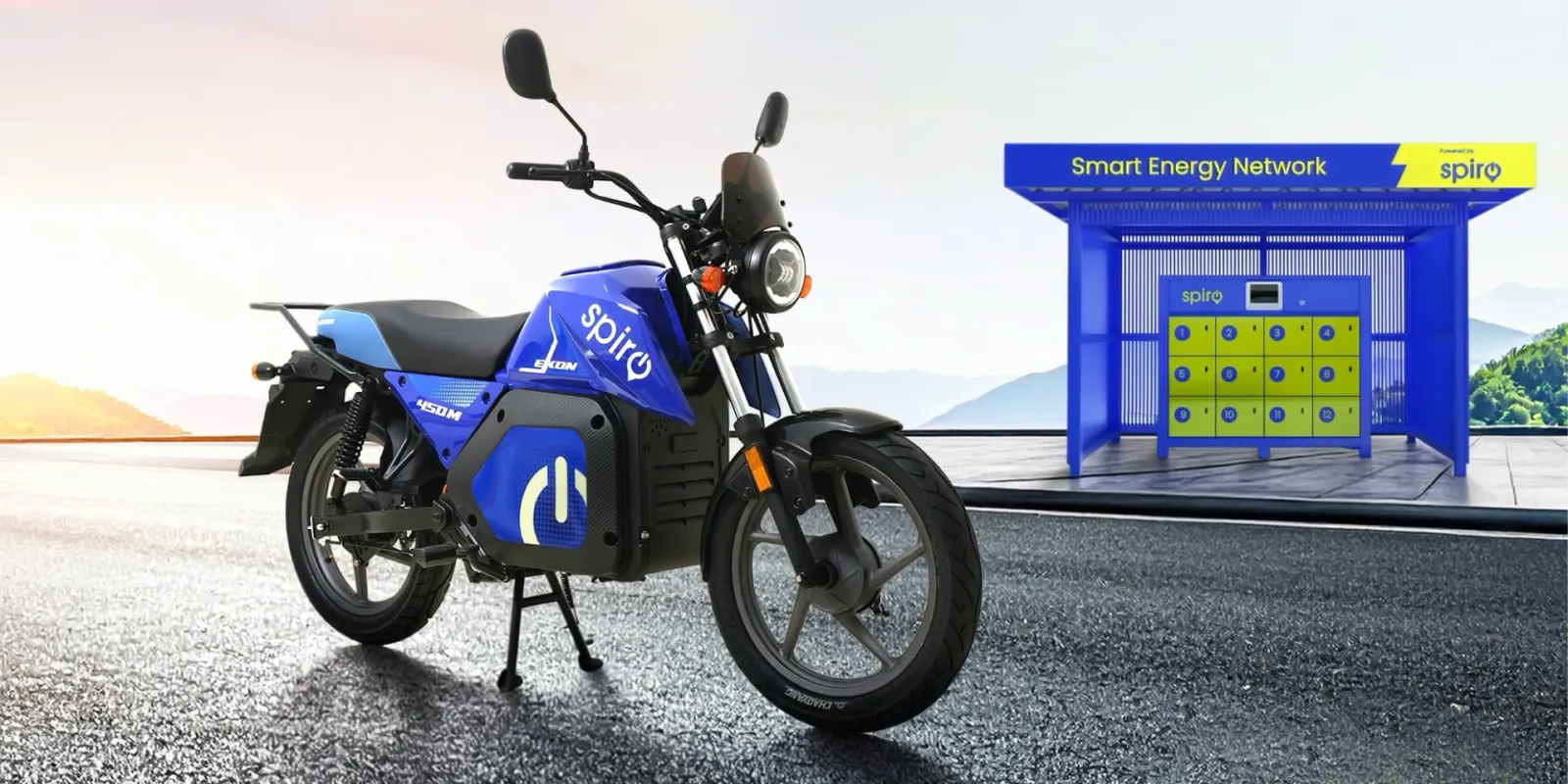
Spiro’s latest expansion provides an indication of the scale at which this challenge is developing. The electric-mobility company says it now operates more than 135,000 electric motorcycles across seven African countries, supported by more than 2,500 battery-swapping stations. The network has completed more than 50 million battery swaps, with the company reporting more than 2.5 billion kilometres of low-carbon travel.
Those figures describe more than a vehicle fleet. They describe an emerging distributed energy network in which electricity has to be delivered, stored in batteries, managed, exchanged and ultimately returned to the grid or consumed by the next vehicle.
The distinction matters because the economics and engineering of electric two-wheel mobility are fundamentally different from those of conventional petrol motorcycles. A petrol motorcycle carries its energy source with it and can refuel in minutes at a relatively small number of stations. A battery-swapping system separates the vehicle from its energy storage. The motorcycle becomes one part of a larger system comprising batteries, charging equipment, swapping stations, software, electricity networks and logistics.
As the number of vehicles increases, the infrastructure supporting that system becomes increasingly important.
From motorcycles to energy infrastructure
Battery swapping changes the relationship between the motorcycle and the electricity system.
Instead of waiting for a battery to charge while the vehicle is stationary, a rider can exchange a depleted battery for a charged one. The motorcycle can therefore return to service quickly, while the depleted battery remains at the station to be recharged.
This seemingly simple arrangement creates a new engineering layer. Each swapping location needs charging equipment, electrical connections, battery storage capacity, thermal and electrical safety systems, communications and monitoring. At scale, the operator also needs to know the location, condition, state of charge and performance history of potentially hundreds of thousands of batteries.
The charging process itself becomes an infrastructure-planning problem.
A station with a small number of batteries can represent a modest electrical load. A larger facility serving a high-volume motorcycle fleet can require substantially greater charging capacity, particularly when many batteries are recharged simultaneously. Across a network of thousands of stations, these individual loads become part of the electricity demand profile of cities and countries.
This means that the growth of electric mobility can create a distributed electricity demand that did not previously exist.
For electricity utilities and distribution companies, the challenge is not simply to connect another customer. It is to understand where charging demand will emerge, how rapidly it will grow and when that demand will occur.
The battery becomes the critical component
The battery is at the centre of the electric-mobility system, and its engineering challenges extend well beyond energy capacity.
A commercial motorcycle battery has to withstand repeated charging and discharging cycles, vibration, heat, moisture and intensive daily use. Its performance also has to remain predictable enough for a rider whose income may depend on the motorcycle being available throughout the day.
Battery-management systems therefore become critical.
These systems monitor parameters such as voltage, current, temperature and state of charge while helping identify abnormal behaviour and degradation. At fleet scale, the data generated by thousands of batteries can also provide an operational picture of the health of the entire energy-storage network.
That creates an important convergence between electrical engineering, mechanical engineering, electronics, software and data science.
The battery is no longer simply a component installed inside a motorcycle. It becomes a monitored asset moving continuously between vehicles and charging locations.
For an operator deploying batteries across several countries, maintaining consistency in battery performance and safety is equally important. Standardisation of battery packs, connectors, charging systems and swapping interfaces can influence how efficiently the network can scale.
Charging without creating another grid problem
One of the less visible challenges of electric mobility is the interaction between charging infrastructure and the electricity grid.
Africa’s electricity systems are themselves undergoing major expansion and modernisation. Kenya, for example, has set targets under its National Energy Compact to increase its transmission network from about 9,484 kilometres to 17,500 kilometres by 2030 while more than doubling transformation capacity.
At the same time, renewable generation is becoming a larger component of the electricity mix.
Electric mobility can potentially help make productive use of this additional generation, but only if charging demand can be managed intelligently. Uncontrolled charging concentrated at the same time of day could increase pressure on already constrained distribution networks.
Smart charging therefore becomes increasingly relevant.
Rather than treating every battery as an independent load, an operator can potentially use software to coordinate charging according to electricity availability, station demand, battery requirements and other operational conditions. Storage can also provide an additional layer of flexibility where the economics and grid conditions support it.
The engineering objective is not simply to install the maximum possible charging capacity. It is to create a system in which electricity, batteries and vehicles are coordinated efficiently.
The continental-scale challenge
Spiro’s current footprint illustrates another complication: Africa is not a single electricity market.
The company says it operates across seven countries and has assembly facilities in Kenya, Uganda, Nigeria and Rwanda. Its expansion therefore takes place across electricity systems with different generation mixes, grid structures, regulatory environments and levels of reliability.
A battery-swapping network designed for one market cannot necessarily be replicated without modification in another.
The availability and cost of electricity will influence station economics. Distribution-grid capacity will determine where high-volume charging facilities can be connected. Local regulations will affect equipment standards and battery handling. Climate will influence thermal-management requirements, while road and logistics conditions affect the physical movement and maintenance of batteries.
The result is an infrastructure problem that is simultaneously local and continental.
At each individual station, engineers are solving questions of electrical connection, charging, safety and equipment reliability. At network level, the challenge becomes one of optimisation: where should stations be located, how many batteries should each hold, when should they charge, how should depleted batteries be moved and how should the system respond when demand changes?
At continental scale, those questions become a complex infrastructure-management problem.
Capital is becoming as important as technology
The financial scale of the electric-mobility transition is also changing.
Spiro announced a $270 million equity financing round in 2026 to support its expansion, following earlier investment, while the Africa Go Green Fund recently announced a further $18 million debt financing commitment. The company says the capital is being used to support expansion of its motorcycle fleet, manufacturing and battery-swapping infrastructure.
That investment illustrates a broader reality about electric mobility in Africa.
The transition requires capital not only for vehicles but also for the infrastructure surrounding them. Battery inventories tie up capital. Swapping stations require land, electrical equipment and communications infrastructure. Manufacturing and assembly facilities require industrial investment. Software platforms and maintenance networks have to scale alongside the physical assets.
The economics therefore depend on utilisation.
A battery-swapping station needs enough riders and battery movements to justify its capital and operating costs. Too few stations can make an electric motorcycle inconvenient; too many stations in locations with insufficient demand can result in underutilised infrastructure.
Network planning becomes as important as vehicle design.
Manufacturing adds another layer
There is also an industrial dimension to the transition.
Spiro says it has operational assembly facilities in Kenya, Uganda, Nigeria and Rwanda and is pursuing a broader strategy of producing electric vehicles in Africa.
Local assembly does not automatically mean that the entire value chain has been localised. Motors, cells, power electronics, battery-management systems and other components may continue to originate from international suppliers.
But increasing local manufacturing and assembly can gradually shift the engineering capabilities required within African markets.
It creates demand for technicians, electrical and mechanical engineers, battery specialists, software developers, quality-control systems and maintenance expertise. It can also create opportunities to design products around African operating conditions rather than simply adapting technologies developed for other markets.
For the continent, that distinction could become significant as electric mobility moves from demonstration projects to mass deployment.
What happens to the batteries afterwards?
Scale also creates an eventual waste and resource-management question.
A battery that is no longer suitable for demanding motorcycle duty does not necessarily have to become waste immediately. Depending on its condition and chemistry, it may have potential for a second application where power and energy requirements are less demanding.
But this requires systems for battery testing, grading, traceability, repurposing and eventually recycling.
The larger the fleet becomes, the more important these systems will be.
A continental electric-mobility network therefore has to be designed with the entire battery lifecycle in mind. The question is not simply how cheaply a battery can be deployed, but how its performance and materials can be managed from first use through eventual retirement.
An infrastructure platform rather than a transport product
The most interesting aspect of Africa’s electric-mobility transition may ultimately be the way it brings several engineering disciplines together.
The motorcycle is the visible product. Behind it sits an electrical network, an energy-storage system, a communications platform, a logistics operation, a manufacturing ecosystem and a large stream of operational data.
This is particularly important for Africa, where two-wheelers play a major role in urban transport and last-mile logistics. Electrifying that segment has the potential to change not only the type of vehicle on the road but also the infrastructure through which energy reaches transport users.
The engineering challenge will be to make those systems reliable enough for commercial use while keeping the cost of energy and infrastructure low enough to make electric mobility economically attractive.
As fleets grow, utilities will need better visibility of emerging charging loads. Mobility operators will need increasingly sophisticated energy-management systems. Engineers will need to consider grid constraints when designing station networks, while policymakers will need standards that address batteries, charging equipment, safety and end-of-life management.
The electric motorcycle, in other words, may be only the front end of a much larger infrastructure transformation.
Africa’s electric-mobility race will ultimately not be measured only by the number of electric motorcycles sold. It will also be measured by the ability to build the energy network behind them — one that can charge, exchange, monitor and eventually recycle millions of batteries reliably across a continent with very different electricity systems.
That is a considerably larger engineering challenge than replacing a petrol engine with an electric motor.

-
Product on sale
 AWEBook Volume 2Original price was: KShs 3,500.00.KShs 3,000.00Current price is: KShs 3,000.00.