Last Updated 14 years ago by Kenya Engineer
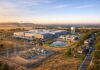
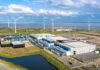
Today marks the official commissioning of the Kipevu III thermal plant at Kipevu, close to the city of Mombasa. This comes five months after KenGen commissioned a 280 geothermal power plant, Olkaria III in July 2012.
The plant will be the largest diesel plant in East Africa comprising of seven diesel engines and is connected to the 132kV Kenya Power transmission substation via an ultramodern gas insulated switch-yard (GIS). This substation will provide a connection point for the Kipevu III power plant to KenGen Diesel PS substation and a connection to the existing KPLC 33kV substation.
The new diesel-powered plant is another step towards reducing the country’s reliance on the expensive emergency power as well as meeting the growing national power demand. It will add to the national grid, 120 mega watts of power which equates to 10 per cent increase in KenGen’s total generating capacity.
It was built on a fast-track basis on a fixed turnkey contract which took 14 months to complete. The plant will generally operate at base load with an expected annual capacity factor greater than 85%.It is designed for an operating life of at least 25 years, with annual availability exceeding 93% under base load and part load conditions.
The plant, first in the country to utilize the GIS technology takes up less than a tenth of the land a conventional switch yard would take with maintenance-free for over 40 years.
Kipevu III power plant was financed through the public infrastructure bond (PIBO) floated by KenGen in 2009 netting a total of Sh25billion.Proceeds from the bond were also used to fund re-development of Tana Hydro plant,3rd unit of Olkaria II and the new 280MW Olkaria I & IV which is currently under development.
The engines of the plant were manufactured by Wartsila,generators by ABB while transformers and the gas insulated switch yard were provided by Siemens and ABB of Italy and Germany
-
Product on sale AWEBook Volume 2Original price was: KShs 3,500.00.KShs 3,000.00Current price is: KShs 3,000.00.