

Last Updated 5 months ago by Kenya Engineer
Abstract
Small-scale irrigation schemes play a vital role in enhancing food security, rural livelihoods, and climate resilience in Kenya. As rainfall patterns become increasingly unreliable, sustainable irrigation has become a necessity rather than an option. Mechanical engineering provides critical solutions in the design, operation and maintenance of irrigation systems, particularly for smallholder farmers and community-based schemes. This article examines key mechanical engineering interventions that support small-scale irrigation, highlights common challenges and proposes practical, context-appropriate solutions for sustainable implementation.
- Introduction
Agriculture remains the backbone of Kenya’s economy, employing a significant proportion of the population and contributing substantially to national food security. Small-scale irrigation schemes that serve individual farmers, farmer groups or community projects are increasingly being adopted to supplement rain-fed agriculture.
While financing and policy frameworks are important, the sustainability of these schemes largely depends on sound mechanical engineering design. Inadequate pump selection, poor energy planning and weak maintenance regimes have contributed to the failure of many irrigation projects. Mechanical engineers therefore play a central role in ensuring system reliability, affordability and long-term performance.
- Overview of Small-Scale Irrigation Systems
The irrigation water supply system begins with a water source, which may be a borehole, well, reservoir, or river abstraction point. Water is abstracted using energy supplied by the power system, which can be grid electricity, solar photovoltaic (PV), diesel engines, or hybrid configurations.
A pump and control unit lifts water from the source and regulates system operation. Water is then conveyed through a rising main pipeline to a storage tank, which may be ground-level or elevated. Elevated tanks provide gravitational pressure for distribution while balancing supply and demand.
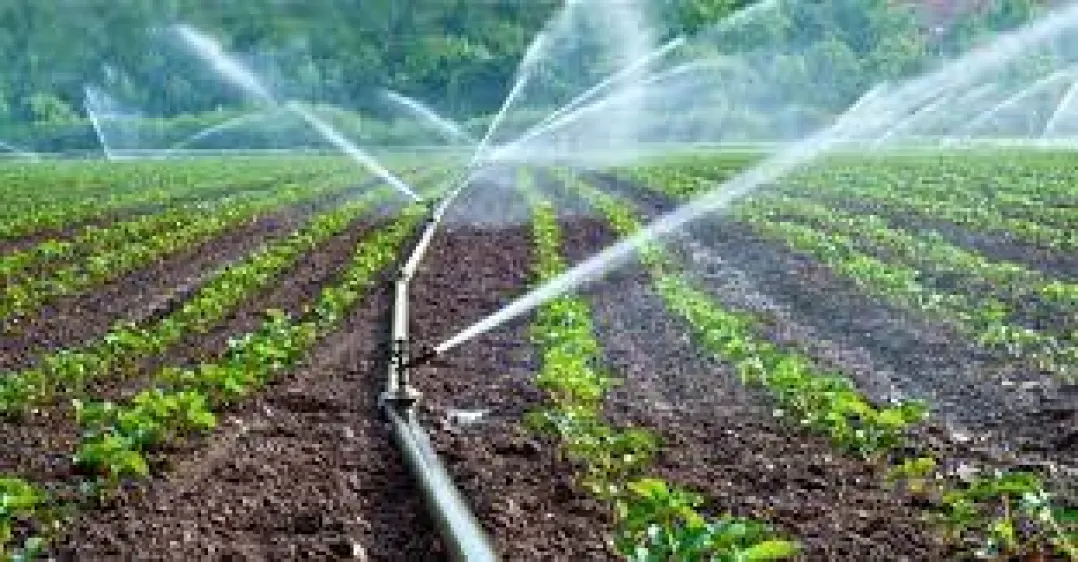
Finally, the on-farm distribution system delivers water through a network of pipelines to the fields, supplying irrigation systems such as drip lines or sprinklers.
- Pumping Technologies for Small-Scale Irrigation
3.1 Pump Selection and Sizing
Correct pump sizing is fundamental to the success and sustainability of any water or irrigation system. Engineers must carefully determine the required discharge based on demand, while accurately calculating the total dynamic head (TDH), which includes static lift, friction losses in pipes and fittings, and minor losses. Consideration of system efficiency, operating hours, and power availability is also essential to avoid under or over-sizing. Proper sizing ensures reliable performance, reduces energy consumption, minimizes wear and maintenance costs, and extends the service life of the pump and associated components.
Table 3.1: Common Pump Types Used in Small-Scale Irrigation
| Pump Type | Typical Application | Advantages | Limitations | |
| i. | Centrifugal pump | Surface water, low head | Simple, low cost | Limited head |
| ii. | Submersible pump | Boreholes, deep wells | Efficient, compact | Higher initial cost |
| iii. | Positive displacement pump | Low flow, high head | High pressure | Sensitive to debris |
Improper pump selection often leads to excessive energy consumption and premature equipment failure.
3.2 Energy Efficiency Considerations
Energy costs form a major component of irrigation system operating expenses. Mechanical engineers improve energy efficiency by selecting pumps that operate close to their Best Efficiency Point (BEP), reducing hydraulic losses through appropriate pipe sizing, and ensuring proper matching of pump characteristics with the available power source to achieve reliable and economical operation.
- Renewable Energy Integration in Irrigation
4.1 Solar-Powered Irrigation
Solar-powered irrigation systems are increasingly adopted in Kenya, particularly in off-grid rural areas.
In this system, PV panels generate electricity that is regulated by a controller to power the pump. Water is pumped to a storage tank, which provides buffering, and then distributed through the irrigation network to the fields. This setup enables reliable, low-cost irrigation, especially in off-grid areas.
Mechanical engineers ensure proper matching of pump performance curves with photovoltaic output, system durability and appropriate operating schedules.
4.2 Hybrid Energy Systems
Hybrid systems that combine solar power, grid electricity, and/or diesel generators enhance system reliability by ensuring continuous pump operation during peak irrigation demand and adverse weather conditions. When solar output is reduced due to cloud cover or at night, grid or diesel backup sources maintain water supply, minimizing downtime and preventing crop stress while optimizing overall energy costs.
- Water Distribution and Application Technologies
5.1 Efficient Irrigation Methods
Efficient irrigation methods maximize water use and crop yield.
Table 2: Comparison of Irrigation Application Methods
| Method | Water Efficiency | Suitability | Key Mechanical Considerations | |
| i. | Surface irrigation | Low | Flat terrain | High losses |
| ii. | Sprinkler irrigation | Medium | Wide crop range | Pressure regulation |
| iii. | Drip irrigation | High | High-value crops | Filtration and pressure control |
As shown in Table 2 above, method selection is critical.
- Drip irrigation is highly efficient and ideal for high-value crops, requiring precise filtration and pressure control.
- Sprinkler irrigation offers medium efficiency for a wide range of crops, with a key focus on pressure regulation.
- Surface irrigation is least efficient (high losses) and generally suitable only for flat terrain.
Proper mechanical design of drip and sprinkler systems directly minimizes water waste and enhances agricultural output.
- Operation, Maintenance, and Sustainability
6.1 Maintenance Planning
Preventive maintenance is essential for system longevity. In this, Small-scale irrigation systems follow a continuous cycle of inspection, servicing, performance monitoring, and corrective action. Routine inspections help identify early signs of wear, leakage, or inefficiencies. Scheduled servicing ensures pumps, motors, and pipelines operate within design parameters, while performance monitoring tracks flow rates, pressure, and energy consumption. When deviations are detected, timely corrective actions prevent system failures and costly downtime. Mechanical engineers play a key role by developing simple, user-friendly maintenance schedules and promoting local capacity building to ensure sustainable operation and long-term system reliability.
6.2 Technology Appropriateness
For small-scale irrigation systems to be sustainable, selected technologies must be robust, easy to operate, and maintainable using locally available skills and spare parts. Systems designed with simple controls and standard components are more likely to remain operational over their intended lifespan. In contrast, overly complex or highly specialized technologies often require external expertise and imported parts, increasing downtime and costs, which can ultimately lead to poor utilization or complete system abandonment. Mechanical engineers therefore play a key role in matching technology choices to local technical capacity and operating conditions.
- Challenges Facing Small-Scale Irrigation Schemes
Table 7.1: Key Challenges and Engineering Responses
| Challenge | Engineering Response | |
| i. | High capital costs | Energy-efficient and solar systems |
| ii. | Limited technical skills | Training and simplified designs |
| iii. | Water scarcity | Efficient application methods |
| iv. | Poor maintenance | Preventive maintenance plans |
| v. | Climate variability | Storage and hybrid energy systems |
The table above highlights common challenges affecting small-scale irrigation schemes and the corresponding engineering responses. High capital costs are addressed through the adoption of energy-efficient equipment and solar-powered systems that reduce long-term operating expenses. Limited technical skills are mitigated by simplified system designs and targeted training, enabling local operators to manage routine operations. Water scarcity is managed through efficient water application methods that minimize losses and improve water use efficiency. Poor maintenance practices are countered by the implementation of structured preventive maintenance plans, while climate variability is addressed through adequate water storage and hybrid energy systems that enhance system resilience and reliability.
- Role of Mechanical Engineers in Food Security
Mechanical engineers play a critical role in strengthening food security by translating policy objectives into practical, on-the-ground solutions. Through the design and supervision of efficient irrigation and water supply systems, engineers ensure reliable access to water for agricultural production. Their contribution is further enhanced through technological innovation, such as energy-efficient pumping and climate-resilient infrastructure, which improves system sustainability. In addition, by mentoring young engineers and technicians, mechanical engineers build local capacity, ensuring long-term operation, maintenance, and resilience of agricultural systems in the face of climate variability.
- Conclusion
Mechanical engineering solutions are central to the success of small-scale irrigation schemes in Kenya. Proper pump selection, energy optimization, efficient water application, and sustainable maintenance practices significantly enhance system performance. By adopting appropriate technologies and renewable energy solutions, small-scale irrigation can become a resilient and transformative tool for Kenya’s agricultural sector.
References
- FAO (2017). Solar Powered Irrigation Systems – A Technical Guide.
- ISO 9906: Rotodynamic Pumps — Hydraulic Performance Acceptance Tests.
- Irrigation and Drainage Paper No. 56: Pumping Systems for Irrigation.

-
Product on sale
 AWEBook Volume 2Original price was: KShs 3,500.00.KShs 3,000.00Current price is: KShs 3,000.00.