
Last Updated 6 hours ago by Kenya Engineer
For decades, West Africa has talked about economic integration. The ambition is easy to understand. A regional market of hundreds of millions of people should provide the scale needed to support larger industries, bigger infrastructure projects and stronger supply chains. Yet the movement of electricity, goods, capital and data across national borders remains constrained by infrastructure gaps, regulatory barriers and the high cost of doing business between countries.
A new investment initiative is attempting to change that.
The West Africa Integration and Investment Summit (WAIIS), scheduled for 17–18 November 2026 in Sierra Leone, is positioning itself as a platform to move regional integration from political declarations towards investment and project execution. The summit identifies four priorities: energy trade and industrialisation, strategic minerals, agribusiness and food systems, and digital transformation. Its organisers currently put the regional investment pipeline at more than US$180 billion.
That makes WAIIS relevant to engineers as much as investors.
Regional integration cannot be built through policy documents alone. It requires transmission lines, roads and railways, ports, industrial plants, telecommunications networks, data infrastructure, processing facilities and reliable utilities.
The question is whether West Africa can build them at sufficient scale.
From a regional market to a productive economy
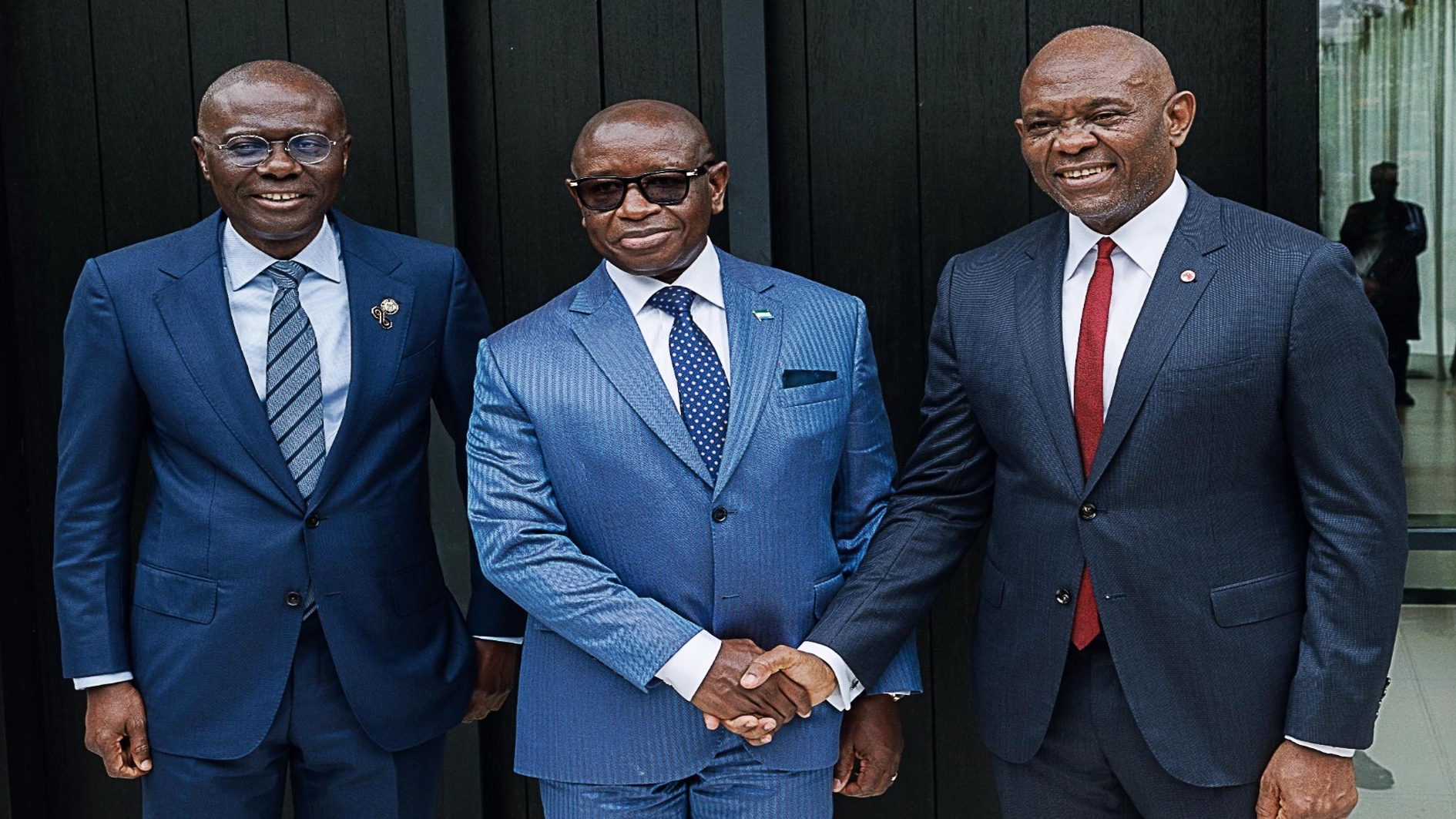
The latest push gained momentum in Lagos on 7 October, when Sierra Leonean President Julius Maada Bio and African investor Tony Elumelu convened the WAIIS Private Sector Advisory Board.
The meeting brought together some of Africa’s most influential business and financial leaders, including representatives of Dangote Group, BUA Group, Oando, Afreximbank, Africa Finance Corporation and Africa50. The group is expected to help identify projects, investors and financing requirements ahead of the November summit.
Bio has framed the challenge bluntly: West Africa has been discussing integration for about five decades, but has yet to build a genuinely consolidated regional market serving more than 400 million people. The WAIIS website now puts the wider regional population at more than 450 million.
For engineers, the issue is what a consolidated market actually requires.
A market of that size needs dependable electricity. It needs transport corridors that move raw materials and finished goods across borders. It needs industrial zones supplied with water and power. It needs communications networks capable of supporting cross-border commerce. It needs customs and payment systems that allow businesses to transact without treating every national border as a separate economic system.
The infrastructure is the integration.
Electricity has to cross borders
Energy is one of the clearest examples.
West Africa already has a regional electricity framework through the West African Power Pool (WAPP), which is working towards a functioning regional electricity market. Cross-border transmission infrastructure is being developed to allow countries with different generation resources and demand profiles to trade electricity.
The work is highly technical.
In September 2026, WAPP was seeking a firm to assess the towers on the 225 kV Ghana–Côte d’Ivoire interconnection for the installation of optical ground wire. The OPGW would combine the functions of transmission-line protection and high-capacity fibre-optic communications. The project forms part of the development of the ECOWAS Regional Electricity Market.
Another major project is the 330 kV Median Backbone interconnection. WAPP reported in June that route alignment, environmental and social studies and feasibility work had progressed, with financing discussions underway. The project is intended to strengthen electricity connectivity across several West African countries.
These are the kinds of projects that give regional integration a physical form.
A factory in one country does not care whether its electricity was generated across a border. It cares whether the supply is reliable and affordable.
That is the economic argument behind regional power trading.
The region’s existing infrastructure also provides evidence of what shared assets can achieve. The 678-kilometre West African Gas Pipeline links Nigeria, Benin, Togo and Ghana and has helped provide gas for power generation across the corridor. Afreximbank has identified such shared infrastructure as an important component of regional energy security and industrial development.
WAIIS is seeking to take that principle further by linking energy investment with industrialisation.
The mineral opportunity is bigger than mining
West Africa’s mineral wealth presents another test.
The region has significant deposits of gold, bauxite, iron ore, lithium and other strategic resources. Exporting raw materials generates revenue, but it leaves much of the value chain elsewhere.
WAIIS therefore places strategic minerals alongside industrialisation, with its stated objective of moving beyond raw mineral exports towards processing and regional value chains.
That shift would require considerably more than new mines.
Processing plants require electricity, water, roads, railways, ports, skilled workers and supporting industries. Refining and manufacturing require specialised equipment and reliable logistics. Industrial clusters need common infrastructure and services.
This is where regional integration can change the economics of mineral development.
A country may not possess every resource, skill or industrial capability required for a complete value chain. Several countries connected through efficient infrastructure can collectively provide them.
The objective becomes less about which country exports a particular mineral and more about where the regional value chain can be built.
That is a much more ambitious industrial proposition.
Agriculture needs infrastructure too
Agribusiness is the third major pillar.
West Africa produces substantial quantities of agricultural commodities, yet production alone does not guarantee food security or competitive exports. Farmers need storage. Processors need reliable electricity. Food producers need cold chains. Manufacturers need packaging and transport. Exporters need efficient ports and predictable customs procedures.
The WAIIS framework covers production, processing, storage, logistics and regional trade rather than treating agriculture as a farm-level problem.
This is significant.
A farmer can increase production and still lose money if crops cannot reach a processor or market quickly. A processing plant can have modern equipment and still operate below capacity if raw materials arrive inconsistently or electricity is unreliable.
Agricultural infrastructure is therefore part of industrial infrastructure.
A genuinely integrated West African food market would require these systems to operate across borders rather than within isolated national supply chains.
The fourth infrastructure layer is digital
Regional integration is no longer only about physical movement.
Goods can cross a border physically while the paperwork remains slow and fragmented. Businesses can have customers in another country but struggle with payments, data exchange or incompatible regulatory systems.
ECOWAS has recognised this problem.
At a March 2026 ministerial meeting in Freetown, regional ICT ministers focused on digital transformation and the role of shared infrastructure, policy harmonisation and digital services in creating a more integrated economy. ECOWAS has also been working on the Western Africa Regional Digital Integration Program, or WARDIP.
The Commission has separately been moving towards digital systems for monitoring regional integration itself. Its African Regional Integration Synthesized Index platform replaces fragmented manual processes with digital data collection, validation, dashboards and reporting.
This is an important change in thinking.
The infrastructure of regional integration increasingly includes fibre networks, data centres, cloud platforms, digital identity systems, interoperable payment platforms and cybersecurity.
West Africa is already seeing movement in this direction.
The challenge now is making these systems work across national boundaries at commercial scale.
The financing question
None of this will happen without capital.
The WAIIS organisers say the project pipeline exceeds US$180 billion and have built the summit around project owners, investors, development finance institutions, sovereign funds and banks. Its Deal Room is intended to match projects with potential financiers and track commitments after the summit.
That focus on project preparation is important.
Large infrastructure projects frequently fail to reach construction because the gap between an idea and a bankable project is enormous. A regional transmission line needs feasibility studies, environmental assessments, route planning, engineering designs, permits, procurement structures and financing.
The same applies to a railway, mineral-processing plant or digital infrastructure project.
Africa’s financial institutions are also trying to address this problem. In February 2026, African multilateral financial institutions launched the Africa Infrastructure Financing Facility, designed to accelerate preparation and financing of priority cross-border infrastructure projects.
This points towards a broader shift in African infrastructure finance: preparing projects properly before approaching capital.
The hardest infrastructure may be institutional
Physical infrastructure is only part of the challenge.
A transmission line can cross a border. A truck can cross a border. A fibre-optic cable can cross a border.
The rules governing those assets also have to work across borders.
At an ECOWAS stakeholder meeting in March, participants identified non-tariff barriers, the digitalisation of documentation and procedures, industrialisation and infrastructure investment as continuing requirements for deeper regional integration.
This is where the private sector’s role becomes important.
Elumelu and other business leaders involved in WAIIS are arguing that African companies need to think beyond national markets and combine capital, technical expertise and capabilities to build businesses capable of operating at regional scale. At the Lagos meeting, the message was accompanied by a call for governments to provide policy certainty, regulatory efficiency and security.
For investors, these are not secondary issues.
A road becomes more valuable when trucks can move efficiently across the countries it connects. A factory becomes more attractive when it can sell into a larger market without facing a maze of restrictions. A regional electricity line becomes more useful when power trading rules are predictable.
Infrastructure and regulation have to develop together.
The November test
WAIIS arrives with a substantial ambition, but the success of the initiative will not be measured by the number of presidents, investors or business leaders attending.
It will be measured by what gets built.
The summit is designed around a project pipeline, investment matching and follow-through. Its organisers say commitments are intended to be tracked through an investment scorecard and subsequent reviews.
That creates a useful test.
Can a regional investment summit produce financial close on a transmission project? Can it accelerate a cross-border transport corridor? Can it attract investment into mineral processing rather than extraction alone? Can it produce new regional digital infrastructure? Can governments remove enough regulatory barriers to make these projects commercially viable?
West Africa does not lack ambitious plans.
It has spent decades producing them.
The next phase has to be about execution.
The region has the population, resources and entrepreneurial capacity to support a much larger industrial economy. But scale only becomes an economic advantage when infrastructure connects that scale to production and markets.
That is the real promise behind the West Africa Integration and Investment Summit.
If the initiative succeeds, regional integration will become visible not only in policy documents but in power flowing across borders, minerals being processed closer to where they are extracted, food moving through modern supply chains, factories serving regional markets and digital systems allowing businesses to operate across national boundaries.
For engineers, that is where the story begins. The challenge is no longer imagining an integrated West African economy. It is designing and building the infrastructure that can make one work.
-
Product on sale
 AWEBook Volume 2Original price was: KShs 3,500.00.KShs 3,000.00Current price is: KShs 3,000.00.