
Last Updated 6 hours ago by Kenya Engineer
As government services move increasingly online, the infrastructure supporting them becomes as important as the applications that citizens interact with. For Kenya’s National Transport and Safety Authority (NTSA), the availability of its vehicle registration systems has direct consequences for motorists, vehicle dealers and the wider transport system.
The authority’s Transport Integrated Management System (TIMS) supports services including vehicle registration, transfer of ownership and the acquisition of number plates. When the system is unavailable, however, the consequences extend beyond an unsuccessful online transaction. According to NTSA’s ICT leadership, newly imported vehicles cannot leave the country’s ports before completing the required registration process, meaning prolonged system outages can disrupt vehicle dealers as well as port logistics.
This was one of the challenges that drove NTSA to modernise the infrastructure supporting its digital services. The agency ultimately deployed a Vertiv SmartRow data centre, supplied by Vertiv and its local systems integration partner, Encapsulated East Africa Limited.
The project was aimed at improving availability while providing the capacity and flexibility required as demand for digital transport services continued to grow.
The infrastructure challenge
NTSA was established in 2012 with a broad mandate covering vehicle registration, inspection, driver licensing and training, vehicle ownership transfers and other transport-related services. As these services became increasingly digitised, the underlying IT infrastructure had to support a growing volume of transactions and a higher expectation of continuous availability.
NTSA’s revamped TIMS platform, deployed in 2021, was part of this digital transformation. Citizens use the platform to conduct a range of vehicle-related transactions, including registration and ownership transfers.
However, the authority’s existing IT infrastructure was becoming increasingly difficult to maintain.
Nashon Kondiwa, then Deputy Director, ICT and Innovation at NTSA (Now Director General), said the organisation needed to modernise its systems to improve service delivery and meet growing demand.
The problem was not limited to the inconvenience experienced by users. Kondiwa noted that system downtime could have economic consequences because new vehicles entering Kenya could not leave the ports without registration.
The ICT team was also under pressure to maintain system availability. Persistent downtime required staff to spend additional hours working, including weekends, to keep services operational.
For NTSA, the requirement was not just to install additional computing equipment. The agency needed an infrastructure platform capable of supporting a critical public-facing digital service around the clock.
Designing for availability and growth
Following a request for proposals, NTSA selected a Vertiv SmartRow solution proposed by Vertiv and Encapsulated East Africa Limited.
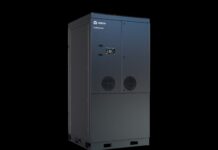
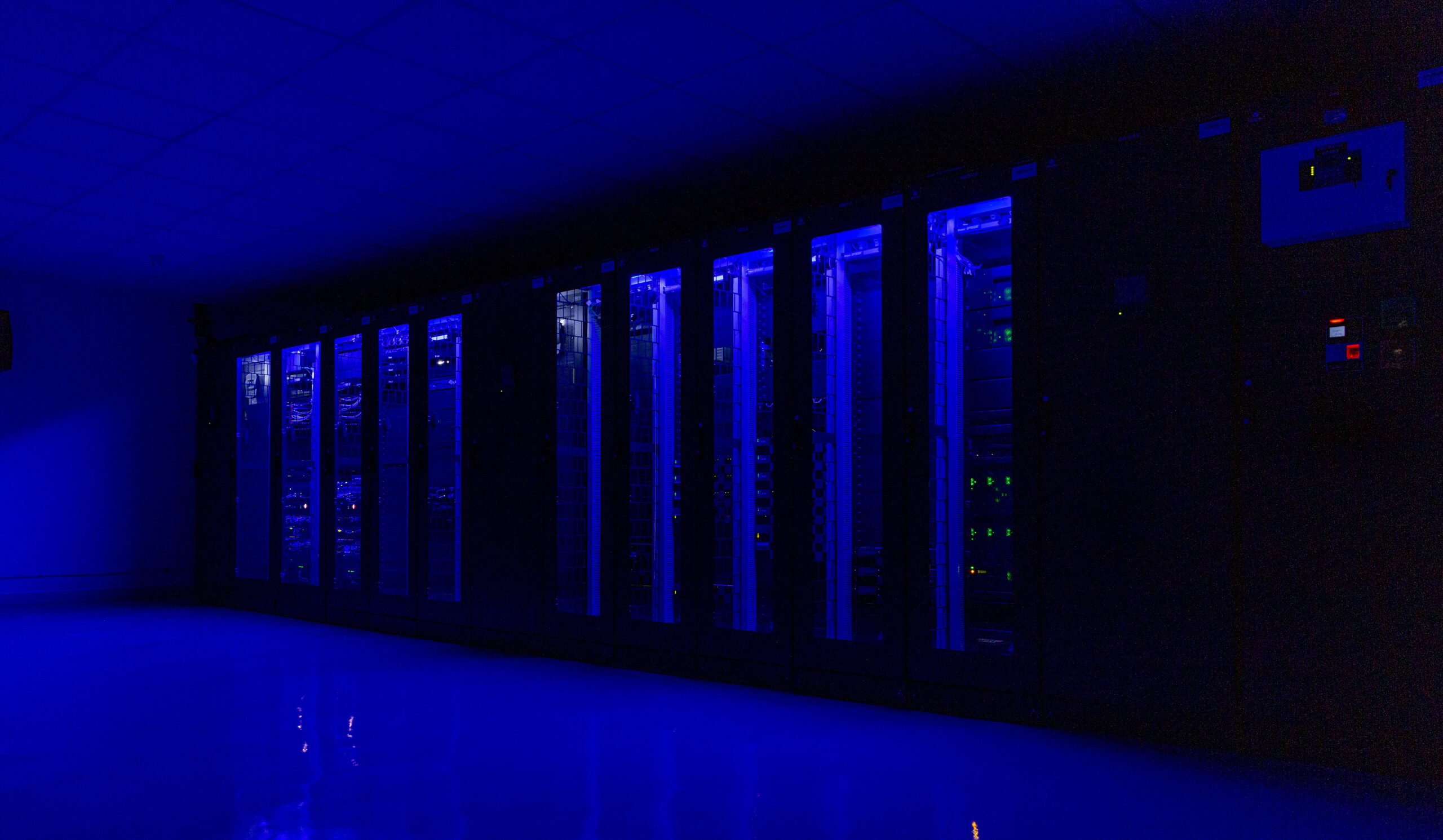
The SmartRow is a pre-engineered, self-contained data centre designed to integrate several of the systems required to operate an IT environment. The solution deployed at NTSA incorporates power protection, power distribution, precision cooling, environmental monitoring, fire suppression and physical security.
This integrated approach was significant because it reduced the need to coordinate numerous separate infrastructure components during installation.
The NTSA project also required the existing facility to be repurposed and redesigned. Among the requirements were modularity and scalability, high reliability, energy efficiency and simplified integration of the various systems supporting the data centre.
The resulting installation has a 70 kW capacity and an average rack density of approximately 7 kW per rack. According to Vertiv, the configuration can operate at densities ranging from 2 kW to 10 kW per rack.
This allows the authority to accommodate significant computing capacity within a relatively compact footprint while retaining room for future expansion.
Building redundancy into the system
For a system supporting essential government services, resilience cannot depend on a single piece of equipment operating continuously without failure.
The NTSA installation therefore incorporates redundancy in both power and cooling.
On the power side, two 80 kVA Vertiv Liebert EXS UPS units support each rack row. The UPS systems provide continuity during power disturbances, allowing the IT equipment to continue receiving a stable supply for the predefined runtime.
Cooling was designed on a similar principle. The installation uses three 35 kW Vertiv Liebert CRV in-row precision cooling units. If one cooling unit becomes unavailable, the remaining units can take on the additional heat load.
The design also incorporates variable-speed fans, allowing cooling equipment to adjust airflow according to requirements rather than operating continuously at maximum capacity.
This approach addresses two competing requirements within a data centre: maintaining the environmental conditions required by IT equipment while avoiding unnecessary energy consumption.
Monitoring the environment
Availability also depends on detecting developing problems before they become service interruptions.
The NTSA installation incorporates Vertiv Environet Alert monitoring software together with Liebert rack data units. These systems provide visibility into conditions including temperature, humidity, liquid leakage, smoke and vibration.
For support teams, this means that conditions within the data centre can be monitored remotely rather than relying entirely on physical inspections.
The monitoring capability is intended to support proactive intervention. An abnormal environmental condition or equipment alarm can be identified before it develops into an incident capable of affecting IT availability.
Physical security was incorporated into the same architecture. The SmartRow installation provides options including controlled access, cameras and door sensors, while sensors within the rack environment provide additional information relating to smoke, temperature, humidity and security.
For NTSA, bringing these functions together was an important part of simplifying the operation of the facility.
“The compactness of the whole solution made it unique,” Kondiwa said. “We didn’t have to deal with parts and pieces all over the place from multiple suppliers and all of the integration challenges that such a scenario usually presents.”
He added that having access control, CCTV, environmental monitoring, sensors, power and cooling integrated within one architecture made the system easier to install and manage.
From a planned 10 months to six
The project also placed considerable emphasis on deployment time.
Vertiv says it manufactured the SmartRow to NTSA’s specifications in eight weeks. The wider project included civil works associated with the renovation of the data centre and UPS room, including installation of a drop ceiling, fire-rated doors and fire-rated wall finishes.
The overall project was completed in approximately six months, compared with an expected timeline of about ten months.
The pre-engineered nature of the infrastructure was a factor in shortening the deployment period, allowing major components to be configured as an integrated system rather than assembled individually on site.
For a government agency undertaking digital transformation, the speed of deployment has practical importance. The longer critical infrastructure remains constrained by existing limitations, the longer users continue to experience the effects of those limitations.
Reported increase in service capacity
The most significant reported changes were in the system’s ability to process applications.
According to the Vertiv case study, the previous system processed approximately 10,000 new licences per month. Following deployment of the new infrastructure, the figure had risen to more than 80,000 licences per month.
The case study also reports that a queue of approximately 60,000 drivers waiting for applications to be processed had been eliminated, with applications being processed upon submission.
NTSA also reported an improvement in licence-renewal compliance. Before the new data centre was installed, renewal compliance was between 45 and 50 per cent. According to the case study, this subsequently exceeded 80 per cent.
These figures illustrate the relationship between application performance and the physical infrastructure supporting a digital government service. When the underlying systems become more available and capable of handling demand, the effect can extend beyond IT performance to the way citizens interact with the public service.
Designing for the next stage
Another consideration in the NTSA deployment was avoiding a situation in which the new data centre would quickly become another capacity constraint.
The modular architecture allows additional power and cooling capacity to be incorporated as requirements increase. The existing server room also has space to accommodate an additional row of SmartRow racks.
The authority has also implemented a six-rack SmartRow installation at its disaster recovery site, providing a degree of standardisation between its primary and recovery environments.
Standardisation can simplify the management of infrastructure across different locations, particularly where support teams need to work with similar equipment and configurations.
For NTSA, the approach provides a path for expanding its infrastructure without having to redesign the entire data centre each time additional capacity is required.
Infrastructure behind the digital service
The NTSA case illustrates a less visible aspect of digital transformation.
For citizens, a digital vehicle-registration service is primarily experienced through a website or online application. Behind that interface, however, lies an infrastructure stack that must provide power, cooling, physical security, environmental control, computing capacity and resilience.
In this case, the infrastructure modernisation was driven by a practical requirement: ensuring that an increasingly important public service could remain available as demand increased.
Kondiwa said the new system had simplified processes, strengthened security and expanded citizen access to NTSA services.
“The new Vertiv SmartRow simplifies processes, enhances system security, and broadens citizen access to our services,” he said.
The experience also highlights the growing importance of data centre engineering within public-sector digital transformation. As more government services move online, availability of the underlying infrastructure becomes increasingly inseparable from availability of the service itself.
For NTSA, the SmartRow deployment provides a modular infrastructure platform designed not only to address existing availability challenges, but also to accommodate further growth in Kenya’s digital transport services.

-
Product on sale
 AWEBook Volume 2Original price was: KShs 3,500.00.KShs 3,000.00Current price is: KShs 3,000.00.