







Last Updated 3 days ago by Kenya Engineer
Kenya’s electric mobility revolution did not happen by accident. It is the product of bold innovators, resilient entrepreneurs, and a generation of technical thinkers determined to reshape how Africa moves. Among the most influential voices in this movement is Warren Ondanje, the Co-founder and Managing Director of the Africa E-Mobility Alliance (AfEMA)—a continental platform championing cleaner, smarter, and more inclusive transportation.
From documenting Nairobi’s early experiments with electric two-wheelers to advising governments and steering Africa-wide research initiatives, Warren’s journey reflects the broader story of e-mobility in Kenya: bold, fast-moving, and anchored in local realities.
From Energy Analyst to Continental Industry Leader
Warren’s entry into the mobility space was anything but conventional. His early career began in 2018 within Nairobi’s energy management circles. When COVID-19 struck in 2020, consulting work slowed—but something else happened: delivery services exploded in demand. The streets filled with motorcycles, and suddenly the environmental and economic cost of urban deliveries became impossible to ignore.
“That moment,” he recalls, “became the real trigger for two-wheeler electrification in Nairobi.”
As he saw early adopters and innovators struggle without structured data or policy support, Warren began documenting the opportunity through blog posts, webinars, and policy conversations. His voice quickly became a reference point. Soon after, he helped set up operations for one of Kenya’s major e-mobility companies—while quietly co-founding AfEMA on the side.
By 2021, he had co-authored Kenya’s first State of the E-Mobility Market Report, launched regional knowledge tools, and eventually committed fully to AfEMA. Today, his work reaches across more than 20 African markets.
“The rest,” he says with a smile, “is electric history.”
Kenya’s EV Landscape: Momentum, Innovation, and Gaps
According to Warren, Kenya’s EV adoption has accelerated rapidly. The country now has over 10,000 registered electric vehicles, with more than 300 charging and battery swap stations across the country.
Growing incentives have helped—VAT exemptions, reduced excise duty, and special electricity tariffs for EV charging. Perhaps Kenya’s strongest advantage is its over 90% renewable grid, making electric mobility one of the cleanest options on the continent.
But Warren is refreshingly honest about the realities:
“EV prices remain high, public charging is still limited outside major cities, and battery lifecycle systems—from second-life use to recycling—are still underdeveloped.”
He notes that the absence of an adopted national e-mobility policy also slows investor confidence, despite strong private-sector momentum.
Why Kenya Is Becoming Africa’s E-Mobility Hub
With most of its electricity coming from geothermal, hydro, and wind, Kenya is uniquely positioned to lead Africa’s transition. Warren points out that:
- Kenya’s grid makes EVs 100% aligned with national sustainability goals.
- Nairobi remains one of the continent’s most vibrant innovation ecosystems.
- Local EV assembly is growing, with more than nine companies assembling electric two- and three-wheelers.
Combined, these elements form the foundation of Kenya’s role as an emerging regional hub for East and Central Africa.
Private Sector at the Wheel
While government incentives matter, Warren believes that private innovation has been the biggest driver of adoption.
“Kenya has over two million motorcycles and more than 100,000 buses. The economic argument for electrifying these fleets is undeniable,” he explains.
With EVs being 40–60% cheaper to operate, companies are quickly building sustainable business models.
Innovations like battery-as-a-service, pay-as-you-drive, and portable battery swapping have drastically lowered upfront costs, especially for boda boda riders and delivery companies.
Africa’s Continental Momentum
Zooming out, Warren underscores how rapidly Africa is electrifying:
- 30,000+ EVs active across the continent
- 38% growth in electric two- and three-wheelers
- 44% growth in e-buses
- Rising assembly capacity in North, East, and West Africa
Countries such as Rwanda, Ethiopia, Morocco, and Egypt are making bold regulatory moves that Kenya can learn from.
The lesson?
“Africa needs predictable long-term policy signals, localized production, and financing models that support commercial fleets.”
Charging Infrastructure: The Next Frontier
Charging remains a major bottleneck, but not an insurmountable one.
Warren points out that fewer than 15% of Africa’s e-mobility companies currently work on charging solutions. However, promising models include:
- Battery swapping for motorcycles
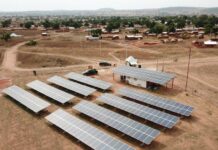
- Solar-powered charging hubs
- Mini-grid charging for rural areas
- Fleet-based charging depots for buses and delivery vehicles
AfEMA is playing a central role by coordinating the Kenya E-Mobility Battery Initiative (KeEBI), which is working on battery standards, reuse protocols, and safe recycling guidelines.
Scaling charging, Warren says, must happen hand-in-hand with urban planning and national energy design.
Financing: Bridging the Valley of Death
Africa’s e-mobility sector has attracted over USD 500 million in investments, with Kenya taking an increasing share. Still, Warren notes the existence of a dangerous middle ground:
“There’s a financing valley of death between piloting and full-scale rollout. That’s where most startups get stuck.”
Blended financing—pairing concessional funds with commercial capital—is helping bridge the gap, as seen in major EV-bus investments like BasiGo’s USD 42 million deal.
Policy, Regulation, and the Need for Consistency
Kenya’s biggest hurdle isn’t lack of interest—it’s unpredictability.
Annual tax changes create uncertainty. Battery disposal regulations are still emerging. Charging standards remain fragmented. And without a fully adopted national policy, long-term commitments are difficult.
Warren argues that Kenya and Africa need:
- Harmonized regional standards
- Strong battery lifecycle regulations
- Predictable incentive frameworks
- Clear national and regional charging-corridor plans
Public procurement of electric buses, garbage trucks, and government fleets could also accelerate adoption while de-risking private investment.
Local Innovation: Africa Is Not Copying — It’s Redefining
From swapping networks to local bus assembly, Africa’s innovations are tailored for local realities.
“Circularity is emerging strongly,” Warren notes, highlighting the repurposing of EV batteries for mini-grids, home storage, and community power systems.
These innovations prove that Africa’s mobility transition is not a replica of Europe or Asia—it is African, affordable, and intentionally practical.
A New Workforce for a New Industry
The biggest variable in the EV transition isn’t batteries or charging infrastructure—it’s people.
Warren emphasizes the need for:
- New curricula in TVETs and universities
- High-voltage technician training
- Battery engineering skills
- Policy and regulatory expertise
- Youth and women inclusion
AfEMA is already partnering with institutions to set up skills centres of excellence, ensuring no one is left behind.
AfEMA: A Continental Engine for Change
AfEMA’s work spans research, policy support, ecosystem convening, and capacity building. Its AfEMA Data Portal has become the continent’s most comprehensive repository of EV data, tracking deployments, investments, and infrastructure.
It also convenes Africa E-Mobility Week, a flagship forum shaping Africa’s collective mobility agenda.
Warren explains:
“Our mission is simple—accelerate the continent’s transition through data, policy support, partnerships, and on-the-ground capacity building.”
Looking Ahead: What 2030 and 2035 Could Look Like
Warren dreams big—and realistically. By 2030, he hopes Kenya will have:
- A fully adopted national e-mobility policy
- Regional coordination under the EAC
- Large-scale EV adoption in public transport and fleets
- Strong assembly and local manufacturing capacity
- A functioning battery reuse and recycling ecosystem
By 2035, he envisions:
- At least 30% of new vehicle sales in Africa being electric
- Harmonized standards across the continent
- Africa producing a meaningful share of its own EVs, batteries, and components
- A fully circular EV ecosystem that drives jobs and industrialization
In Conclusion: Africa’s Electric Moment Has Arrived
From his early days as a curious observer to leading one of the continent’s most influential mobility institutions, Warren Ondanje represents a new generation of African thinkers—bold, practical, and relentlessly future-focused.
His work, through AfEMA, is helping shape an industry that could shift everything from urban air quality to foreign exchange reserves, manufacturing, and youth employment.
If Africa succeeds in electrifying mobility at scale, it will be because pioneers like Warren built the foundations early — quietly, intentionally, and with a vision far greater than themselves.

-
Product on sale
 AWEBook Volume 2Original price was: KShs 3,500.00.KShs 3,000.00Current price is: KShs 3,000.00.











)