
Last Updated 5 months ago by Kenya Engineer
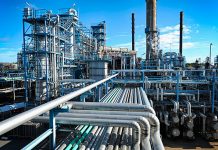
Across East Africa, an ambitious idea is slowly gaining attention in policy circles, engineering discussions, and energy planning forums. It is the idea that the region could move away from fragmented national fuel systems and instead develop a shared refining hub anchored in a large-scale refinery at Tanga, Tanzania.
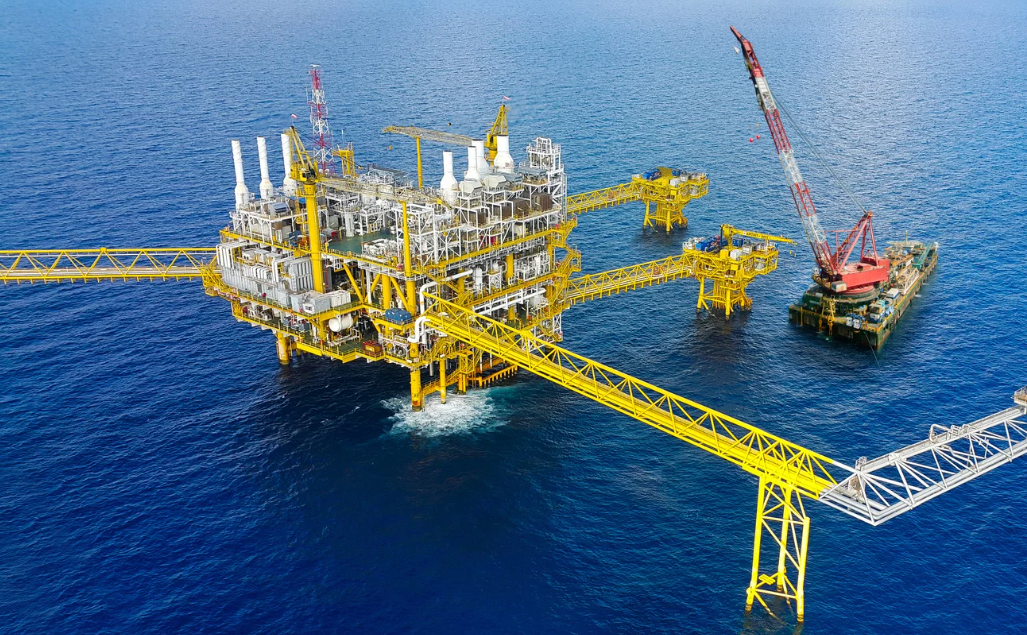
The proposed facility, often discussed at a theoretical capacity of around 650,000 barrels per day, would not exist to serve Tanzania alone. Instead, it would function as a regional energy processing centre, drawing crude oil from Uganda, South Sudan, and potentially the Democratic Republic of Congo, while distributing refined petroleum products back across East and Central Africa.
At first glance, this appears to be a logical next step for a region that currently relies almost entirely on imported refined fuels. But the real question is not whether such a refinery can be built. The more important question is whether the region has the economic demand, supply certainty, and political coordination to sustain it for decades.
Understanding the Demand Reality
To assess viability, it is important to first understand how much fuel East African countries actually consume on a daily basis.
Kenya is currently the largest petroleum consumer in the region, with demand estimated at roughly 100,000 to 120,000 barrels per day. Tanzania follows with approximately 80,000 to 85,000 barrels per day, while Uganda consumes around 14,000 to 15,000 barrels per day. Smaller economies such as Rwanda and Burundi add relatively modest volumes, together estimated at under 20,000 barrels per day combined.
South Sudan presents a different case entirely. Rather than being a major consumer, it is primarily a crude oil producer, generating approximately 150,000 to 180,000 barrels per day in output under stable conditions. However, its domestic fuel consumption remains comparatively small.
When all regional consumption figures are combined, the effective East African demand base is estimated at roughly 250,000 to 300,000 barrels per day under current economic conditions.
This is where the first major tension emerges. A proposed refinery of 650,000 barrels per day is more than double the region’s current consumption footprint. This means that even under optimistic scenarios, a significant portion of production would need to be exported outside East Africa for the project to remain commercially viable.
Why Tanga Becomes the Centre of the Conversation
Tanga’s strategic appeal lies in geography. Located on Tanzania’s northern coastline, it offers direct access to international shipping routes while also sitting within reasonable proximity to Uganda, Kenya, and South Sudan’s planned infrastructure corridors.
In theory, this positions Tanga as a natural energy logistics hub where crude can be aggregated, refined, and redistributed. The concept also aligns with broader regional infrastructure ambitions such as cross-border pipelines, railway systems, and port expansions that could eventually form an integrated East African energy network.
In this sense, the refinery is not just an industrial facility. It becomes the anchor of a wider system that includes pipelines, ports, storage depots, and rail-based distribution corridors.
The Engineering Logic Behind Mega-Refineries
From a purely technical and economic standpoint, large refineries tend to outperform smaller ones. The reason is scale. Larger facilities are able to process crude oil more efficiently, spread fixed costs over greater output, and produce a wider range of petroleum and petrochemical products.
At 650,000 barrels per day, a refinery enters the category of global-scale infrastructure. At this level, it is no longer just a fuel production facility. It becomes a petrochemical complex capable of producing industrial inputs such as plastics, fertilisers, and feedstocks for manufacturing.
However, such efficiency only materialises when the refinery operates at consistently high utilisation levels. A facility of this size must run close to capacity for decades to remain economically viable.
The Supply Question: Where Will the Crude Come From?
While demand is one side of the equation, supply is equally critical.
Uganda is expected to be the largest near-term crude contributor, with potential output of around 250,000 barrels per day once full field development is achieved. However, this crude is waxy and requires specialised heated pipelines for transport, meaning infrastructure must be reliable and continuously maintained.
South Sudan adds additional supply potential, but its production history has been affected by political instability and fluctuating output levels. Kenya’s own crude resources in Turkana remain modest, estimated at between 20,000 and 50,000 barrels per day under optimistic scenarios, and are not sufficient on their own to support a large refinery.
The Democratic Republic of Congo introduces long-term upside potential, but its oil sector remains underdeveloped and infrastructure constrained.
This means that while regional supply potential exists, it is not yet fully mature or guaranteed over the multi-decade horizon that a refinery of this scale would require.
Infrastructure: The Backbone of the Vision
For a Tanga-based refinery system to function effectively, it would need to be supported by a highly integrated infrastructure network. This would include crude oil pipelines from Uganda to the Tanzanian coast, integration with the LAPSSET corridor for South Sudanese output, expansion of Kenya’s pipeline network for refined product distribution, and the use of railway systems such as the Standard Gauge Railway to support inland logistics.
In addition, port infrastructure at Tanga would need significant expansion to handle both crude imports and refined product exports. Storage and blending facilities would also play a critical role in stabilising supply and demand fluctuations.
Without this infrastructure backbone, the refinery concept remains theoretical rather than operational.
The Real Challenge: Coordination, Not Construction
Perhaps the most underestimated aspect of this proposal is not engineering or capital investment, but governance. A regional refinery requires long-term alignment between multiple sovereign states, each with its own economic priorities, political cycles, and energy strategies.
Such a system would require stable agreements lasting 20 to 30 years, covering crude supply commitments, pricing mechanisms, taxation frameworks, and operational governance structures.
This level of coordination is difficult even in highly integrated economic blocs. In East Africa, where policy harmonisation is still evolving, it represents one of the most significant risks to implementation.
Global Competition and Market Reality
Even if successfully built, a Tanga refinery would not operate in isolation. It would compete directly with established refining hubs in India, the Middle East, and Asia, where large-scale facilities already benefit from lower production costs, mature logistics networks, and established global trading relationships.
This means that East Africa would need to justify its refinery not purely on cost competitiveness, but on broader strategic grounds such as energy security, foreign exchange stability, and industrial development.
A Question of Regional Readiness
The idea of a shared East African refining hub is technically sound and strategically attractive. It offers a pathway toward energy security, industrialisation, and regional integration.
However, its success depends on whether East Africa can move beyond fragmented national energy planning and operate as a coordinated long-term energy market.
The engineering can be done. The pipelines can be built. The refinery can be designed.
But the real question remains unresolved:
Can East Africa sustain 30 years of coordinated energy policy long enough to make such a system viable?
If the answer is yes, Tanga could become one of the most important energy hubs on the African continent. If not, it will remain an ambitious idea that highlights both the promise and the complexity of regional integration.

-
Product on sale
 AWEBook Volume 2Original price was: KShs 3,500.00.KShs 3,000.00Current price is: KShs 3,000.00.