
Last Updated 4 weeks ago by Kenya Engineer

Silas Santana, Engineering Services Manager – One AfricaAcross Africa’s industrial and mining sectors, reliability engineering is no longer just a maintenance function — it is a strategic lever for productivity, sustainability, and cost control. From harsh operating environments and unstable power supply to long spare-part lead times, African plants face unique reliability pressures that demand disciplined engineering and practical solutions.
In this interview, Silas Santana, Engineering & Services Manager – One Africa, shares field-driven insights from years of supporting operations across the continent. He discusses the real causes of premature equipment failure, common lubrication misconceptions, predictive maintenance pitfalls, and the cultural shift required to build resilient maintenance systems.
Reliability Realities on the Ground
What are the leading causes of premature equipment failure in African industrial plants and mining operations?
From our field experience across Africa, more than 70% of rotating equipment failures are not caused by the bearing itself, but by external factors. The most common root causes are improper lubrication practices, poor installation methods, and contamination within the operating environment.
Lubrication deficiencies remain the single biggest contributor. This includes selecting the wrong grease type, applying incorrect relubrication intervals, and both over- and under-lubricating assets. Contamination from dust, humidity, water ingress, and unfiltered lubricants is also widespread, particularly in mining, cement, and port environments. Improper mounting — such as misalignment, incorrect fits, and use of inadequate tools — further accelerates failure.
Global field data consistently shows that only a small percentage of failures are due to manufacturing defects. The overwhelming majority stem from how equipment is installed, lubricated, operated, and maintained.
How do African operating conditions change the reliability equation?
African industrial environments introduce stress factors that significantly alter reliability expectations. High dust loads — including silica, cement, coal, and clinker — place enormous strain on seals and lubrication systems. Extreme temperatures degrade grease more rapidly, while unstable power supply and load variations introduce mechanical and electrical stresses that shorten equipment life.
In many regions, long logistics chains delay spare part availability. As a result, equipment often continues operating in a degraded condition longer than it should, compounding damage.
Because of these realities, reliability strategies in Africa must emphasize enhanced sealing, contamination control, robust lubrication practices, and predictive tools that can function effectively even in low-connectivity environments. Installation precision and continuous technical training become even more critical under these conditions.
Is premature failure more often a design, installation, or maintenance issue?
Field investigations show that while design issues account for a portion of failures, the majority are linked to installation and maintenance practices. In our experience, maintenance discipline is the most powerful reliability lever.
Precision mounting, correct lubrication, proper alignment and balancing, and early detection of abnormal conditions can dramatically extend asset life. When plants strengthen these fundamentals, reliability improves almost immediately.

Bearings, Lubrication & Common Misconceptions
When machines fail, how often is the bearing itself the real problem?
In most cases, the bearing is not the root cause but the visible symptom. True manufacturing defects account for only a small fraction of failures. The dominant causes are contamination, improper lubrication, and incorrect mounting.
This is why we always emphasize root cause analysis rather than simply replacing components. Without addressing lubrication discipline, contamination control, and installation accuracy, failures will repeat — regardless of bearing quality.
What lubrication mistakes happen most often in African facilities?
Lubrication remains the greatest reliability opportunity — and the greatest vulnerability.
Common mistakes include mixing incompatible greases without understanding thickener compatibility, applying grease until it visibly purges (which often results in over-lubrication), and failing to adjust relubrication intervals for operating temperature and speed. In high-contamination environments, many plants still rely solely on manual greasing rather than controlled or automated systems.
Ambient temperature is frequently overlooked, yet it directly affects grease viscosity and oxidation rates. When lubrication is treated as a technical discipline rather than a routine task, equipment life increases significantly.
How can plants balance over-lubrication and under-lubrication, especially with irregular maintenance intervals?
Stabilizing lubrication intervals is key. We recommend moving toward controlled or automatic lubrication systems where feasible, as they remove human variability and deliver consistent volumes.
Where automation is not yet possible, relubrication volumes should be calculated based on bearing size, speed (ndm), and operating temperature. Condition-based lubrication — supported by ultrasound or other monitoring tools — also helps determine the optimal moment for grease replenishment.
Precision lubrication, when implemented correctly, is one of the fastest ways to extend asset life.
Do high-end bearing solutions ever become ineffective in harsh environments?
Yes — even premium components will fail if operating conditions are not controlled. Contamination, persistent misalignment, inconsistent lubrication, worn shafts or housings, and loads exceeding design assumptions will negate the benefits of high-end solutions.
In such cases, upgrading the bearing alone will not solve the problem. The priority must be improving installation quality, sealing systems, lubrication consistency, and operating discipline.

Predictive Maintenance & Condition Monitoring
Where do African plants go wrong with condition monitoring?
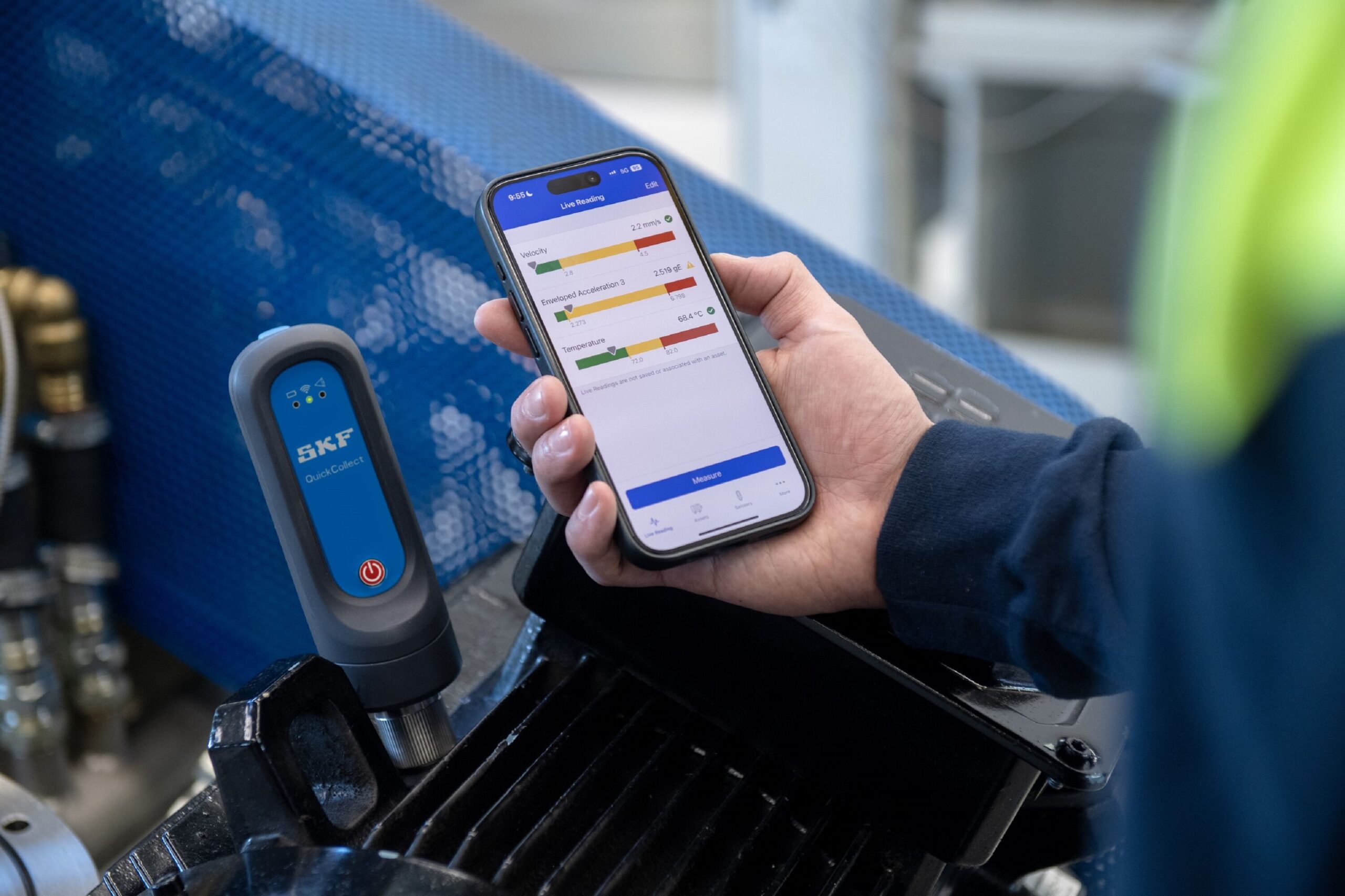
The most common mistake is focusing on acquiring technology rather than building process discipline around it. Plants often invest in sensors but fail to develop internal diagnostic capability or structured response plans.
Another issue is attempting to monitor too many assets without prioritization. Monitoring should begin with critical equipment — those assets whose failure significantly impacts safety, production, or cost.
Predictive maintenance succeeds when technology is supported by training, accountability, and integration between maintenance, operations, and planning.
Which condition monitoring data points deliver the most value for budget-restricted plants?
For plants working within tight budgets, vibration analysis remains the most powerful early warning tool. Temperature monitoring is inexpensive yet highly effective. Lubrication condition assessment and basic motor diagnostics can also provide meaningful insight without excessive investment.
The key is to start small, focus on high-criticality assets, and scale gradually as capability matures.
How should plants decide which assets deserve predictive monitoring?
Asset criticality assessment is essential. We evaluate safety impact, downtime cost per hour, spare part lead time, historical failure patterns, environmental exposure, and accessibility.
High-criticality assets justify predictive monitoring. Medium-criticality assets can be maintained preventively, while low-criticality equipment may remain reactive. This structured approach optimizes both reliability and budget allocation.
Skills, Culture & Maintenance Maturity
How important is maintenance culture compared to technology?
Maintenance culture is more important than technology. Advanced systems cannot compensate for inconsistent practices, lack of accountability, or insufficient training.
Technology accelerates reliability only when supported by disciplined execution, structured planning, and clear standards. Without culture, tools alone will not deliver results.
What skills do African maintenance teams need most urgently?
Three areas consistently emerge as priorities: precision maintenance (alignment, mounting, balancing, and lubrication), basic condition monitoring skills, and structured root cause failure analysis.
When these competencies are strong, plants move from reactive firefighting to controlled reliability growth.
How can plants reduce dependence on individual “expert technicians”?
Knowledge must be embedded in systems rather than individuals. Standard operating procedures, visual guides, structured certification paths, and documented condition monitoring data all help institutionalize expertise.
Cross-functional collaboration between maintenance, operations, and engineering further strengthens resilience. Sustainable reliability depends on systems that outlast personnel changes.
Sustainability, Energy Efficiency & Lifecycle Thinking
How does reliability engineering support sustainability beyond energy savings?
Reliability directly reduces environmental impact. Extending equipment life reduces replacement frequency and associated carbon footprint. Optimized lubrication can significantly cut grease consumption. Avoiding catastrophic failures minimizes waste, scrap, and oil contamination.
Stable, efficient equipment also reduces process variability and material waste. In this sense, reliability engineering and sustainability are deeply interconnected.
As African industries modernize, what maintenance practices should be abandoned — and which strengthened?
The “run-to-failure” mindset must be abandoned. Manual lubrication without volume control, reactive maintenance culture, and reliance on incorrect spare parts all undermine reliability.
At the same time, precision maintenance standards, automated lubrication, wireless condition monitoring, data-driven decision-making, and structured skills development should be strengthened.
Modern reliability is not defined by expensive equipment — it is defined by disciplined execution.
-
Product on sale AWEBook Volume 2Original price was: KShs 3,500.00.KShs 3,000.00Current price is: KShs 3,000.00.