

Last Updated 2 months ago by Kenya Engineer
In the critical world of heavy industry, mining and ship repair, steel wire rope is quite literally the lifeline that holds operations together. Whether hauling thousands of tonnes of ore from the depths of a South African gold mine or suspending a multimillion-rand vessel on a synchrolift, the integrity of these ropes is non-negotiable.
Yet steel has a natural enemy in corrosion. Without adequate protection, the very environments in which these ropes operate, including salt sea spray, acidic mine water, and persistent humidity, can rapidly turn high-tensile steel into brittle iron oxide. According to Simon Norton, Director of the International Zinc Association (Africa), zinc is not simply an optional coating but a critical line of defence in ensuring operational safety and reliability.
“Wire rope is an engineered system designed to handle immense tensile loads,” explains Norton. “When that system is exposed to aggressive environments, corrosion becomes the silent threat. Zinc provides both a physical barrier and an electrochemical safeguard, ensuring that even when coatings are damaged, the steel remains protected.”
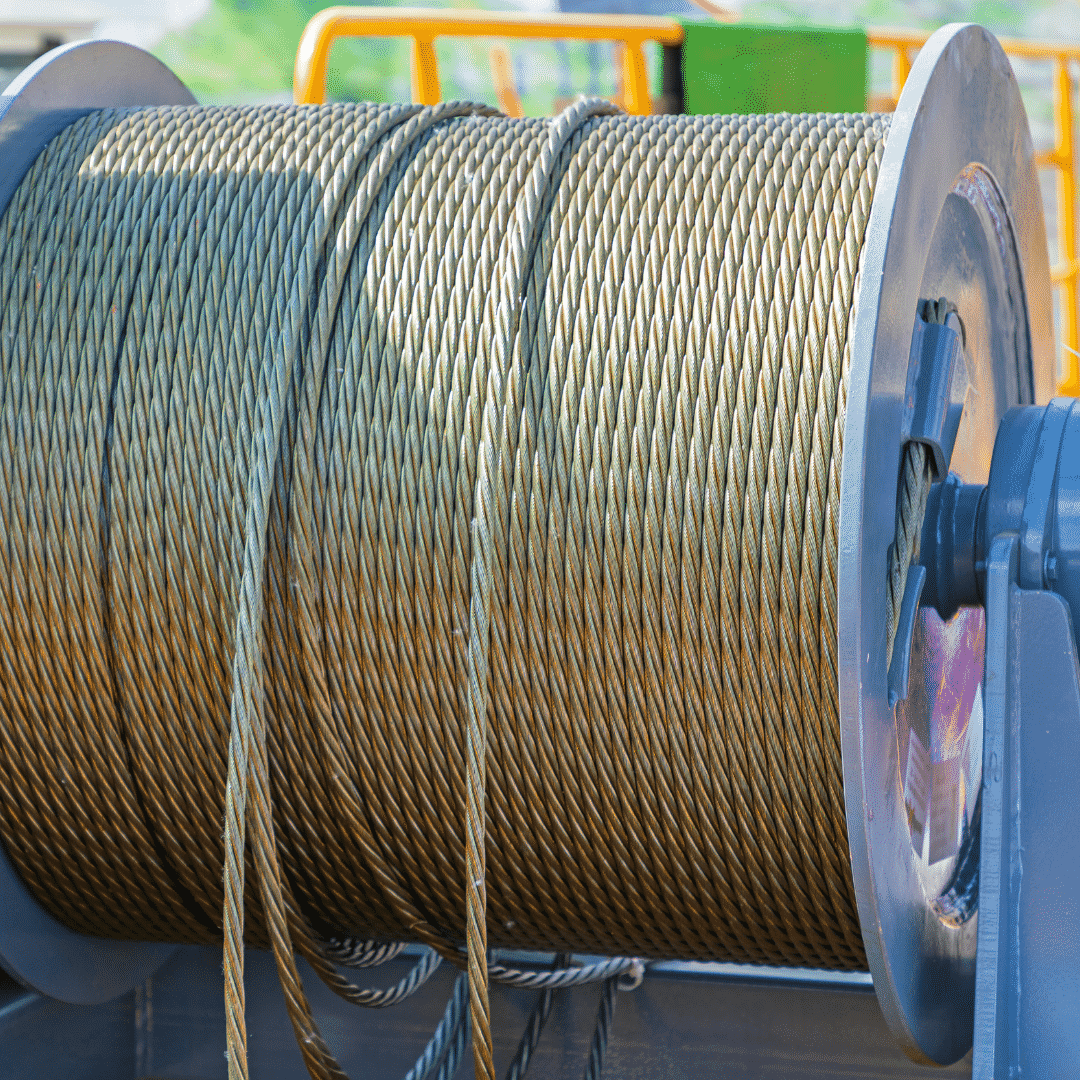
Wire ropes themselves are sophisticated mechanical systems. A standard stranded rope consists of a central core, typically an Independent Wire Rope Core for maximum strength, surrounded by multiple strands composed of individual wires twisted helically around a centre wire.
High-friction mining environments
In high-friction mining environments, Lang Lay construction is often used to distribute wear, while Full Locked Coil ropes use interlocking outer wires to create a smooth, watertight layer that shields the internal lubricant and zinc-coated core from corrosive ingress.
Lang lay refers to a specific way in which a wire rope is constructed, specifically the relationship between the direction the individual wires are twisted in each strand and the direction the strands are twisted to form the rope. The wires within each strand are twisted in the same direction as the strands are twisted around the core. By contrast, in regular lay construction, the wires are twisted in the opposite direction to the strands.
The science behind zinc’s protective capability lies in electrochemistry. When moisture and oxygen meet steel, oxidation begins. Zinc halts this process in two ways. First, it acts as a barrier layer, physically preventing moisture and chlorides from reaching the steel. Second, and more importantly, it offers sacrificial or cathodic protection. Because zinc is more chemically active than iron, it corrodes preferentially, effectively sacrificing itself to protect the underlying steel.
“Even if a galvanized or Galfan-coated rope is scratched or nicked, the surrounding zinc continues to corrode in place of the steel,” Norton explains. “That predictability is crucial in engineering. Predictable performance prevents catastrophic failure.”
Two dominant zinc-based coatings
Two principal zinc-based coatings dominate the market: traditional hot-dip galvanizing and Galfan. Standard galvanizing involves pulling steel wire through molten zinc, creating iron-zinc alloy layers that are hard and abrasion-resistant.
Galfan, by contrast, is a 95% zinc and 5% aluminium alloy with small additions of rare earth elements. Its unique eutectic microstructure produces a finer, more stable coating that is less prone to micro-cracking during repeated bending. The aluminium component forms protective oxides that further inhibit corrosion, particularly in acidic conditions.
This distinction is particularly relevant in South Africa’s deep-level mines, some exceeding four kilometres in depth. Mine hoist ropes operate under immense tension in hot, humid shafts where acidic mine water and dissolved salts accelerate corrosion. In these demanding environments, Galfan-coated ropes are increasingly preferred due to their ductility and enhanced resistance to acid attack.
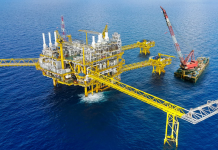
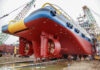
Similarly, in maritime hubs such as Cape Town, Saldanha Bay, Durban, and Richards Bay, synchrolifts and harbour cranes endure aggressive wet-dry salt cycles that intensify corrosion. Properly greased and maintained galvanized wire ropes provide robust marine protection, significantly extending service life.
By contrast, ungalvanized or ‘bright’ wire rope relies solely on grease for protection. Once grease is washed away by rain or high-pressure cleaning, corrosion can begin unseen within the rope’s internal structure. Zinc coatings eliminate this vulnerability by metallurgically bonding to the steel, ensuring fallback protection even if lubrication fails.
“Zinc coatings are the unsung heroes of infrastructure resilience,” says Norton. “Whether it is Galfan resisting acidic mine conditions or galvanized zinc shielding harbour cranes from Atlantic salt, zinc does not just stop rust, it delivers reliability, safety, and long-term performance,” he concludes.

-
Product on sale
 AWEBook Volume 2Original price was: KShs 3,500.00.KShs 3,000.00Current price is: KShs 3,000.00.