

Last Updated 5 months ago by Kenya Engineer
The shipping industry operates in one of the most aggressive environments namely in the deep sea and coastal environment. For vessels constantly exposed to high salinity, varying temperatures, and mechanical abrasion, corrosion isn’t just an aesthetic inconvenience—it is a relentless threat. Among the most effective weapons in the ship repair and maintenance arsenal is zinc rich paint.
Often but incorrectly referred to as “cold galvanizing,” these coatings provide a sophisticated, multi-layered defense mechanism that extends the service life of steel hulls, decks, and internal structures. By utilising the fundamental laws of electrochemistry, zinc-rich coatings offer a very high level of protection unmatched by other organic coatings.
Not all paints containing zinc qualify as “zinc rich.” For a coating to provide true galvanic protection, the concentration of zinc dust / flake in the dry film must be high enough to ensure the zinc particles are in physical contact with one another. This creates a continuous electrical path to the steel substrate.
Industry standards, such as SSPC-Paint 20, typically categorize these coatings based on the level of zinc dust /flake by weight in the dry film, often requiring levels between 65% and 85%. Without this high “loading,” the zinc particles would be isolated by the non-conductive paint binder, rendering the sacrificial mechanism inert.
The Chemistry of Zinc Protection: How It Works
Zinc-rich paint does not function like standard decorative or industrial paint. While traditional coatings rely solely on a physical barrier to keep water, oxygen and the external environment away from the steel, zinc-rich primers provide a double action defence.
- Galvanic (Sacrificial) Protection
The primary advantage is the principle of galvanic action. In the galvanic series, zinc is more chemically active (more anodic) than the carbon steel used in shipbuilding. When the coating is damaged and the steel is exposed to seawater, the zinc particles in the paint film sacrifice themselves in preference to the steel.
The zinc corrodes preferentially, releasing electrons that flow to the steel, effectively turning the ship’s structure into a protected cathode.
This prevents the oxidation of iron:
Fe = Fe+2 + 2e
Even if a significant scratch occurs, the surrounding zinc suppresses rust “creep” or under-cutting of the paint film by sacrificing itself:
Zn = Zn+2 + 2e
- The Self Healing Barrier Effect
As the zinc sacrifices itself, it produces zinc corrosion products, such as zinc carbonates and hydroxides. These by-products are relatively stable, insoluble, and occupy a larger volume than the original zinc metal. Over time, these zinc reaction products migrate into the pores of the paint film, effectively sealing it. This creates a secondary, dense physical barrier that further inhibits the ingress of moisture and aggressive chloride ions.
Types of Zinc-Rich Coatings in Marine Environments
In ship repair, two main formulations are utilized, each with distinct usage and performance profiles:
Inorganic Zinc Silicates
These consist of zinc dust/flakes mixed with an inorganic silicate binder (often ethyl silicate). These coatings provide superior heat resistance and form extremely hard films. They are often the preferred choice for new builds or major overhauls of tank internals and decks because of their exceptional long-term durability.
However, they are technically demanding. They require a very high level of surface cleanliness and specific humidity ranges to cure properly. If the air is too dry, the coating will not hydrate; if it is too wet, the film may fail. They MUST be topcoated for marine service and the top coat must be a high quality compatible topcoat.
Organic Zinc Primers
Typically using epoxy or polyurethane binders, these are the workhorses of the repair yard. They are far more “forgiving” during application than their inorganic counterparts. Organic primers offer better adhesion to varied substrates and are easier to top-coat with high-build epoxies or anti-fouling systems. While they may offer slightly less heat resistance, their flexibility makes them ideal for the vibrating, high-stress environments of a working ship.
Critical Role in Ship Repair Logistics
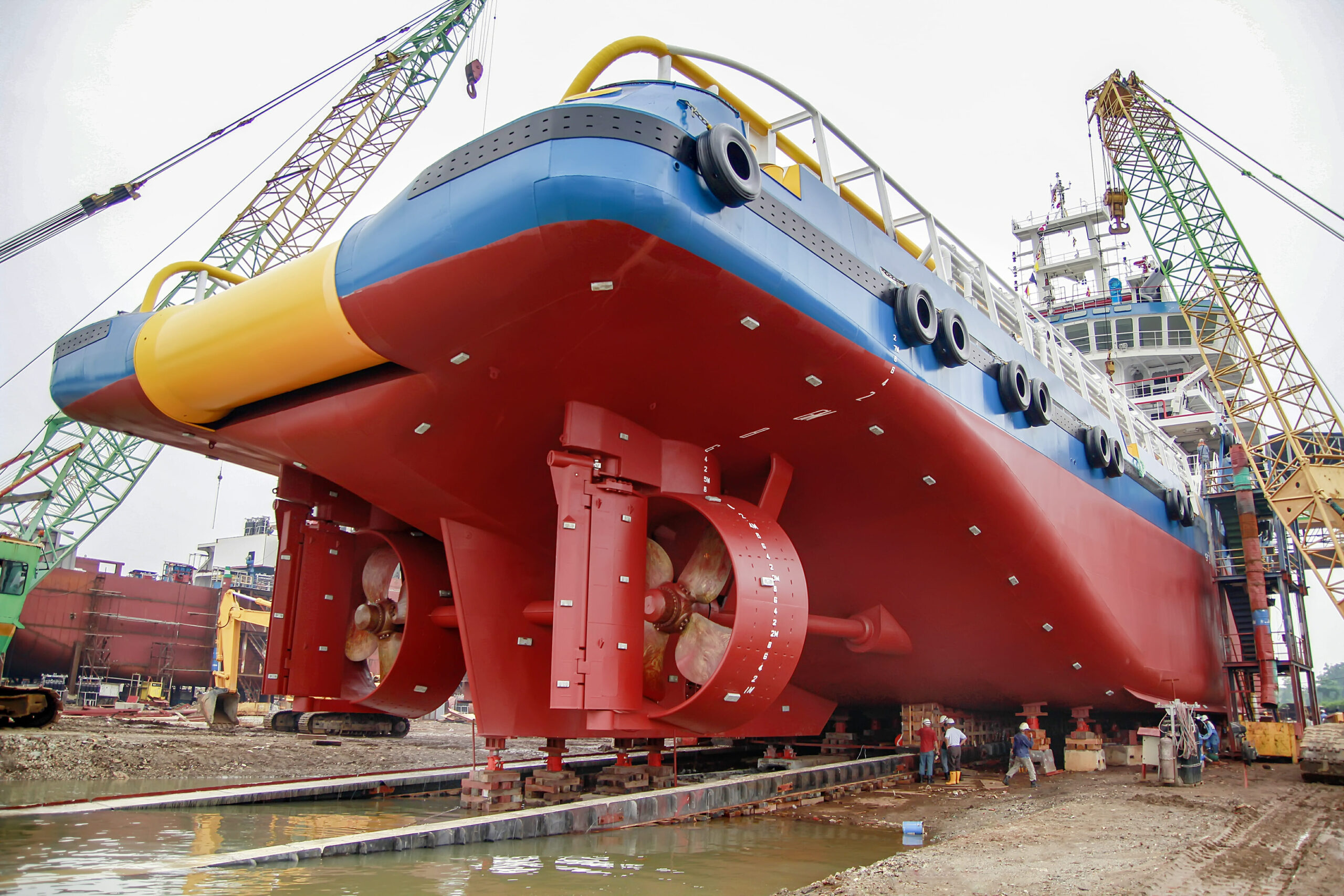
Ship repair environments differ significantly from controlled new build facilities. Repair work often occurs in dry docks under pressing schedules, where salt contamination and complex geometries are constant challenges. Repair work is often outdoors.
- Surface Preparation: The non negotiable
For zinc-rich paint to function, there must be direct metal-to-metal contact between the zinc and the steel. In repair, this necessitates rigorous preparation, typically to ISO 8501-1 Sa 2.5 (Near-White Metal Blasting). Any remaining rust, mill scale, or old coating acts as an insulator, effectively “switching off” the galvanic protection.
- Edge Protection and Stripe Coating
Ships are full of “hard spots”—welds, sharp edges, and rivets—where coatings naturally become thin during drying. In repair protocols, a “stripe coat” of zinc-rich primer is manually applied to these areas before the full spray application. This ensures that the most vulnerable parts of the structure have the maximum reservoir of sacrificial zinc.
- Integration with Cathodic Protection
On the underwater hull, zinc-rich paints work in tandem with Impressed Current Cathodic Protection (ICCP) or sacrificial anodes. The paint acts as the primary defence, reducing the electrical demand on the ship’s active systems and providing a failsafe if those systems are powered down during dockage.
Economic and Structural Impact
While the initial cost of zinc-rich systems and the required abrasive blasting is higher than simpler barrier coatings, the Life Cycle Cost (LCC) is significantly lower.
- Reduced Steel Replacement:By preventing pitting and general wastage, zinc primers reduce the need for expensive repair steelwork during five-year surveys.
- Extended Maintenance Intervals:The inhibition of “rust creep” means that small areas of mechanical damage do not blossom into massive failures, allowing for localized touch-ups rather than full-scale blasting.
| Feature | Zinc-Rich Paint | Standard Epoxy Mastic |
| Protection Type | Galvanic + Barrier | Barrier Only |
| Repairability | Excellent (prevents under-film rust) | Moderate (rust spreads from chips) |
| Surface Prep | High (Sa 2.5 Blast cleaning) | Moderate (Power tool cleaning) |
| Max Service Life | 15–25 plus Years | 5–10 Years |
Zinc rich paint is more than just a coating; it is a sacrificial skin. By utilizing the electrochemical properties of zinc, vessel operators can combat the catastrophic structural degradation caused by chloride induced pitting. In the expensive world of vessel maintenance, where “time out of water” equals lost revenue, the long-term reliability of zinc rich systems provides a vital return on investment, ensuring that the vessel remains structurally sound and seaworthy for decades.

-
Product on sale
 AWEBook Volume 2Original price was: KShs 3,500.00.KShs 3,000.00Current price is: KShs 3,000.00.