
Last Updated 1 hour ago by Kenya Engineer
Construction mobilisation for the proposed Dangote East Africa Refinery in Lamu has advanced with the arrival of a second shipment of heavy machinery and equipment at the Port of Lamu, adding to the cargo delivered ahead of the project’s groundbreaking in September.
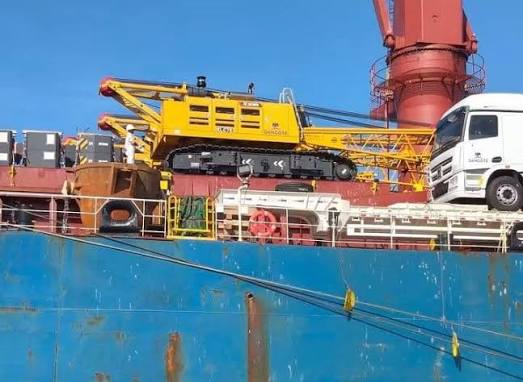
The vessel MV Great Glory arrived on 19 October carrying 154 assorted pieces of equipment destined for the refinery, according to an announcement by the Lamu Port-South Sudan-Ethiopia Transport (LAPSSET) Corridor Development Authority.
The delivery follows the arrival of MV Da Yang in late September, when the port received approximately 2,930 metric tonnes of construction machinery and materials for the project. The successive shipments mark the early mobilisation of equipment for what is planned to become one of the largest industrial facilities in East Africa.
The refinery’s groundbreaking ceremony took place on 30 September in Mokowe, Lamu County, attended by President William Ruto, Dangote Group President Aliko Dangote and other African leaders. The project is intended to establish a major petroleum-processing and petrochemical complex on Kenya’s northern coast.
An integrated industrial complex
The refinery is designed to process up to 700,000 barrels of crude oil per day, with production intended to serve Kenya and other markets across the region.
Beyond petroleum refining, the planned development includes a 1,000 MW power plant, fertiliser manufacturing and chemical production facilities. These components could establish a broader industrial base around the refinery, creating demand for electricity infrastructure, industrial utilities, storage facilities and transport services.
The project is expected to take approximately 40 months to construct, with operations targeted for early 2030. Its delivery will require the coordinated development of processing facilities, supporting utilities, material-handling systems and logistics infrastructure. ict.go.ke
Crude oil for the facility is expected to come from Kenya’s oilfields in Turkana, supplemented by supplies from other regional producers and international markets. The availability and transportation of suitable crude supplies will be important to the refinery’s eventual operations.
Lamu Port’s role in the construction programme
The arrival of successive equipment shipments highlights the role of the Port of Lamu in supporting large-scale industrial investment.
Heavy project cargo requires suitable port infrastructure, lifting equipment, cargo-handling capacity and onward transportation arrangements. As construction advances, the port is expected to handle additional machinery, materials and other supplies needed at the refinery site.
The longer-term implications extend beyond the construction period. An operational refinery of the proposed scale would require reliable arrangements for bringing in crude oil and distributing finished petroleum products to domestic and regional markets.
This could generate demand for specialised maritime services, petroleum storage, pipelines, road transport and other logistics facilities. The actual requirements will depend on the final design of the refinery and the infrastructure developed to connect it with suppliers and customers.
The project also gives the wider Lamu Port-South Sudan-Ethiopia Transport Corridor an opportunity to develop around a major industrial customer. LAPSSET was conceived as a network of transport and supporting infrastructure connecting Kenya’s northern coast with inland markets, including South Sudan and Ethiopia.
The refinery could strengthen the economic case for complementary infrastructure, although the wider benefits will depend on how effectively the port, transport links and industrial facilities are integrated.
Implications for Kenya’s petroleum supply
Kenya has depended on imported refined petroleum products since the closure of its Mombasa refinery in 2013. The proposed Lamu facility could introduce substantial domestic refining capacity and position the country as a supplier to neighbouring markets.
However, processing capacity alone will not determine the project’s contribution to energy security. Reliable crude supplies, competitive operating costs, environmental compliance, product distribution and access to regional markets will all influence its commercial performance.
The planned power plant and chemical manufacturing facilities could also expand the project’s impact beyond fuel production. If delivered as proposed, the complex could support industrial activity and create opportunities for engineering, construction, operations and maintenance services.
For Kenya’s engineering sector, the construction programme presents potential opportunities across civil and structural works, mechanical installation, electrical systems, instrumentation, power generation and industrial process engineering. The extent to which local firms and professionals participate will depend on procurement arrangements, technical requirements and the availability of relevant skills.
The second equipment shipment is an early development in a project whose wider significance will become clearer as construction progresses. For Lamu Port, it provides further evidence of the industrial cargo it can handle. For Kenya, the central challenge will be to translate the refinery investment into reliable energy infrastructure, competitive industrial production and lasting economic benefits.
-
Product on sale
 AWEBook Volume 2Original price was: KShs 3,500.00.KShs 3,000.00Current price is: KShs 3,000.00.