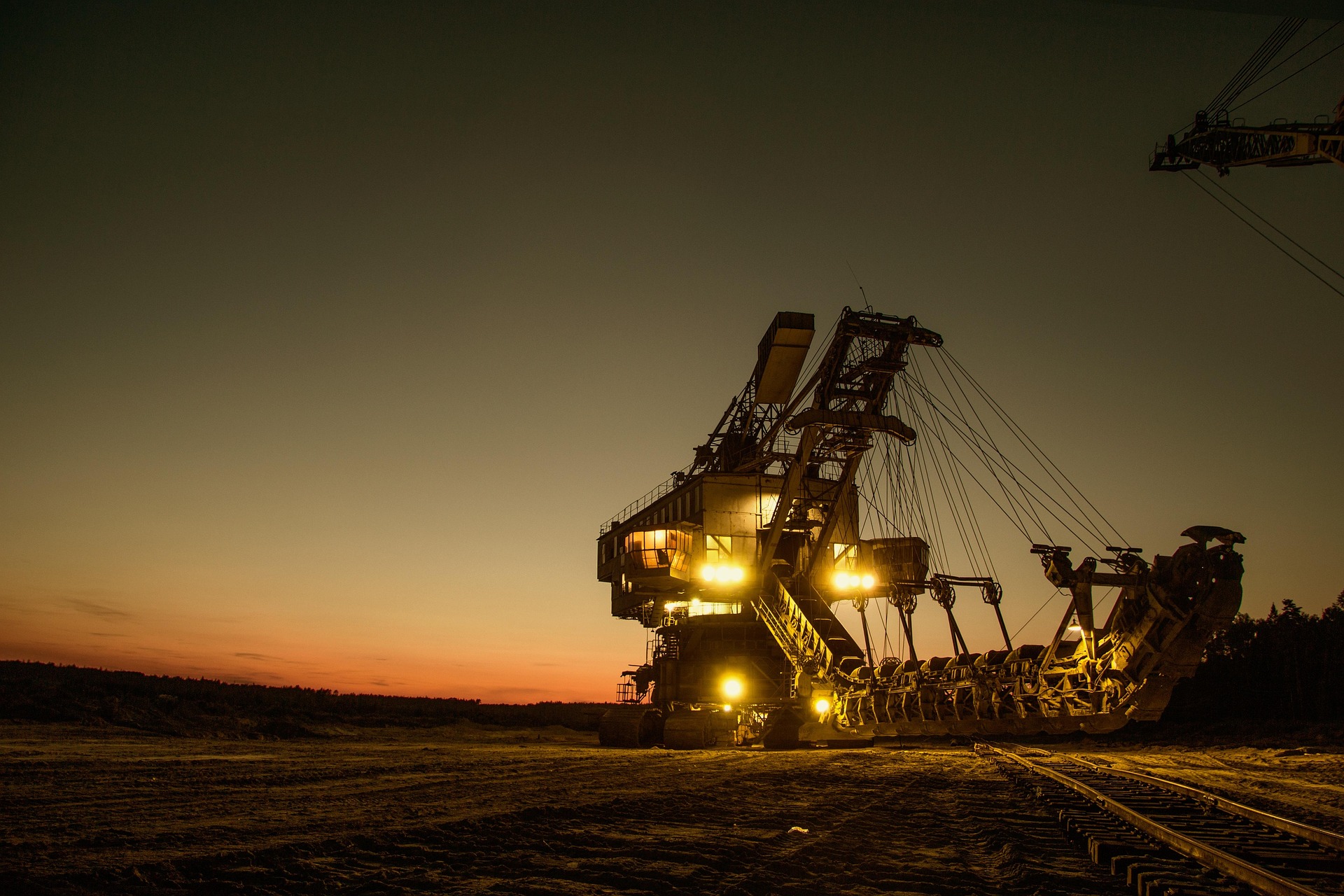

Last Updated 1 hour ago by Kenya Engineer
Africa is seeking to change its position in the global mineral economy. Instead of exporting raw materials and importing finished products, governments are pressing for more refining, smelting and manufacturing to take place within their borders.
The economic argument is compelling. Processing minerals locally can create industrial employment, develop technical skills, expand domestic supply chains and retain a greater share of the value generated from natural resources. It can also support industries that consume processed materials, including construction, transport, electrical equipment and manufacturing.
Yet the transition from extracting minerals to processing them presents a different set of infrastructure requirements. A mine can operate with power systems designed around extraction, crushing and material handling. An alumina refinery, aluminium smelter or steelworks requires a much larger and more dependable industrial energy supply.
Recent developments across Africa illustrate the scale of the challenge. Guinea is pursuing an ambitious expansion of its alumina refining capacity, while South Africa’s ferrochrome industry has been weakened by escalating electricity costs. In Mozambique, drought-related power constraints have also affected aluminium production.
These cases point to a central question for African engineers, policymakers and investors: can the continent build the electricity infrastructure required to support its mineral-processing ambitions without making the resulting products uncompetitive?
Guinea’s bauxite wealth meets the electricity constraint
Guinea illustrates both the opportunity and the challenge.
The West African country has become the world’s largest producer and exporter of bauxite, the principal ore used in aluminium production. Much of this material has historically left the country for processing elsewhere, particularly in China, where established refining and industrial systems convert it into higher-value products.
Guinea now wants a greater share of that processing activity to take place domestically.
At African Mining Week in Cape Town in October 2026, representatives of the country’s mining authorities outlined plans to establish five alumina refineries by 2030, targeting combined annual production capacity of between seven million and eight million tonnes. Three refineries were reported to be under construction.
The country is also pursuing iron ore processing and future steel production linked to its substantial mineral resources.
The scale of these ambitions makes electricity infrastructure a determining factor in whether the projects can be delivered and operated economically.
According to a Reuters report published on 19 October, Guinea generates approximately 1,000 megawatts of electricity, predominantly from hydropower. A senior adviser to the country’s mines minister estimated that national generation capacity would need to reach between 5,000 MW and 10,000 MW to support its wider industrialisation ambitions, including aluminium smelting.
These figures represent an estimate of future industrial requirements rather than a confirmed power-demand forecast for the proposed refineries alone. Nevertheless, they indicate the scale of the energy challenge confronting Guinea as it seeks to expand mineral processing. Reuters
The country’s electricity supply also faces seasonal pressures. Guinea exports electricity to neighbouring West African countries during periods of stronger hydropower availability but imports power during drier months.
For an energy-intensive industrial facility, this creates a planning challenge. Production cannot be designed around the assumption that electricity will always be available at the same cost and volume throughout the year.
An alumina refinery requires substantial and continuous energy inputs for its industrial processes. Aluminium smelting places even greater demands on electricity supply, with interruptions potentially disrupting production and damaging the economics of the operation.
Building additional generation capacity is therefore only part of the solution. Guinea must also develop transmission infrastructure, strengthen grid reliability and establish arrangements that can sustain industrial demand through seasonal variations in supply.
Its experience demonstrates why mineral development and electricity planning cannot be treated as separate exercises.
Mineral processing requires more than a power plant
The relationship between electricity and mineral processing extends beyond the quantity of power generated.
Industrial facilities need electricity delivered at the required voltage, at a predictable cost and with sufficient reliability to maintain production. A country may have substantial generation potential yet remain unable to supply an industrial zone if transmission capacity is inadequate or the grid cannot withstand the additional load.
This makes mineral-processing investment an integrated infrastructure undertaking.
A new refinery or smelter may require dedicated transmission lines, substations, grid reinforcement and backup arrangements. Depending on the process, the facility may also need significant water supplies, wastewater treatment, industrial roads, railway connections and bulk-material handling systems.
The engineering requirements differ by mineral and processing stage.
Bauxite must be refined into alumina before it can be used as the principal feedstock for conventional aluminium smelting. Alumina refining relies on industrial heat and other energy inputs, while aluminium smelting requires large quantities of electricity to maintain the electrochemical process.
Iron ore processing has a different energy profile. Crushing, grinding, concentration and pelletising require power, while producing iron or steel introduces further requirements for heat, fuels and process technology. The precise energy demand depends on the ore characteristics, plant configuration and production route.
These differences have important implications for investment decisions.
A country planning an alumina refinery should not automatically assume that it can support an aluminium smelter using the same power infrastructure. The two stages have different electricity requirements and operating conditions.
Likewise, a proposal to produce steel from local iron ore needs to be assessed against the availability and cost of electricity, suitable fuels, transport infrastructure and markets for the finished product.
The central engineering task is to match the proposed processing technology with an electricity system designed to support its actual operating requirements.
That requires power-system studies and industrial demand forecasts to be undertaken before major investment commitments are finalised, rather than treating electricity as a utility that can be added after a factory has been planned.
South Africa shows what happens when electricity becomes uncompetitive
South Africa offers a contrasting example.
The country has an established industrial base, mineral-processing expertise and significant deposits of minerals used in steelmaking and other industrial applications. Yet its ferrochrome industry has suffered as electricity costs have risen and competition from international producers has intensified.
Ferrochrome, an alloy of iron and chromium, is an important input in stainless-steel production. Its manufacture through conventional smelting is energy-intensive, making electricity prices and supply reliability central to plant economics.
Reuters reported on 19 October that fewer than a dozen of South Africa’s 66 ferrochrome smelters were operating. The country’s ferrochrome industry has faced substantial pressure from electricity costs, which have risen dramatically since 2008, according to industry representatives cited in the report. Reuters
The consequences extend beyond the smelters themselves.
When processing facilities close, countries risk losing industrial jobs, technical expertise and demand for supporting services. Mining operations may continue producing ore, but a larger share of the value created through processing can accrue to countries with more competitive industrial energy supplies.
China’s position in ferrochrome production illustrates this wider competitive challenge. Access to processing capacity, industrial infrastructure and competitive electricity has helped it develop a strong position in mineral refining and manufacturing.
South Africa’s experience is a warning against assuming that possessing abundant mineral reserves and an established engineering industry automatically guarantees successful downstream processing.
Industrial electricity must be affordable enough to support viable production, while remaining financially sustainable for the institutions responsible for supplying it.
This is a difficult balance. Electricity tariffs must account for generation, transmission, maintenance and financing costs. At the same time, prices that make domestic processing uncompetitive can undermine the industrial investment that governments seek to attract.
The solution is not necessarily to subsidise electricity indefinitely. It is to develop a power system that can deliver dependable energy at a cost consistent with the needs of productive industry.
Mozambique highlights the vulnerability of industrial power supply
Mozambique provides another example of the relationship between energy security and mineral processing.
South32 placed its Mozal aluminium smelter on care and maintenance in 2026 after a drought affected power supply, according to the Reuters report published on 19 October. Reuters
The development highlights a vulnerability that can arise when an energy-intensive industrial facility depends heavily on a power system exposed to hydrological conditions.
Hydropower can provide relatively low-carbon electricity and support industrial development. However, where supply depends on rainfall and reservoir conditions, drought can reduce available generation or increase competition for electricity.
The appropriate response depends on the power system and the economics of the industrial facility. Options may include diversifying generation sources, improving transmission interconnections, expanding storage where technically and economically appropriate, and establishing carefully designed arrangements for backup supply.
For industrial consumers, however, additional generation capacity does not automatically translate into reliable electricity. The location of generation, transmission constraints, contractual arrangements and the ability of the grid to respond to disruptions all influence the quality of supply.
The Mozal example reinforces the need to evaluate electricity security over the operating life of a project rather than relying solely on the capacity available when an investment decision is made.
Can renewable energy power Africa’s mineral-processing ambitions?
Africa’s energy resources offer several potential pathways for supporting industrial growth.
Hydropower, geothermal energy, solar and wind can contribute to electricity supply, while natural gas and other dispatchable sources may play a role in some power systems. The appropriate mix will vary by country, industrial process, resource availability and cost.
Guinea is exploring additional energy investments as it seeks to expand domestic mineral processing. Its options include economically viable power projects across several technologies, according to the Reuters report.
The challenge is to develop an electricity supply that is both competitive and sufficiently dependable for industrial operations. Reuters
Renewable energy can be attractive to mineral-processing companies seeking to manage electricity costs and reduce the emissions associated with production. Yet the contribution of variable renewable generation must be assessed against the operating requirements of each industrial process.
Solar and wind output varies with weather and time of day. Their integration into an industrial power system may require a combination of grid capacity, storage, complementary generation, flexible demand or other measures to maintain the required level of supply.
Hydropower can offer dispatchable generation where reservoir conditions permit, but its reliability must be assessed against drought risk and competing demands for water.
Geothermal energy can provide firm electricity in suitable locations, although exploration, drilling and plant development involve their own costs and risks.
Gas-fired generation may offer dispatchable supply where gas is available at a competitive price, but fuel infrastructure, import dependence, price volatility and emissions must be considered.
For some energy-intensive industries, the challenge is especially demanding. Aluminium smelting, for example, requires a highly stable electricity supply. A project that relies on intermittent power without adequate balancing or backup arrangements may face production disruptions that undermine its commercial viability.
The engineering response is therefore not to select a preferred energy technology in isolation. It is to design a system around the plant’s load profile, reliability requirements, location and long-term operating economics.
Transmission infrastructure is as important as generation
Africa’s mineral deposits are not always located near major electricity-generation centres or established industrial networks.
This geographical separation can create substantial infrastructure requirements. New mines, refineries and processing zones may need transmission lines and substations to connect them to the grid. In some locations, dedicated power generation may be considered where the existing network cannot provide the necessary capacity.
Such projects require coordination between mining companies, electricity utilities, transmission operators, governments and financiers.
The timing of infrastructure delivery is particularly important. If a refinery is completed before the necessary transmission capacity is available, the plant may be unable to operate at its intended output. Conversely, building power infrastructure for an industrial project that is subsequently delayed or cancelled can leave utilities and other customers carrying the cost of underused assets.
Integrated planning can reduce these risks.
Mining and industrial development plans should be assessed alongside electricity demand forecasts, grid expansion requirements and the financing arrangements needed to deliver supporting infrastructure.
Industrial clusters may offer one approach. Locating processing facilities near shared power infrastructure, transport links and other industrial services can help distribute infrastructure costs across several users.
However, the viability of such clusters depends on the scale and timing of demand, the availability of feedstock, the distance to markets and the ability to coordinate investment across different projects.
The same principle applies to regional power trade. Cross-border electricity interconnections can broaden the range of available supply and help countries balance differences in generation resources and demand. But regional trade cannot replace investment in domestic transmission networks or guarantee that electricity will be available when neighbouring countries also face shortages.
For mineral-processing projects, the relevant question is whether the entire system—from generation through transmission and delivery to the industrial plant—can provide the required electricity at a sustainable cost.
Power infrastructure must be planned alongside mineral policy
Several African governments are using mining licences, tax incentives and other policy measures to encourage investors to establish processing facilities locally.
Guinea’s strategy includes encouraging investment in domestic refining and processing, while linking mineral development with supporting infrastructure. Its approach reflects a broader effort to retain more value from the continent’s mineral wealth. Reuters
However, incentives cannot compensate indefinitely for an electricity system that makes industrial production uneconomic.
A refinery may receive favourable tax treatment and reliable access to mineral feedstock, but still struggle if electricity is expensive or frequently interrupted. A smelter may be close to a mine but remain commercially unviable if the cost of delivering power outweighs its logistical advantages.
The investment decision must consider the complete production chain.
That includes the price and consistency of mineral feedstock, the cost of electricity, water availability, transport and port infrastructure, access to capital, regulatory stability and the existence of committed buyers.
These elements must be developed in parallel. Building a refinery before establishing a viable electricity supply can delay production and increase costs. Expanding generation without credible industrial demand can expose investors and utilities to underused capacity.
Financing is another constraint. Power plants, transmission lines, refineries and smelters are capital-intensive assets with long development periods. Their financing structures must account for construction risks, future demand, operating costs and the ability of industrial customers to meet their contractual obligations.
Development finance institutions and private investors can help mobilise capital, but projects still require sound technical preparation and credible commercial arrangements.
The objective should be to create conditions in which mineral-processing facilities can operate competitively over their full economic life, rather than merely attract initial investment announcements.
What does this mean for Kenya?
Kenya’s industrialisation ambitions make these developments relevant even though the country is not a major producer of every mineral discussed.
The country has pursued manufacturing growth under its broader development agenda and has an electricity system with a substantial renewable-energy contribution. Yet industrial expansion depends not only on the quantity of electricity generated, but also on its cost, reliability and availability where new factories are located.
The International Energy Agency’s Kenya 2024 review identifies electricity affordability, grid performance and investment in transmission and distribution infrastructure as important issues for the country’s energy development. It also notes the importance of improving system efficiency and attracting investment into the electricity sector. IEA
For Kenya, the lesson is not that its power system must replicate the requirements of an aluminium smelter or a large iron ore refinery. It is that industrial policy and electricity planning must be developed together.
Potential growth in mineral beneficiation, cement production, construction materials, fertiliser, metal fabrication and other energy-consuming industries would require a clear assessment of their electricity demand and operating requirements.
Where processing industries are concentrated in industrial parks or special economic zones, the planning process should establish whether existing networks can accommodate the proposed loads and what additional investment is needed.
It should also examine the implications for other electricity consumers. Industrial expansion can increase electricity sales and support wider economic activity, but poorly coordinated demand growth can place pressure on networks and require costly investment.
The economic case for new industrial loads depends on the value they create relative to the cost of supplying them.
For Kenya’s engineers, this presents an opportunity to contribute at the planning stage. Electrical engineers can assess demand profiles, grid capacity and power quality. Mechanical and chemical engineers can evaluate process-energy requirements and opportunities for efficiency. Civil and structural engineers can support industrial buildings, water infrastructure and transport connections, while environmental engineers assess emissions, water use and waste management.
Industrialisation is not simply a question of constructing factories. It requires a coordinated system of infrastructure that allows those factories to operate productively and competitively.
Building the infrastructure before the opportunity is lost
Africa’s mineral wealth provides a foundation for industrial growth, but it does not guarantee it.
Guinea’s plans to expand alumina refining show the potential for countries to move beyond exporting raw materials. South Africa’s ferrochrome difficulties demonstrate how expensive electricity can weaken an established processing industry. Mozambique’s experience shows that dependence on vulnerable power supplies can disrupt production even where industrial capacity already exists.
Together, these developments expose a common challenge: mineral-processing ambitions must be supported by electricity infrastructure that is reliable, affordable and designed around industrial demand.
The required investment extends beyond power plants. It includes transmission lines, substations, grid reinforcement, appropriate supply arrangements and, where necessary, complementary generation and storage. These systems must be planned alongside mines, refineries, transport networks and industrial markets.
The sequence matters. Countries that attract mineral-processing investments without resolving electricity constraints risk creating facilities that operate below capacity or fail to compete internationally. Those that coordinate power infrastructure with credible industrial demand stand a better chance of retaining more value from their natural resources.
Africa’s industrialisation debate is often framed around who owns its minerals and where they are processed. The engineering challenge is equally fundamental: can the continent supply the energy required to turn those resources into competitive industrial products?
Until that question is answered through practical investment in generation, transmission and industrial power systems, the ambition to move from raw mineral exports to higher-value manufacturing will remain difficult to realise.
-
Product on sale
 AWEBook Volume 2Original price was: KShs 3,500.00.KShs 3,000.00Current price is: KShs 3,000.00.