





Last Updated 11 months ago by Kenya Engineer
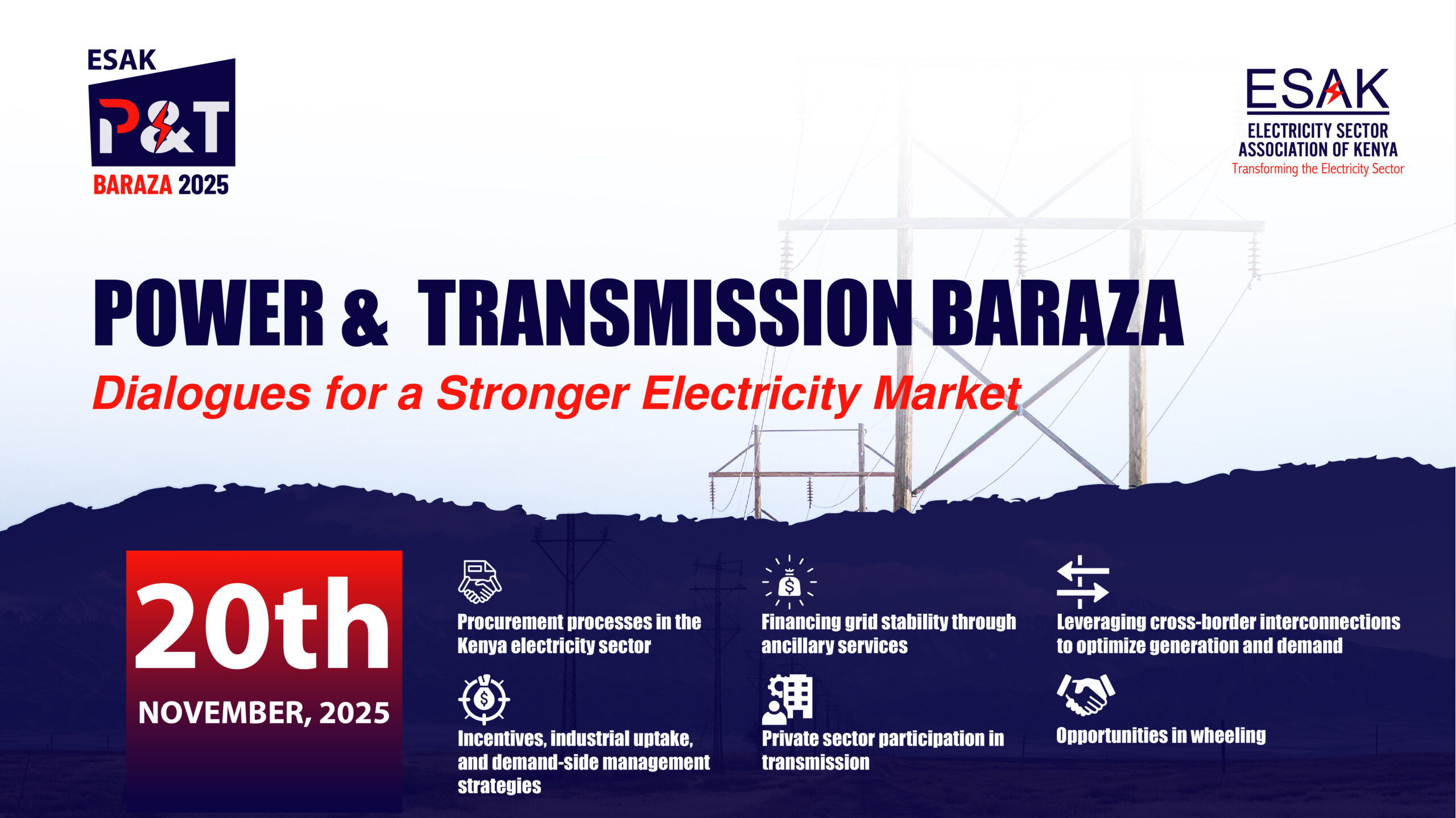
The 20th November 2025 inaugural Power & Transmission Baraza, convened by the Electricity Sector Association of Kenya (ESAK), brought together the country’s leading voices in generation, transmission, regulation, and utility operations. Held in Nairobi, the forum provided timely insights into Kenya’s electricity landscape.
A Sector at a Turning Point
ESAK Chairperson Eddy Njoroge set the tone with a reminder that real progress begins with bold, honest conversations. Kenya, he noted, enjoys a strong renewable energy base built through decades of deliberate investment. Yet meeting peak demand remains challenging, and reliance on imports — over 10% of current supply — exposes the country to regional uncertainty.
Njoroge welcomed the lifting of the IPP moratorium on 12 November, saying it had renewed investor confidence and opened space for new capital inflows into the sector. He underscored the need for reliable, predictable power to support both households and industries.
Demand Is Rising — and So Are Expectations
One of the striking themes of the morning was Kenya’s shifting demand profile. Eng. Julius Riungu warned that peak demand has now exceeded available generation, a situation that had long been signaled in EPRA forecasts. He further urged Kenya Power to introduce off-peak industrial tariffs to help absorb the large volumes of underutilized power during off-peak hours, noting that monetizing this idle capacity would support both system stability and industrial consumers seeking lower-cost operating windows.
He reminded participants that demand growth will not slow — and called for urgent sector-wide education to ensure policymakers grasp the seriousness of the moment.
Representing Kenya Power’s CEO, Eng. Rosemary Oduor reported that Kenya’s electricity access now stands at 76%, with total grid length exceeding 320,000 km. She described the utility’s ‘delegated’ central role in demand forecasting and transmission planning, and highlighted growing enquiries from data centres and crypto-mining operations. Her message was clear: the sector needs sober conversations free from political sensationalism, and a united front as demand accelerates.
Generation Realities: Diversity, Flexibility, and Security
Henry Muthanja, CEO of IberAfrica, offered a firm reminder that Kenya requires a diversified generation mix. Thermal power, he explained, still plays a strategic role because of its speed of deployment, flexible location, rapid dispatching capability, and the possibility of converting from HFO to LNG when gas becomes available.
He argued that focusing solely on renewables without strategic balancing could leave the country exposed. Meanwhile, Allan Munyua of Kipeto Energy highlighted how wind farms like Kipeto provide strong output during evening hours, supporting the grid during its busiest period.
Transmission: The Beating Heart of Industrial Growth
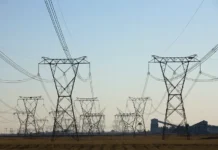
Transmission emerged as one of the day’s most critical topics. Both KETRACO and Kenya Power underscored that wayleave acquisition and land negotiations remain major impediments to timely rollout of high-voltage infrastructure.
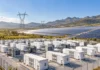
Eng. Kipkemoi, Acting MD of KETRACO, explained that variability from wind and solar requires advanced grid-stabilization equipment. The company is now tendering for STATCOMs to strengthen voltage and frequency stability. However, he noted that traditional financing models are strained, and the sector must embrace alternative financing and private-sector participation in transmission development.
Grid Stability & Regulatory Innovation
Kenya Power’s David Syengo, General Manager for Network Management, described challenges in managing voltage, frequency, and evening peak demand—issues that directly affect industrial operations. Equipment upgrades, he said, are urgently needed.
From the regulatory front, Dr. John Mutua of EPRA announced ongoing work on a pricing framework for ancillary services — a critical step toward modernizing the grid and remunerating stabilizing technologies. He emphasized that Kenya has developed strong experience in generation, but the “next frontier” lies in innovative transmission funding models, including monetizable lines and new PPD structures.
A Baraza Aligned to Kenya’s Industrial Future
With manufacturing prioritized under national economic goals such as the Bottom-Up Economic Transformation Agenda (BETA), the insights from the baraza are timely:
-
Off-peak tariffs can attract energy-intensive manufacturers seeking competitive cost structures.
-
Stable evening peak power safeguards industries with continuous production lines.
-
Expanded transmission networks will ensure new industrial parks and SEZs receive adequate and reliable power.
-
Regulated ancillary services open pathways for smart grids and industrial-grade stability.
-
Investor confidence, boosted by the lifted moratorium and coordinated planning, will drive new generation and industrial capacity.
A New Chapter for the Power Sector
The baraza concluded with a shared understanding: Kenya’s electricity sector is at a pivotal juncture. Its decisions today — on tariffs, transmission, system stability, private investment, and planning — will determine how effectively the country can support manufacturing, industrialisation, and economic diversification.
For a first-time event, the ESAK Power & Transmission Baraza achieved something rare: it moved the conversation from isolated institutional mandates to a shared national vision — one where electricity is not just a service, but a cornerstone of Kenya’s industrial transformation.
-
Product on sale
 AWEBook Volume 2Original price was: KShs 3,500.00.KShs 3,000.00Current price is: KShs 3,000.00.













)