Last Updated 9 months ago by Kenya Engineer
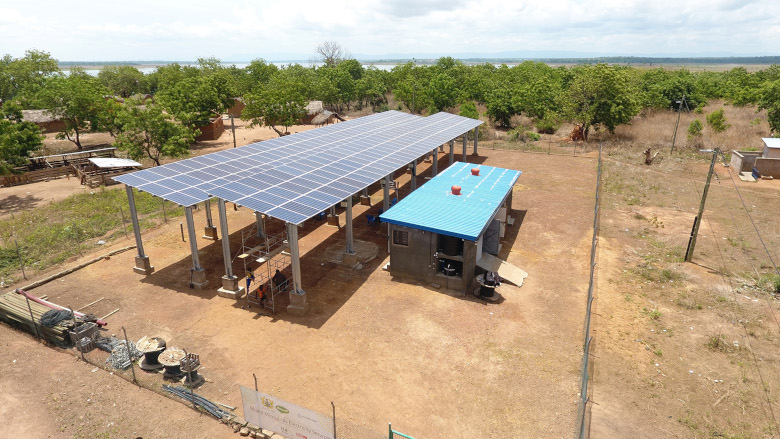
As Africa intensifies its push toward universal access to clean energy, Sierra Leone has taken a decisive step by opening its rural electrification agenda to the private sector. On January 26, 2026—marked globally as the International Day of Clean Energy—the Salone Off-Grid Renewable Energy Acceleration (SOGREA) Initiative officially launched a call inviting private developers to build and upgrade green mini-grids across rural Sierra Leone .
Backed by EUR 24 million in grant financing from the European Union and the Government of Denmark, SOGREA represents a growing African trend: blending public funding with private sector execution to close persistent electricity access gaps, particularly in rural and underserved communities .
De-risking Rural Power Investment
Implemented in partnership with the Government of Sierra Leone, and delivered through Sustainable Energy for All (SEforALL) and UNOPS, the three-year SOGREA programme is designed to reduce the financial and operational risks that have historically discouraged private investment in rural electrification.
The initiative uses performance-based capital support, with developers receiving payments only after independently verified milestones are achieved. By partially covering upfront development costs, the programme bridges the gap between the true cost of electricity supply and what rural households and small businesses can afford—allowing tariffs to remain low while expanding access.
This results-based financing model is increasingly gaining traction across Africa, where energy poverty remains most acute in rural areas despite significant renewable energy potential.
Sierra Leone’s Mini-Grid Push in Context
Sierra Leone’s approach mirrors efforts seen in countries such as Kenya, Rwanda and Nigeria, all of which have turned to decentralised energy solutions to complement national grid expansion.
In Kenya, rural electrification has largely been driven by public utilities and state-led programmes, including grid extension, last-mile connectivity projects and standalone solar initiatives under agencies such as the Rural Electrification and Renewable Energy Corporation (REREC). While Kenya boasts one of Africa’s cleanest power mixes—over 90 per cent from renewables—the challenge has been extending reliable electricity to sparsely populated and economically marginal areas.
Mini-grids have begun to fill this gap, particularly in northern and coastal regions, but private sector participation has often been slowed by high upfront costs, tariff uncertainty and long payback periods. Sierra Leone’s SOGREA model directly addresses these barriers by guaranteeing transparent tariff-setting and milestone-based subsidies, offering a framework Kenya and other African states may find instructive.
Rwanda, for example, has made notable progress through structured public–private partnerships, while Nigeria has aggressively promoted mini-grids through regulatory reforms and targeted incentives. Sierra Leone is now positioning itself firmly within this cohort of reform-oriented energy markets.
Beyond Power: Economic and Social Impact
The implications of SOGREA extend far beyond electricity connections. Reliable, affordable power underpins rural economic transformation—supporting agro-processing, refrigeration, small manufacturing, digital services, health facilities and schools.
According to Sierra Leone’s Ministry of Energy, the initiative is closely aligned with broader energy sector reforms aimed at strengthening institutional capacity and ensuring long-term sustainability.
For rural communities, access to electricity can unlock productivity, improve service delivery and reduce reliance on costly and polluting diesel generators.
This mirrors experiences in Kenya, where electrified trading centres and agricultural zones have shown measurable gains in income generation, service quality and youth employment.
A Regional Signal to Investors
One of the most significant aspects of SOGREA is the signal it sends to renewable energy developers and investors across Sub-Saharan Africa. By offering first-come, first-served funding allocations to pre-qualified developers with proven mini-grid experience, Sierra Leone is actively positioning itself as an investable off-grid market.
Developers are required to meet technical, operational and social inclusion criteria—including smart-meter integration and at least 30 per cent female representation across operations—reflecting a growing emphasis on inclusive and future-ready energy systems.
For African countries seeking to fast-track rural electrification without overburdening public finances, this blended-finance approach offers a scalable template.
Clean Energy Access as a Development Lever
As Africa works toward Sustainable Development Goal 7 on affordable and clean energy, initiatives like SOGREA underscore a critical lesson: generation alone is not enough. Delivery models, financing structures and regulatory certainty are just as important as megawatts installed.
Kenya’s experience shows the power of strong public institutions and grid investment. Sierra Leone’s strategy highlights the growing role of private developers in decentralised energy delivery. Together, these models illustrate how African countries can adapt solutions to local realities while pursuing a shared objective—universal, affordable and clean energy access.
As the continent’s energy demand grows, and climate pressures intensify, the success of such initiatives may well define Africa’s energy future.
-
Product on sale
 AWEBook Volume 2Original price was: KShs 3,500.00.KShs 3,000.00Current price is: KShs 3,000.00.