

Last Updated 3 months ago by Kenya Engineer
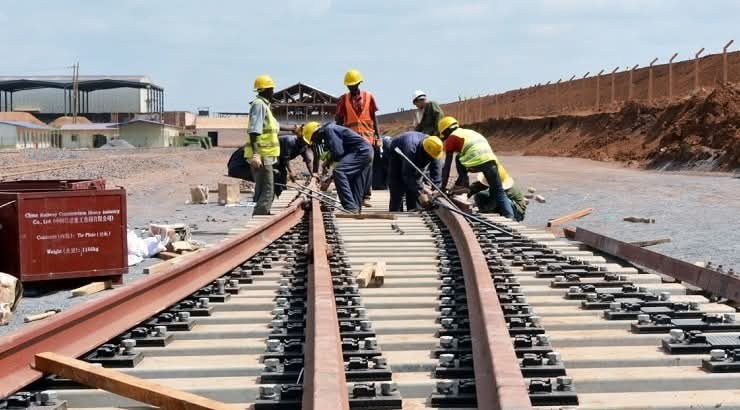
Kenya has embarked on a defining phase of its infrastructure development with the extension of the Standard Gauge Railway (SGR) from Naivasha to Kisumu and onward to Malaba. The project, whose groundbreaking was presided over by William Ruto in Kibos, Kisumu County, signals a decisive shift from isolated transport investments toward an integrated, high-capacity economic corridor designed to reshape trade, industry, and regional connectivity.
In framing the significance of the project, the President drew a direct parallel with the historic Uganda Railway, whose construction at the turn of the 20th century fundamentally altered the spatial and economic landscape of East Africa. That line not only connected the port of Mombasa to the hinterland but also determined the rise and fall of urban centres, elevating Nairobi into a regional hub while cementing Kisumu as a key inland port. More than a century later, the SGR extension is being positioned as a modern equivalent—an infrastructure system capable of redefining where opportunity resides and how economies interact.
The western extension completes a critical missing link in Kenya’s standard gauge network. Having already connected Mombasa to Nairobi and extended the line to Naivasha, the country is now pushing the railway deeper into its productive hinterland. The Naivasha–Kisumu segment, spanning approximately 264 kilometres, traverses some of Kenya’s most economically significant regions, including the agricultural zones of Narok, Bomet, Kericho and Nyamira. From Kisumu, a further 107 kilometres will extend the line to Malaba at the border with Uganda, forming a near-continuous rail corridor of close to 1,000 kilometres from the Indian Ocean to the western frontier.
From an engineering standpoint, this phase introduces a higher degree of complexity than earlier sections of the SGR. The alignment cuts across varied terrain, from escarpments and highland gradients to densely cultivated agricultural zones and urban interfaces. These conditions demand sophisticated geotechnical design, extensive earthworks, and resilient drainage systems capable of withstanding seasonal variability. The project is not merely a linear transport system; it is a large-scale civil engineering undertaking requiring precision in alignment, structural integrity in bridge and culvert systems, and careful integration with existing infrastructure.
Equally significant is the shift in how the railway is conceptualised. Unlike the initial phases, which primarily addressed port-to-inland connectivity, the western extension is explicitly designed as part of a multimodal logistics network. The line will interface with inland container depots such as Naivasha, connect to lake transport through Kisumu, and integrate with regional road systems. This approach addresses longstanding inefficiencies in cargo movement, particularly the costly and time-consuming transitions between transport modes that have historically characterised trade along this corridor.
The economic rationale for the project is anchored in the high cost of logistics across the region. Transport expenses can account for as much as 30 to 40 percent of the final value of goods, while cargo movement from Mombasa to Malaba currently takes up to 80 hours, and longer to reach Kampala. By introducing a high-capacity, standardised rail system, the SGR extension is expected to reduce freight costs significantly while shortening transit times, thereby improving the competitiveness of regional industries.
However, the most transformative aspect of the project lies in its framing as an economic corridor rather than a transport line. The government has signalled its intention to anchor industrial parks, logistics hubs and commercial centres along the route, effectively aligning infrastructure with production and trade. This model has proven successful in other regions of the world, where transport corridors have catalysed industrial clustering and regional development. In the Kenyan context, it opens up new possibilities for value addition in agriculture, expansion of manufacturing, and growth of logistics-driven enterprises.
The corridor runs through some of the country’s most productive agricultural zones, and its impact on the sector is expected to be substantial. Tea from Kericho, dairy products from Bomet, grains from the Rift Valley and fish from Lake Victoria stand to benefit from faster, more reliable access to both domestic and export markets. By reducing transport bottlenecks and improving efficiency, the railway could play a critical role in lowering post-harvest losses and enhancing the overall value chain.
At a regional level, the SGR extension represents a significant step toward deeper East African integration. The presence of Yoweri Museveni at the groundbreaking ceremony underscored the cross-border importance of the project. The line is intended to connect seamlessly with Uganda’s rail network and, in the longer term, extend to Rwanda, South Sudan and the eastern Democratic Republic of Congo. This vision aligns with earlier regional agreements to develop a standardised railway system capable of supporting intra-African trade and reducing dependence on fragmented transport networks.
The performance of the existing SGR provides a useful benchmark for what the extension could achieve. Since its commissioning, the railway has transported over 15 million passengers and more than 45 million tonnes of freight, demonstrating its capacity to shift significant volumes from road to rail. The western extension is expected to build on this foundation, particularly in freight movement, where the greatest economic gains are likely to be realised.
For the engineering community, the project represents both an opportunity and a responsibility. Large-scale rail infrastructure demands a wide range of expertise, from civil and structural engineering to signalling, telecommunications, and operations management. It also requires adherence to high standards of safety, quality, and sustainability, particularly given the scale and long-term impact of the investment.
At the same time, the project is not without its challenges. Financing such infrastructure remains complex, requiring sustained commitment and innovative funding models. The full benefits of the corridor will depend on coordinated development across borders, as well as effective integration with other modes of transport. Environmental considerations and community engagement will also play a critical role in ensuring that the project delivers inclusive and sustainable outcomes.
Ultimately, the Naivasha–Kisumu–Malaba extension of the SGR is more than a railway project. It is an attempt to reconfigure the economic geography of Kenya and the wider East African region, shifting from fragmented, high-cost logistics systems to an integrated, efficient transport network. If successfully implemented, it could redefine how goods move, how industries grow, and how regions connect—laying the foundation for a new phase of industrial and economic transformation.
As William Ruto observed, the infrastructure built today will shape the fortunes of generations to come. In that context, the SGR western extension stands not only as a major engineering undertaking, but as a strategic investment in the future of the region.
-
Product on sale
 AWEBook Volume 2Original price was: KShs 3,500.00.KShs 3,000.00Current price is: KShs 3,000.00.