
Last Updated 2 months ago by Kenya Engineer
The Finnish communications specialist will supply intercom systems and tactical headsets for multiple military vehicle platforms, alongside training and commissioning services.
Finnish communications technology company Savox Communications Oyj is supporting a Middle Eastern defence customer through a communications modernisation programme involving multiple military vehicle platforms.
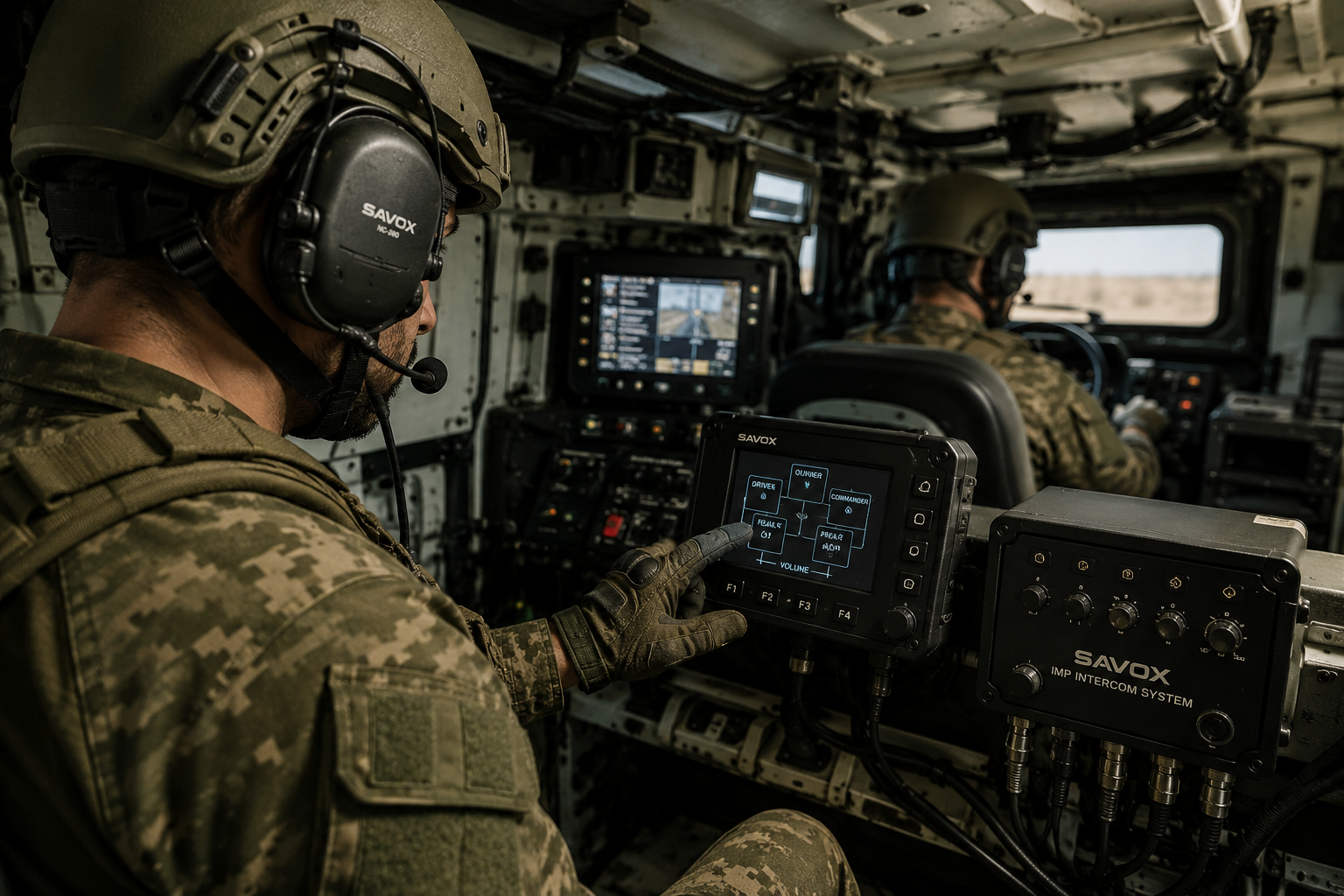
The programme includes the delivery of Savox IMP Intercom Systems and Savox Noice COM-200 Tactical Headsets, together with related training and commissioning services. Deliveries will take place in accordance with the agreed project schedule.
Savox has not disclosed the identity of the customer, the number of vehicles involved, the contract value or the specific military platforms being modernised.
The company said the programme continues a customer relationship spanning more than a decade, reflecting continued confidence in its communications solutions, integration expertise and lifecycle support capabilities.
Communications as part of vehicle modernisation
Military vehicle modernisation is not limited to engines, armour, mobility or weapons systems. Reliable communications are also essential to the operation of vehicle crews, particularly where personnel must coordinate activities in noisy, demanding or rapidly changing environments.
Savox’s IMP Intercom Systems are designed to support crew communications and coordination across military vehicle platforms. The company’s tactical headsets are intended to provide integrated communications capabilities for personnel operating in challenging conditions.
The combination of intercom systems and headsets forms part of the communications layer within a vehicle platform, connecting crew members and supporting the exchange of information during operations.
For vehicle operators, the engineering challenge extends beyond the equipment itself. Communications systems must be integrated into the vehicle’s existing architecture, remain reliable under demanding operating conditions and be supported throughout the platform’s service life.
Integration and lifecycle support
According to Savox, the programme includes training and commissioning services, highlighting the importance of implementation support alongside hardware delivery.
In defence communications, equipment procurement is only one part of the modernisation process. Successful deployment also depends on system integration, configuration, testing, user training and ongoing maintenance.
“Long-term customer relationships and close cooperation are essential in supporting defence modernization programs,” said Jerry Kettunen, Chief Executive Officer of Savox Communications.
“We are pleased to continue working with this customer and to support the development of its operational communications capabilities across multiple vehicle platforms.”
The company said the programme demonstrates its expertise in integrated communications solutions, platform integration and lifecycle support for defence customers.
A broader communications technology market
Savox operates in the critical communications sector, supplying equipment and solutions for defence, law enforcement, fire and rescue, and industrial markets.
Its portfolio includes tactical communication controllers, hearing protection, rugged ICT devices, search and rescue systems, and intercom and vision solutions.
The company reported revenue of €56.1 million in 2025.
The Middle East remains an important market for Savox, with the company continuing to support defence organisations through long-standing customer relationships and regional engagement.
While the latest programme is not accompanied by details of the customer’s vehicle fleet or the wider modernisation budget, it illustrates the role of communications technology in maintaining the effectiveness of complex defence platforms.
For military vehicle operators, the ability to communicate reliably between crew members is a fundamental operational requirement. As defence forces modernise their fleets, communications systems are increasingly being treated as an integrated part of the vehicle rather than an accessory added after the main platform has been delivered.

-
Product on sale
 AWEBook Volume 2Original price was: KShs 3,500.00.KShs 3,000.00Current price is: KShs 3,000.00.