
Last Updated 2 hours ago by Kenya Engineer
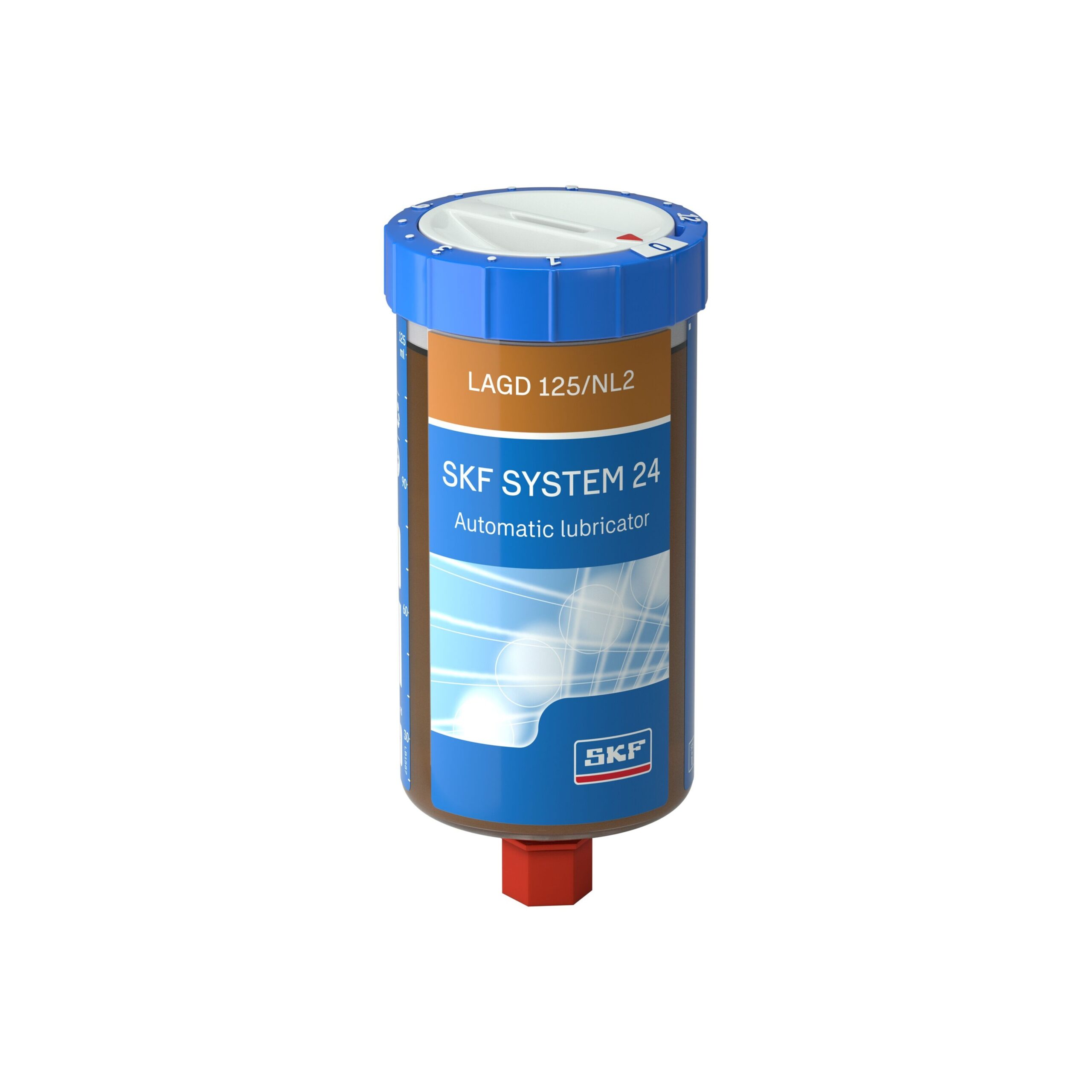
SKF has expanded its LGNL 2 lithium-free bearing grease range to include two 125 ml formats for automatic lubrication systems, extending the options available to maintenance teams using the calcium-based grease in industrial applications.
The additions comprise the LAGD 125/NL2 automatic lubricator and the LGNL 2/SD125 refill. They complement existing pack sizes of 400 g, 5 kg, 18 kg and 180 kg, giving users additional options for supplying grease to bearings and maintaining lubrication schedules.
According to SKF, the expanded range is designed to deliver performance comparable to established extreme-pressure (EP) greases, including products used in demanding bearing applications.
The company says the new formats respond to customer demand for an EP 2 grease suitable for automatic lubricators, while allowing users to adopt a lithium-free formulation without sacrificing the performance characteristics required for their applications.
Grease formulation and bearing protection
Introduced in 2023, SKF LGNL 2 was developed around a calcium-based thickener intended to combine properties associated with conventional lithium greases with the economic advantages of an alternative thickener technology.
Grease performance depends on more than the thickener alone. The base oil, additives, consistency and resistance to water and mechanical working all influence how a lubricant performs under operating conditions.
SKF describes LGNL 2 as offering water resistance and mechanical stability comparable to characteristics traditionally associated with lithium-based greases. These properties are important in applications where moisture ingress, vibration, load and repeated mechanical working can affect lubricant performance.
Extreme-pressure (EP) greases are formulated to help protect lubricated surfaces under demanding load conditions. However, the suitability of a particular grease depends on factors including bearing design, operating temperature, speed, load, contamination exposure and the lubrication interval.
For maintenance engineers, grease selection should therefore be based on the equipment manufacturer’s recommendations and the operating conditions, rather than thickener type or product classification alone. Compatibility with the grease already in use should also be established before changing formulations or mixing products.
Automatic lubrication and maintenance
The introduction of the 125 ml formats extends the range’s use in automatic lubrication arrangements. Such systems can deliver controlled quantities of grease at prescribed intervals, helping maintenance teams maintain lubrication schedules and reduce the need for frequent manual intervention.
Correct application remains essential. Both insufficient and excessive lubrication can contribute to bearing problems, while incorrect lubricant selection can compromise performance under particular operating conditions. Automatic lubricators must consequently be configured to suit the bearing’s requirements, with dispensing rates and replacement intervals established accordingly.
The availability of smaller formats may also offer practical flexibility for equipment using compatible automatic lubricators, particularly where lubrication points are distributed across a plant or where routine maintenance requires controlled, repeatable grease delivery.
SKF’s expanded LGNL 2 range provides another option for facilities seeking to standardise lubrication products across their operations. The extent to which the grease can replace an existing product will depend on the equipment specifications, operating environment and confirmation of lubricant compatibility.
The expansion reflects a wider development in industrial lubrication, where formulation, application method and maintenance requirements increasingly need to be considered together to support bearing reliability and effective asset management.

-
Product on sale
 AWEBook Volume 2Original price was: KShs 3,500.00.KShs 3,000.00Current price is: KShs 3,000.00.