Last Updated 1 day ago by Kenya Engineer
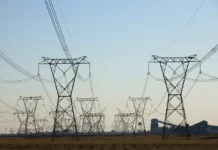
Electricity transmission lines are a familiar feature of Kenya’s expanding infrastructure. They cross farmland, skirt urban settlements, pass near industrial areas and traverse communities where homes and businesses continue to develop. Their presence is essential to economic growth, but the land around them requires careful management to protect the public, workers and the reliability of the electricity network.
As transmission infrastructure expands, questions about the safety of living, working or conducting business near high-voltage lines deserve closer attention. Some concerns relate to immediate electrical hazards, including electric shock, electrical arcing and falling conductors. Others concern the long-term effects of electromagnetic fields. Construction activities, unauthorised development and inadequate maintenance access introduce further risks.
The engineering challenge is to ensure that electricity can be transmitted reliably while maintaining appropriate separation between electrical infrastructure and surrounding land uses. Achieving this requires sound engineering design, effective regulation, responsible development and public understanding of the risks.
Understanding the risks around transmission lines
Kenya’s transmission network includes lines operating at 132 kV, 220 kV, 400 kV and 500 kV high-voltage direct current (HVDC), among other system voltages. These installations operate at voltages substantially higher than those encountered in ordinary domestic electrical systems.
Direct contact with an energised conductor can cause fatal electric shock, severe burns and cardiac arrest. However, physical contact is not always necessary for an accident to occur. Under certain conditions, electricity can cross an air gap between an energised conductor and a nearby object. This phenomenon, known as electrical arcing or flashover, is influenced by voltage, distance, environmental conditions and the geometry of the objects involved.
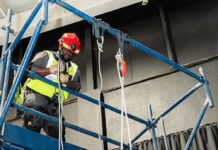
Construction equipment, crane booms, scaffolding, long metal pipes and elevated roofing materials can create dangerous situations when brought too close to overhead conductors. Workers may underestimate the risk because the wires appear distant or because no physical contact has occurred.
The position of overhead conductors also changes under operating conditions. Temperature affects conductor sag, while wind can cause conductors to move laterally. A clearance that appears adequate from the ground should never be used as the basis for approving construction or lifting operations.
Fallen conductors present another serious hazard. A damaged line may remain energised, and automatic protection systems can sometimes re-energise a circuit after an initial fault. The public must treat fallen or unusually low-hanging wires as live until the responsible utility confirms otherwise.
Transmission towers and their foundations also require protection. Unauthorised excavation, poorly controlled drainage, vehicle impact and interference with tower components can compromise structural stability. The resulting danger may extend well beyond the person carrying out the activity.
These hazards explain why transmission corridors require controlled land use, regular inspection and clear procedures for work carried out nearby.
Understanding wayleaves and development restrictions
One of the principal safeguards around transmission infrastructure is the wayleave, a designated corridor that provides for the installation, operation, inspection and maintenance of a transmission line. The corridor helps maintain separation between the infrastructure and incompatible land uses while preserving access for maintenance and emergencies.
KETRACO’s published Resettlement Policy Framework identifies the following wayleave widths for its transmission infrastructure.
| Transmission voltage | Published total wayleave width | Width on each side of centreline |
|---|---|---|
| 132 kV | 30 metres | 15 metres |
| 220 kV | 40 metres | 20 metres |
| 400 kV | 60 metres | 30 metres |
| 500 kV HVDC | 60 metres | 30 metres |
These figures provide a practical reference for land-use planning and public awareness. They represent the overall corridor width, generally measured across the transmission line’s centreline, rather than the minimum distance between an individual conductor and a person, building or piece of equipment.
The requirements for a particular project may extend beyond these published figures, depending on the approved alignment, tower configuration, terrain, conductor characteristics, engineering assessments and applicable legal conditions. The established wayleave boundaries and project-specific requirements should be confirmed with the responsible utility before land is purchased, subdivided or developed.
Within a wayleave, land use is subject to restrictions intended to protect people and preserve access. KETRACO’s published guidance identifies permanent buildings and certain tall vegetation as prohibited uses, while activities such as gardening, parking and recreation may be permitted subject to the applicable conditions. These permissions should not be interpreted as blanket approval for every activity or structure.
For prospective property owners, developers and business operators, the presence of a transmission line does not automatically establish that every nearby activity is unsafe. Equally, a building should not be presumed safe merely because it has stood near a line for years without an incident.
A workshop operating outside the restricted corridor may be able to function safely, provided its activities and equipment comply with the applicable requirements. A warehouse, school, market or residential building placed within a restricted corridor presents a different set of concerns, including electrical clearances, public exposure and obstruction of maintenance access.
The appropriate course is to obtain confirmation from the utility before construction begins. County planning authorities, landowners and developers should establish the applicable restrictions early enough to incorporate them into site layouts, building designs and construction programmes.
Electromagnetic fields and the question of long-term health
Concerns about living near high-voltage transmission lines frequently extend beyond the immediate risk of electric shock. Residents may worry about whether prolonged exposure to electromagnetic fields could cause cancer or other illnesses.
Alternating-current transmission lines produce electric and magnetic fields at extremely low frequencies, typically 50 hertz in Kenya’s power system. Electric fields arise from electrical voltage, while magnetic fields are associated with the current flowing through the conductors. Both decrease with distance from their sources, although the rate of decline depends on the configuration and operating conditions of the installation.
The two fields behave differently around buildings. Electric fields can be reduced by common materials and conductive barriers, including walls and metal structures. Magnetic fields pass through many ordinary building materials with relatively little attenuation. A house wall may consequently reduce the electric field indoors without producing a comparable reduction in the magnetic field.
The World Health Organization (WHO) has assessed the possible health effects of these extremely low-frequency electromagnetic fields. Its findings provide an important basis for discussing the subject without overstating what scientific research has established.
What the WHO says about cancer
The WHO’s Environmental Health Criteria Monograph No. 238, published in 2007, reviewed the scientific evidence on extremely low-frequency electric and magnetic fields. The assessment considered epidemiological studies, laboratory research, possible biological mechanisms and evidence relating to several health outcomes.
One of the principal findings concerned childhood leukaemia. Pooled epidemiological studies had identified a statistical association between childhood leukaemia and long-term average residential magnetic-field exposures above approximately 0.3 to 0.4 microtesla (µT). Some studies reported roughly twice the risk observed at lower exposure levels.
This finding requires careful interpretation. The 0.3–0.4 µT range is an exposure level associated with the observation in epidemiological studies. It is not a demonstrated threshold at which magnetic fields begin causing cancer, nor does an exposure above that range establish that a child will develop the disease.
The WHO concluded that the evidence was not strong enough to establish a causal relationship. Methodological limitations, including possible selection bias, weaken the epidemiological evidence. Research has also failed to identify an accepted biological mechanism explaining how the low-level fields involved might cause cancer, while animal studies have largely been negative.
The International Agency for Research on Cancer (IARC), a WHO agency, classified extremely low-frequency magnetic fields as possibly carcinogenic to humans in 2002. This is a Group 2B classification. It indicates limited evidence of a possible cancer hazard, not proof that exposure causes cancer. The WHO’s subsequent assessment found that the association with childhood leukaemia remained unresolved.
The WHO also reviewed other proposed health effects, including adult cancers, reproductive outcomes, cardiovascular disease, neurological conditions and behavioural effects. It found the evidence supporting an association with these outcomes to be considerably weaker than that concerning childhood leukaemia.
For communities living near transmission lines, the scientifically responsible conclusion is that a possible association has been observed for one specific health outcome, but causation has not been established. It would be inaccurate to claim that living near a transmission line inevitably causes cancer. It would also be inaccurate to claim that every question about long-term exposure has been conclusively settled.
What do exposure measurements mean?
The strength of a magnetic field is commonly expressed in microtesla, while electric-field strength is measured in volts per metre. These measurements describe exposure; they do not, by themselves, diagnose a health risk.
The WHO’s published guidance notes that magnetic fields directly beneath large transmission lines can reach several microtesla, depending on the line and its operating conditions. Electric fields beneath such lines can also be substantially higher than those normally encountered inside homes. Both fields generally decrease with distance, although actual levels vary with line design, loading, conductor height and other factors.
These variations are important when interpreting claims about the safety of a particular property. Distance from a tower alone does not establish the magnetic field at a residence because the nearest conductor may be located some distance from the tower. The electrical loading of the line and the geometry of the conductors also affect exposure.
Where a credible concern exists, appropriately qualified specialists can measure electric and magnetic fields using recognised procedures. Measurements should be taken at relevant locations and, where necessary, under representative operating conditions. The results can then be compared with the applicable exposure guidelines and national requirements.
What precautions does the WHO recommend?
The WHO distinguishes between the established effects of sufficiently high short-term exposure and the uncertainty surrounding some possible long-term effects of low-level exposure. International exposure guidelines developed by the International Commission on Non-Ionizing Radiation Protection (ICNIRP) are designed to protect against established adverse effects. The WHO encourages governments to adopt appropriate exposure standards and to investigate sources where exposure could exceed applicable limits.
The WHO also recognises that scientific uncertainty can justify proportionate, low-cost precautionary measures. Its 2007 assessment recommended that authorities consider such measures where they can be implemented without undermining the health, social and economic benefits of electricity.
For transmission planning, this supports sensible decisions at the design stage. Where alternative routes or layouts are technically and economically reasonable, planners can consider whether exposure can be reduced through appropriate siting and design. New buildings and sensitive public facilities should be planned in accordance with established wayleave restrictions and relevant exposure requirements. Field measurements may also help resolve concerns about existing installations.
Precaution should remain proportionate to the evidence. The WHO’s findings do not establish that every home near a transmission line requires relocation, nor do they justify declaring an entire neighbourhood medically unsafe. Decisions about individual sites should be informed by applicable land-use restrictions, engineering assessments and credible exposure data.
The distinction between electromagnetic-field exposure and immediate electrical hazards is equally important. Even where measured fields comply with relevant exposure guidelines, the danger from touching a conductor or bringing a crane too close to an energised line remains. Compliance with electromagnetic-field limits cannot replace electrical clearances and wayleave controls.
Protecting residents, businesses and construction sites
Public safety begins with respect for the established transmission corridor and an understanding of the activities that can create electrical hazards.
Developers should confirm the wayleave boundaries before purchasing or developing land. Construction plans involving roofing, scaffolding, excavation, cranes, concrete pumps or long metal materials should be referred to the utility for the necessary assessment and approval.
Equipment operators must account for the full movement of booms, suspended loads and materials, including wind and the possibility of unexpected movement. Clearance requirements must be based on the voltage and applicable rules, not visual estimates or a universal distance borrowed from another jurisdiction.
Businesses located near transmission infrastructure should incorporate electrical hazards into their occupational safety procedures. Site inspections, worker induction, equipment-height assessments, access controls and communication with the utility can help prevent avoidable incidents.
Residents should avoid climbing transmission towers, interfering with tower components or entering restricted areas. Kites, drones and long objects should be kept away from conductors. Unauthorised excavation around tower foundations can also introduce structural hazards.
Fallen or damaged conductors should be reported immediately to the utility. Members of the public should remain well clear and warn others against approaching the affected area. No one should attempt to move a fallen wire, rescue a person by touching a potentially energised object or assume that a line is safe because it appears inactive.
Where electromagnetic-field exposure is a concern, residents should seek credible information and, where justified, professional assessment rather than rely on speculation or measurements taken with unsuitable equipment.
Safety requirements for transmission-line workers
Transmission-line maintenance combines electrical hazards with working at height, lifting operations, changing weather and difficult access. Safe work requires a controlled system rather than reliance on personal experience alone.
Where practicable, maintenance should be undertaken with the line de-energised. The utility’s approved procedures should cover isolation, protection against accidental re-energisation, testing for absence of voltage and the application of protective earthing. Switching instructions or verbal assurances alone do not establish that a circuit is safe to approach.
Some operations may require work on energised equipment. Such activities must be restricted to appropriately qualified and authorised personnel using approved live-line methods. These methods require specialised training, suitable and tested equipment, controlled working distances, appropriate weather conditions and emergency arrangements.
Working at height requires suitable fall-protection systems, inspection of climbing equipment and anchorage points, competent supervision and a workable rescue plan. A fall-arrest harness is only one part of the system; workers must also be able to receive assistance promptly if an incident occurs.
Before work begins, the team should undertake a documented job safety analysis covering line status, the task, weather, access, lifting operations, communication and emergency response. Contractors should be subject to the same essential safety controls as the utility’s own personnel.
Construction workers and other non-specialists also need specific protection when operating near overhead lines. Crane operators, excavators, scaffolding teams and transport crews should know the line owner, establish the voltage and obtain the required clearance instructions before work begins. De-energisation or other approved controls should be arranged where necessary.
If machinery contacts an overhead conductor, workers should not rush to touch the equipment or assist someone who may be in contact with it. The operator should remain inside the cab if it is safe to do so, warn others to stay away and contact the utility and emergency services. If immediate danger forces the operator to leave, they should avoid simultaneously touching the machine and the ground and follow emergency instructions.
Kenya’s legal and regulatory framework
Kenya’s safety framework includes legislation governing electricity infrastructure, occupational safety and land use.
The Energy Act, 2019 provides the principal statutory framework for the energy sector, including provisions relating to rights of way and wayleaves. Sections 170 onwards address the acquisition and use of land for energy infrastructure. These provisions must be read alongside applicable land legislation, project approvals and the legal arrangements governing individual corridors.
The Energy and Petroleum Regulatory Authority (EPRA) regulates the electricity supply industry and oversees relevant licensing and technical requirements. The applicable grid codes and electricity regulations provide additional requirements for the development and operation of electricity infrastructure.
The Occupational Safety and Health Act, 2007 establishes duties relating to workplace safety and health. These duties are relevant to utility employees, maintenance contractors and construction teams working on or near transmission infrastructure. Employers must identify hazards, implement appropriate controls and protect workers and other persons who may be affected by their activities.
The Directorate of Occupational Safety and Health Services has a role in occupational safety oversight, while county governments exercise relevant development-planning and building-control functions. Environmental and land-use approvals may impose further conditions on transmission projects.
KETRACO, as a transmission infrastructure developer and operator, has responsibilities for the safe management of its installations, maintenance activities and wayleave corridors. Its published corridor widths provide a practical reference, but the applicable legal and technical requirements must be established for each project.
The existence of these laws does not, by itself, prevent encroachment or unsafe work. Effective protection depends on accurate corridor surveys, clear public communication, coordinated approvals, inspection and enforcement.
African and international approaches to electrical safety
There is no single continent-wide wayleave width that automatically applies to all African transmission lines. National legislation, adopted technical standards and the requirements of the relevant utility remain central to compliance.
Regional interconnected-grid initiatives, including the Eastern Africa Power Pool, support coordinated electricity-system planning and operation. International technical standards provide further guidance for electrical installations, live-line maintenance, occupational safety and electromagnetic-field assessment.
The International Electrotechnical Commission’s IEC 61936-1 addresses the design and erection of electrical power installations exceeding 1 kV AC within its stated scope. IEEE 516 provides guidance on maintenance methods for energised power lines, while IEEE 644 addresses measurements of power-frequency electric and magnetic fields around AC overhead lines.
ISO 45001 provides a framework for managing occupational health and safety through hazard identification, risk control, worker participation and continual improvement. The ICNIRP exposure guidelines provide an internationally recognised scientific basis for protection against established effects of non-ionising electromagnetic fields.
These instruments serve different purposes. A workplace management standard does not replace electrical clearance rules, and electromagnetic-field exposure guidelines do not establish the legal width of a transmission wayleave. Project teams must identify the standards and legal provisions applicable to each activity.
Making safety part of transmission planning
The safe coexistence of transmission infrastructure and surrounding communities requires coordination throughout the life of a project.
Utilities should maintain accurate records of wayleave boundaries, approved alignments, conductor clearances, inspections and reported hazards. Warning signs and public information should explain restricted activities and provide channels for reporting dangerous conditions.
County planning authorities should account for existing transmission infrastructure when considering development proposals. Developers should consult the utility early enough to incorporate restrictions into site layouts and construction plans. Where settlements expand around existing lines, the responsible agencies should assess encroachment and emerging risks rather than rely exclusively on the circumstances that existed when the line was commissioned.
New transmission projects should integrate public safety into route selection, environmental and social assessment, design, land acquisition and construction. Existing networks require periodic inspection, effective maintenance and consistent enforcement of land-use restrictions.
Communities, in turn, need practical information about the reasons for these restrictions. A transmission corridor is not vacant land available for unrestricted development. It is part of an essential electricity system that requires space for safe operation and maintenance.
High-voltage transmission lines are indispensable to modern economies. Their safe coexistence with homes, businesses and workplaces depends on sound engineering, effective regulation and a clear understanding of the risks. The objective is not to create unnecessary fear of transmission infrastructure, but to prevent avoidable accidents, address legitimate health concerns responsibly and make public safety an integral part of how electricity networks are planned and managed.

-
Product on sale
 AWEBook Volume 2Original price was: KShs 3,500.00.KShs 3,000.00Current price is: KShs 3,000.00.