
Last Updated 57 mins ago by Kenya Engineer
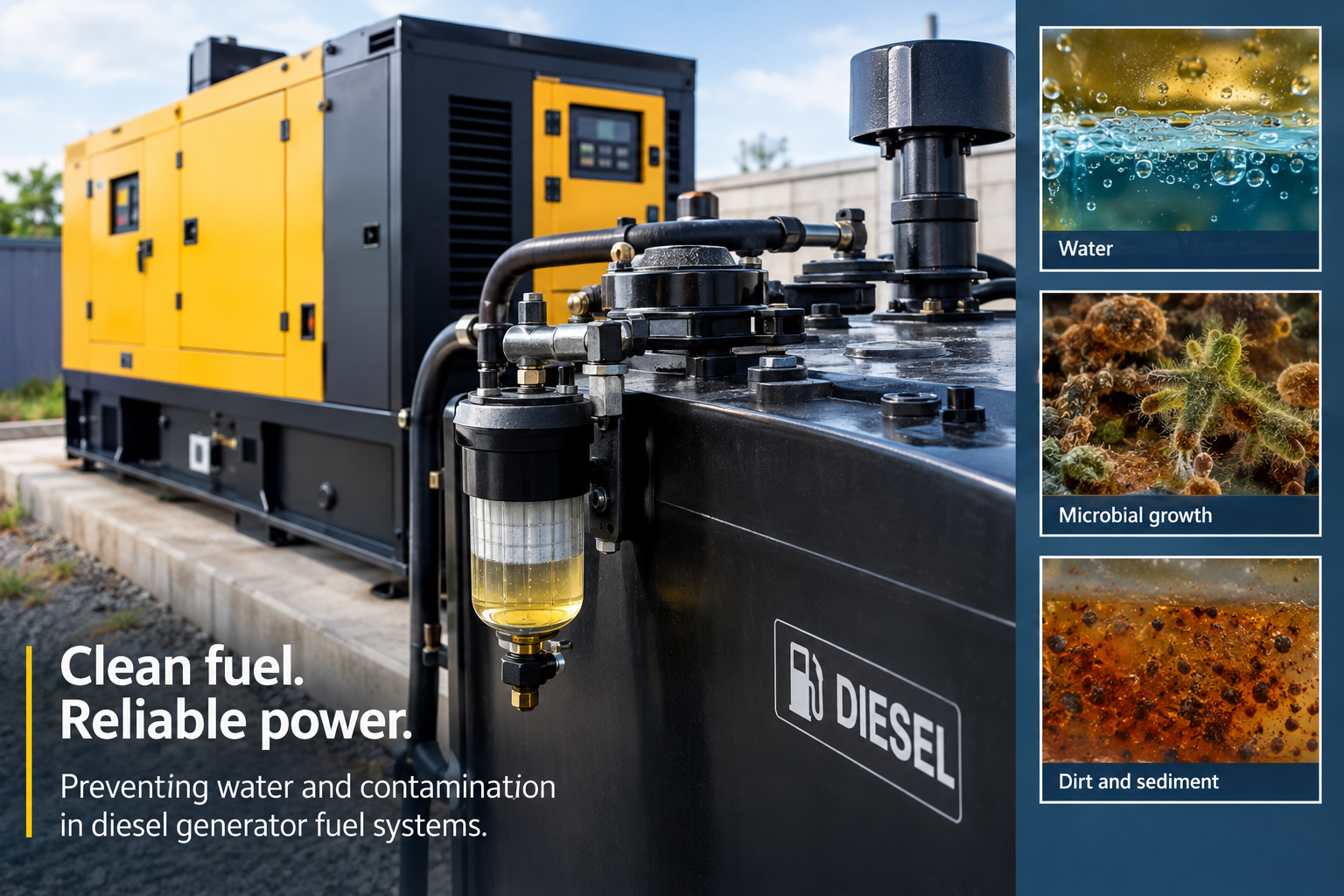
When a standby generator fails to start or stalls under load, the engine is often blamed. Yet many such failures originate in the fuel system. Water, dirt and microbial growth in stored diesel can block filters, damage injection equipment and cause erratic engine performance. Where fuel remains in storage for weeks or months between outages, contamination can develop unnoticed until the generator is called upon to operate.
How water enters diesel storage
Water enters stored fuel through several routes. As fuel is consumed and temperatures fluctuate, air moves in and out through the tank vent. Moisture in this air can condense on cooler tank surfaces and collect at the bottom. Water may also arrive with fuel deliveries or enter through inadequately sealed filling points, inspection covers and other openings exposed to rain.
Because water is denser than diesel, free water generally settles at the bottom of the tank. If it accumulates around the fuel pickup, it can enter the fuel system and compromise engine operation. Even when it does not reach the engine directly, water creates conditions that encourage microbial growth and corrosion.
The microbial problem
The interface between water and diesel provides a favourable environment for certain bacteria and fungi. These organisms can use components of the fuel as nutrients, producing colonies and deposits commonly referred to as diesel bug.
As contamination develops, microbial material can accumulate on tank surfaces and form sludge. Some organisms also produce acidic by-products that contribute to corrosion. Detached material can enter fuel lines and block filters, restricting the supply of fuel to the engine.
The resulting symptoms may include difficult starting, irregular running, reduced power and unexpected shutdowns. A generator may start normally but lose power as a contaminated filter becomes increasingly restricted, potentially leaving the installation without backup power during an extended outage.
Biodiesel blends require particular attention because their properties can affect water absorption, fuel stability and susceptibility to microbial contamination. Storage conditions, fuel composition and the length of time fuel remains unused all influence the risk.
Dirt and sediment
Water is not the only threat to stored diesel. Rust from steel tanks, dust entering through filling points and sediment introduced during deliveries can accumulate over time.
Modern diesel injection systems operate at high pressures and depend on closely controlled clearances. Contaminating particles can accelerate wear in pumps and injectors, while accumulated debris can restrict filters and reduce fuel flow.
Filtration provides an important barrier, but it does not eliminate the need to maintain clean storage tanks and control contamination during fuel delivery and handling. Repeated filter blockages may indicate an underlying storage or fuel-quality problem rather than a need for more frequent filter replacement alone.
Practical measures for site engineers
1. Design the tank for inspection and drainage.
Tank design should allow water and sediment to be removed safely. A suitable low-point drain, accessible inspection points and a fuel pickup positioned above the tank bottom help prevent accumulated contamination from entering the engine. Tank slopes and drainage arrangements should follow the tank design and applicable safety requirements.
Filling points should be secured against unauthorised access and water ingress. Properly selected and maintained tank vents can also help limit moisture entry while allowing the tank to breathe as fuel levels change.
2. Install appropriate water-separating filtration.
A primary fuel filter incorporating a water separator can remove free water and particulate contamination before fuel reaches the engine. Where a transparent collection bowl is fitted, operators may be able to identify accumulated water during routine inspections.
The separator should be checked and drained according to the manufacturer’s instructions. Filter selection should account for the generator’s fuel flow requirements, the engine manufacturer’s specifications and the expected level of contamination.
3. Check for water at the tank bottom.
Periodic checks at designated sampling or drain points help identify water before it causes operational problems. Monthly checks may be a useful starting point for some installations, but inspection frequency should reflect fuel turnover, tank design, environmental conditions and the consequences of generator failure.
More frequent checks may be appropriate where contamination has occurred previously or where fuel is stored for long periods. Water and contaminated fuel should be collected and disposed of safely rather than released into the surrounding environment.
4. Manage fuel turnover.
Reducing the time diesel remains in storage limits the opportunity for fuel degradation and the accumulation of contamination. Tank capacity should be matched to expected demand, delivery arrangements and the duration of an anticipated outage.
Keeping tanks reasonably full can reduce the volume of humid air above the fuel and may help limit condensation, although it does not eliminate water ingress. Safe filling limits must always be observed, and older fuel should be assessed before it is retained or mixed with fresh deliveries.
5. Test and treat stored fuel when necessary.
Fuel sampling and testing are particularly valuable at installations where generator failure would have serious consequences, including hospitals, data centres and water-pumping stations. Testing can help identify water, sediment, microbial contamination and changes in fuel quality that may not be apparent from visual inspection alone.
Fuel polishing systems can remove particulate contamination and free water, depending on the equipment used. However, polishing may not resolve heavy sludge accumulation or contamination attached to tank surfaces. Where these conditions are present, tank cleaning and further inspection may be necessary.
Biocides can help control microbial contamination when selected and applied appropriately. Treatment should follow the product instructions and applicable fuel-system requirements. The source of contamination must also be addressed, since treating the fuel without removing accumulated water or deposits may allow the problem to recur.
6. Control fuel deliveries and handling.
Fuel quality can deteriorate before diesel reaches the generator site. Using reliable suppliers, checking delivery documentation and maintaining clean transfer equipment reduce the risk of introducing water and sediment into storage tanks.
Operators should inspect filling connections and avoid exposing open tank openings to rain or dust. Records of delivery dates, quantities, fuel batches and maintenance activities can help establish how long fuel has been stored and identify recurring contamination problems.
Sizing the tank appropriately
Tank capacity involves balancing fuel availability against storage duration. An undersized tank may be unable to sustain the generator throughout an extended outage, while an oversized tank can leave fuel unused for prolonged periods.
The appropriate capacity depends on the expected duration of an outage, the generator’s fuel consumption at the anticipated operating load, the required reserve and the reliability of replenishment arrangements. Consumption estimates should reflect realistic site loads rather than relying exclusively on the generator’s rated output.
For critical installations, the assessment should also account for access constraints, delivery lead times and the possibility that several facilities may require fuel during the same emergency. These considerations help establish a practical reserve without creating unnecessary long-term storage.
Include fuel in the maintenance plan
Fuel-system maintenance should form part of the generator’s documented maintenance schedule alongside checks of lubricating oil, coolant, batteries and other essential components. Visual inspections, water checks, appropriate filter replacement and periodic tank inspections help identify problems before they interrupt operation.
The frequency of these activities should reflect the operating environment, fuel-storage conditions, manufacturer recommendations and the criticality of the installation. Records should capture findings, corrective actions and any recurring signs of contamination.
A standby generator is expected to operate when normal power is unavailable. Maintaining the quality of its fuel is a basic requirement for that reliability, yet it can be overlooked when attention is concentrated on the engine and electrical systems. Consistent fuel management reduces avoidable failures and helps ensure that backup power remains available when it is needed.

-
Product on sale
 AWEBook Volume 2Original price was: KShs 3,500.00.KShs 3,000.00Current price is: KShs 3,000.00.