Last Updated 2 hours ago by Kenya Engineer
Kenya is seeking to turn its water and sanitation infrastructure pipeline into investment-ready projects ahead of the 2026 United Nations Water Conference in Abu Dhabi, as the country faces persistent gaps in access to safe water, sewerage and sanitation services.
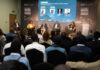
The financing challenge was a key theme at the Water, Sanitation and Irrigation Conference – Road to Abu Dhabi, officially opened in Nairobi by Cabinet Secretary for Water, Sanitation and Irrigation Eric Mugaa Murithi. The meeting brought together sector stakeholders to consolidate Kenya’s priorities ahead of the global conference, scheduled for 8–10 December 2026.
Speaking at the meeting, State Department for Water and Sanitation officials highlighted progress in expanding services while pointing to the investment needed to accelerate infrastructure development and improve delivery.
The figures presented at the conference put national water access at 76%, safely managed sanitation at 41% and sewered sanitation at 16%. The sewerage figure highlights a particular infrastructure challenge: expanding access to networks and treatment facilities capable of collecting and processing wastewater.
Water supply infrastructure requires more than developing new sources. Dams, boreholes and abstraction works must be supported by treatment plants, storage facilities, pumping stations and distribution networks. These systems also require reliable power, maintenance and sufficient operating revenue to sustain service delivery.
Sanitation presents a related but distinct challenge. Extending sewer networks requires substantial investment in collection systems, pumping infrastructure and wastewater treatment plants. In areas where conventional sewerage is impractical or too expensive, safely managed on-site sanitation and faecal sludge treatment can provide alternatives, provided that waste is collected, transported and treated appropriately.
Kenya’s investment priorities must account for these different needs, alongside population growth, urban expansion and the demands of underserved rural communities.
A central message from the conference was the need to move from projects seeking finance to investment-ready projects seeking the right financing partners. For infrastructure developers, this means preparing proposals supported by sound technical designs, credible cost estimates, land and environmental approvals, realistic implementation schedules and clear plans for operation and maintenance.
Project preparation is particularly important in water infrastructure, where the cost of construction is only one part of the long-term financial requirement. Water utilities must also be able to meet recurrent costs, manage losses, maintain equipment and generate sufficient revenue to keep systems operational. Where tariffs alone cannot cover these costs, projects may require public funding, concessional loans, grants or blended financing arrangements.
The conference was sponsored by Nation Media Group in partnership with the Embassy of Denmark in Kenya and Somalia. Its deliberations are intended to help Kenya develop a coordinated national position and identify priorities for engagement with international partners in Abu Dhabi.
The December conference will provide an opportunity for governments and other stakeholders to accelerate implementation of Sustainable Development Goal 6, which calls for universal access to water and sanitation. For Kenya, the value of that engagement will depend in part on whether it leads to financing arrangements that can move priority projects from planning to construction and, ultimately, reliable service delivery.
The task is not only to attract capital but also to ensure that it reaches projects designed to address the country’s most pressing water and sanitation needs. The test will be whether the resulting infrastructure expands access, improves reliability and delivers lasting public value.
-
Product on sale
 AWEBook Volume 2Original price was: KShs 3,500.00.KShs 3,000.00Current price is: KShs 3,000.00.