Last Updated 9 hours ago by Kenya Engineer
Industrial facilities increasingly rely on Supervisory Control and Data Acquisition (SCADA) systems to monitor equipment, control processes and alert operators to abnormal operating conditions. These systems provide real-time visibility across complex installations, from power generation plants and manufacturing facilities to water treatment works and process industries.
However, the ability to generate and display alarms does not necessarily mean that operators can easily determine what caused an incident. When a fault occurs, one abnormal condition can trigger a chain reaction across interconnected equipment and processes, producing hundreds or even thousands of alarms within a short period.
This creates a significant challenge for plant operators and maintenance engineers: distinguishing the initiating fault from the secondary events that follow.
Sequence of Events (SOE) technology and dedicated alarm management systems address this challenge by providing more accurate records of when events occur, helping engineers reconstruct incidents and investigate their underlying causes.
Understanding the sequence of events
In a complex industrial installation, equipment rarely operates in isolation. A fault affecting one component can influence several connected systems, triggering protective actions, equipment shutdowns and changes in operating conditions.
Consider a generating unit that suddenly trips. The initial fault may cause circuit breakers to operate, auxiliary systems to change state and other protective devices to respond. Each action can generate an alarm or event notification.
Within seconds, operators may be presented with a large volume of information. Although each alarm may describe a genuine change in plant conditions, the resulting list can make it difficult to establish which event initiated the disturbance.
Sequence of Events technology addresses this problem through accurate time-stamping of events at their source. By synchronising equipment against a common time reference, an SOE system can establish the chronological order of changes across different devices and control systems.
This is particularly important when information from different parts of a plant reaches the central control system at different times.
Systems that depend on polling may record events according to when information is received rather than precisely when the underlying change occurred. During a major disturbance, communication delays can make it difficult to reconstruct the actual sequence.
Source-level time-stamping preserves the chronology of events even when the information takes longer to reach the central monitoring system.
For engineers investigating equipment trips, process interruptions or protection system operations, this chronological record can provide valuable evidence when identifying the initiating fault and understanding how the disturbance propagated.
Managing alarm floods in industrial plants
The volume of alarms generated during abnormal operating conditions is a recognised challenge in industrial automation.
A single equipment failure can produce a cascade of notifications across multiple systems. In a power generation facility, for example, a generating unit trip could generate as many as 2,000 alarms within moments.
When operators are confronted with such volumes, distinguishing critical warnings from secondary notifications becomes difficult. Important information can be buried among alarms that are consequences of the original fault rather than indicators of its cause.
Alarm management seeks to address this problem through systematic alarm design, prioritisation and filtering.
EEMUA 191, the industry guidance on alarm system design and management, provides recommendations for developing effective alarm systems, including alarm prioritisation, filtering and the prevention of alarm floods.
IEC 62682:2022 also establishes principles for the management of alarm systems based on process control systems and human-machine interfaces. Its scope includes alarm and event logs and alarm historians.
These approaches recognise that an effective alarm system must do more than report changes in operating conditions. It must help operators identify which conditions require attention and what response may be necessary.
The continuing role of dedicated alarm management
Modern SCADA platforms have developed considerably, incorporating more advanced alarm handling, event logging and process visualisation capabilities.
Consequently, dedicated alarm management systems no longer occupy the same position they did when SCADA platforms offered more limited functionality. Their continued relevance depends on the requirements of individual industrial installations and how their control architectures are designed.
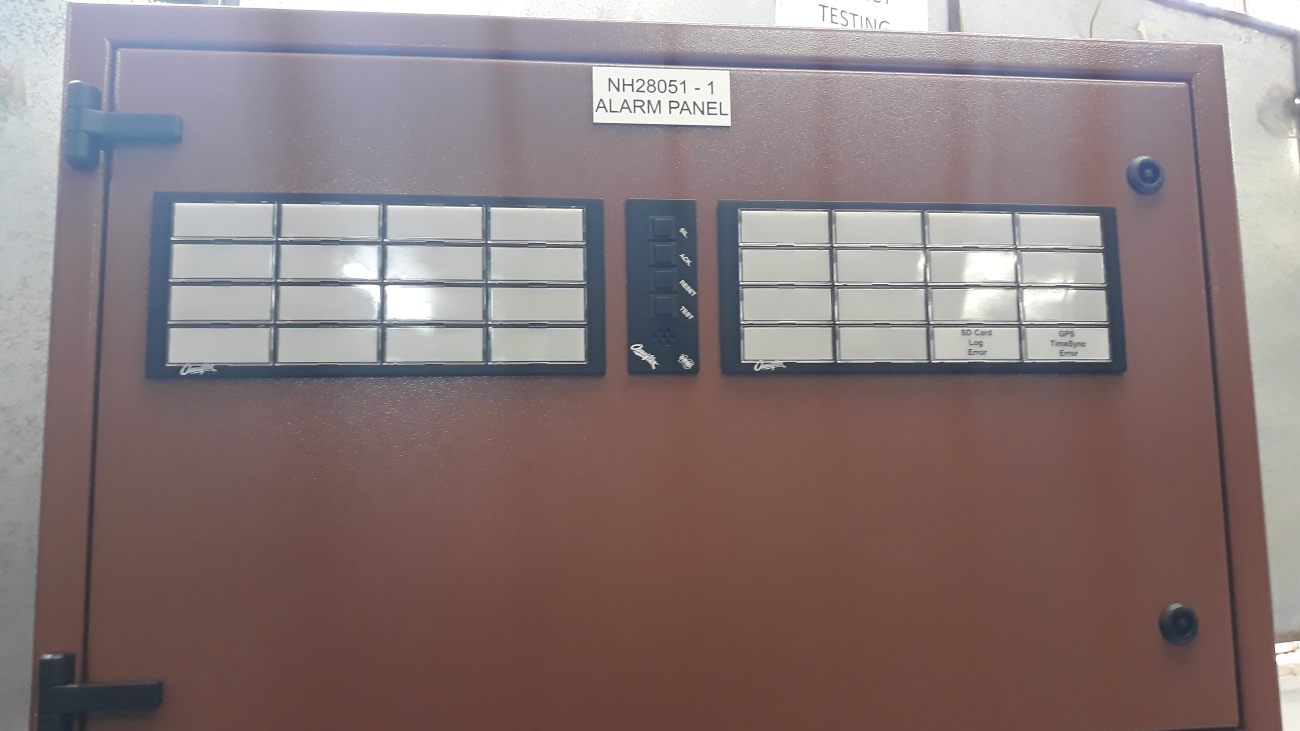
One example is Omniflex’s OMNI4000 platform, which was originally developed to provide a dedicated environment for alarm management.
The system can operate alongside modern SCADA and distributed control systems, allowing the respective platforms to perform complementary functions. SCADA can continue handling wider operational monitoring and control, while a dedicated system provides additional alarm management and event visibility.
Communication standards such as Open Platform Communications (OPC) have also made it easier for industrial software and control platforms to exchange information.
For facilities with complex control environments, retaining a dedicated alarm management layer can provide an additional means of organising critical operational information. However, this does not mean that every installation requires a separate platform. The decision depends on the scale of the facility, its alarm management requirements and the capabilities of the existing control system.
Turning event information into operational decisions
Accurate event recording is only one part of effective alarm management. The information must also be presented in a way that enables operators to recognise abnormal conditions and respond appropriately.
Alarm management platforms can help achieve this through filtering, classification and prioritisation.
For example, OMNI4000 supports the classification of alarms according to different levels of priority, including urgent, non-urgent and critical notifications. It can also filter alarms based on changes of state, helping operators distinguish relevant notifications from routine operational information.
The relationship between SOE and alarm management is particularly important during incident investigation.
SOE establishes the chronology of events, helping engineers understand what happened, when it happened and the order in which different systems responded. Alarm management provides the means of organising and presenting this information so that operators can identify conditions requiring attention.
Together, these capabilities support fault diagnosis, operational monitoring and the investigation of recurring equipment or process failures.
Supporting reliability in increasingly automated facilities
Industrial facilities are becoming more interconnected, with automation systems monitoring larger numbers of devices and exchanging information across multiple operational platforms.
This increases the importance of having reliable event records and well-designed alarm systems. Without accurate time-stamping and effective alarm prioritisation, the volume of information generated by modern installations can make fault investigation and operational response more difficult.
The objective is not necessarily to introduce more alarms or additional software platforms. It is to ensure that information generated by industrial control systems is accurate, properly organised and useful to the people responsible for operating and maintaining the facility.
As SCADA technology continues to advance, Sequence of Events systems and dedicated alarm management platforms retain a role where their capabilities address specific operational requirements. For engineers responsible for plant reliability and process safety, understanding the relationship between event chronology and alarm management remains an important part of designing and maintaining effective industrial control environments.

-
Product on sale
 AWEBook Volume 2Original price was: KShs 3,500.00.KShs 3,000.00Current price is: KShs 3,000.00.