Last Updated 24 mins ago by Kenya Engineer
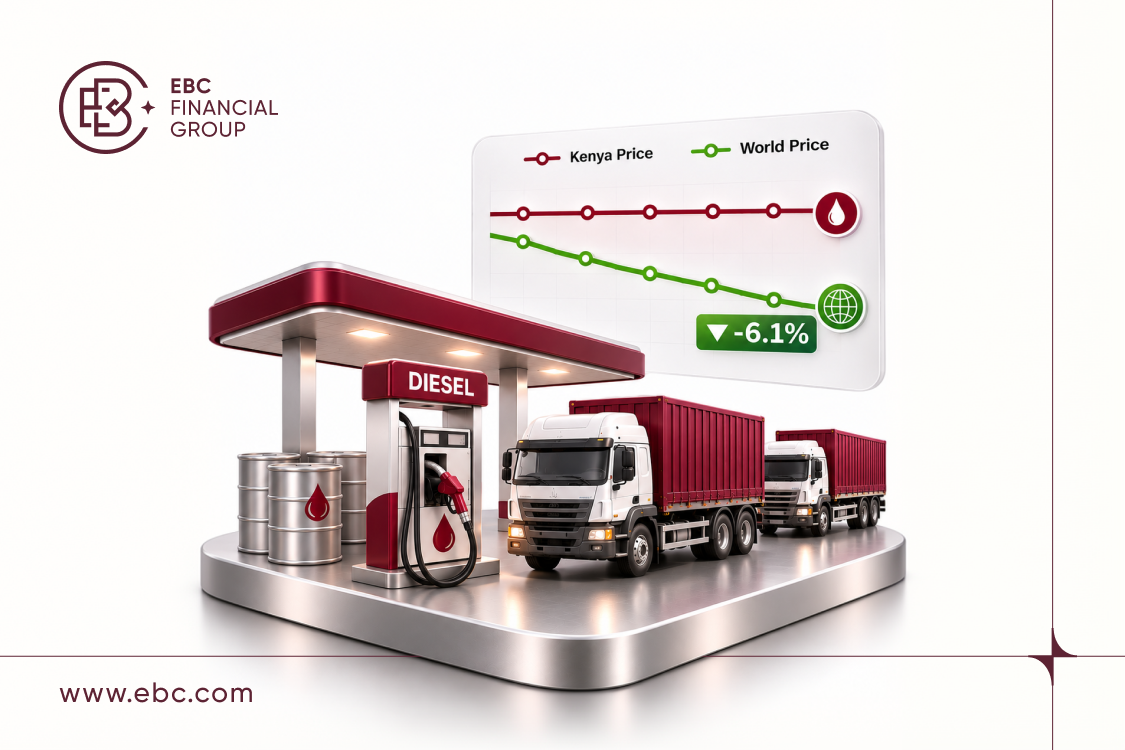
Despite a 6.1 per cent decline in international diesel prices, Kenya’s landed import costs increased by 6.73 per cent in October, forcing the Government to deploy KSh 4.6 billion to prevent another pump-price increase.
The decline in international diesel prices would ordinarily be expected to offer some relief to fuel consumers. In Kenya, however, the latest petroleum pricing figures tell a different story. While the international benchmark price of diesel fell by 6.1 per cent in October 2026, the average cost of importing the product into the country increased by 6.73 per cent.
The difference highlights the complexities of petroleum pricing in an import-dependent economy and explains why movements in international markets do not always translate into immediate changes at local filling stations.
According to the Energy and Petroleum Regulatory Authority (EPRA), the international price of diesel declined from US$1,215.83 per metric tonne in September to US$1,142.17 in October. Over the same period, however, Kenya’s average landed cost of imported diesel increased from US$1,065.38 to US$1,137.09 per cubic metre.
The increase in landed costs would ordinarily have translated into higher retail prices. Instead, the Government applied KSh 4.6 billion from the Petroleum Development Levy Fund to stabilise pump prices for the November 15 to December 14 pricing period.
Consequently, diesel remains at a maximum retail price of KSh 227.76 per litre in Nairobi, with petrol at KSh 226.96 and kerosene at KSh 219.87.
EPRA estimates that without the intervention, diesel would have increased by KSh 10.54 per litre, petrol by KSh 8.58 and kerosene by KSh 1.16.
The latest intervention provides temporary relief to consumers, but it also raises questions about the factors influencing Kenya’s import costs, the sustainability of fuel-price stabilisation and the wider implications for an economy heavily dependent on diesel.
Why falling international prices are not translating into lower import costs
Understanding the apparent contradiction requires distinguishing between the international benchmark price of diesel and the landed cost of bringing the product into Kenya.
The international benchmark reflects the price of refined diesel traded in the global market. Kenya’s landed cost, on the other hand, represents the cost associated with importing the product and bringing it to the country.
These figures are related, but they are not interchangeable. The international benchmark is expressed in US dollars per metric tonne, while EPRA reports landed costs in US dollars per cubic metre.
Kenya imports its petroleum requirements in refined form, making it exposed to movements in international refined-product markets rather than crude oil prices alone.
The cost of importing diesel is influenced by several factors, including international product prices, the timing of cargo purchases and deliveries, shipping and insurance expenses, financing and exchange-rate movements.
The timing of petroleum cargoes is particularly important. EPRA’s monthly pricing framework takes account of the weighted average cost of imported petroleum products discharged at Mombasa during the relevant review period. Consequently, the import costs reflected in a particular month’s pricing calculations may not move in line with the latest international market quotations.
The exchange rate appears to have played a relatively minor role in the latest increase. EPRA’s figures show that the average exchange rate moved from KSh 129.91 to KSh 130.17 per US dollar between September and October, a depreciation of approximately 0.2 per cent.
This suggests that the increase in landed diesel costs was largely associated with other components of the import cost structure, although the published figures do not establish the precise contribution of each component.
The distinction is important because a reduction in international diesel prices does not automatically mean that the next shipment arriving in Mombasa will cost less. The price Kenya ultimately pays depends on the relevant procurement and delivery costs captured within the pricing period.
Government intervention keeps pump prices unchanged
The Government’s intervention through the Petroleum Development Levy Fund has prevented the higher landed costs from being passed directly to consumers during the latest pricing cycle.
The fund is supported through a levy imposed on petroleum products and is intended, among other purposes, to provide a mechanism for managing fluctuations in fuel prices.
In the latest review, KSh 4.6 billion was applied to stabilise the calculated retail prices. The intervention effectively absorbed the additional cost that would otherwise have been reflected at filling stations.
However, the scale of the intervention raises questions about how long the mechanism can sustain such support if import costs remain elevated.
David Precious, Senior Market Analyst at EBC Financial Group, observes that the intervention has a cost of its own. He notes that the KSh 4.6 billion deployed in the latest cycle exceeds the approximately KSh 2.4 billion the fund is reported to collect monthly.
If the difference persists, the fund may require additional resources. Equally, should import costs remain high while government support is reduced, consumers could face a more substantial adjustment in pump prices.
A second measure cushioning consumers is the reduced Value Added Tax (VAT) rate on petroleum products. The rate has been maintained at 8 per cent, down from the standard 16 per cent, following legislative action in October 2026.
Together, the reduced VAT and the Petroleum Development Levy Fund intervention have helped moderate the immediate impact of higher international and import costs.
However, these measures do not necessarily eliminate the underlying cost pressures. They redistribute or defer part of the burden that would otherwise be reflected in consumer prices or public revenue.
The wider economic and infrastructure implications
Diesel occupies an important position in Kenya’s economy. Beyond private motorists, it powers much of the country’s freight transport, agricultural machinery, construction equipment and industrial operations.
For the construction industry, changes in diesel prices have direct implications for project implementation costs.
Road construction and maintenance depend heavily on diesel-powered equipment, including excavators, bulldozers, graders, rollers, asphalt pavers and tipper trucks. These machines consume substantial quantities of fuel during earthworks, excavation, material handling and road formation.
Diesel is also required to transport construction materials such as aggregates, cement, steel and bitumen from suppliers to project sites. Higher fuel costs can consequently increase both equipment operating expenses and material transportation costs.
Contractors working under fixed-price agreements may be particularly exposed to fuel-price volatility, especially where increases occur after contract prices have been established. The availability and application of contractual price-adjustment provisions can influence how these additional costs are managed.
The impact extends beyond construction. Freight operators face higher operating expenses when diesel prices rise, while agricultural production depends on diesel-powered tractors, harvesters, irrigation pumps and transport vehicles.
These costs can eventually feed into the prices of food and other essential goods.
The Kenya National Bureau of Statistics reported that annual inflation increased from 6.8 per cent in September to 7.3 per cent in October 2026. Over the same period, diesel prices had risen by 32.5 per cent year-on-year, while transport prices increased by 17.1 per cent and food prices by 10.2 per cent.
The figures illustrate the wider economic pressures associated with petroleum costs, even when the Government manages to prevent an additional monthly increase at the pump.
The question of energy security
Kenya’s dependence on imported refined petroleum products leaves the economy exposed to developments in international energy markets, shipping conditions and geopolitical disruptions.
Although the country has made significant progress in renewable electricity generation through geothermal, hydroelectric, wind and solar power, petroleum remains central to transport, construction, agriculture and several industrial activities.
Reducing this dependence requires more than expanding renewable electricity generation. It also calls for improvements in transport efficiency, fuel-efficient machinery, logistics systems and the adoption of alternative technologies where commercially and technically viable.
For construction companies, better equipment maintenance, efficient site planning and optimisation of material transportation can help reduce fuel consumption and operating costs.
At the national level, strengthening energy security will require continued investment in infrastructure that improves the reliability and efficiency of energy supply, alongside efforts to diversify the country’s energy mix.
The development of Kenya’s domestic petroleum resources may also contribute to this longer-term discussion, although domestic crude production and self-sufficiency in refined petroleum products are different propositions.
What happens at the next fuel-price review?
The current maximum retail prices remain in force until December 14, 2026. The next EPRA review will provide a clearer indication of whether the increase in landed costs was temporary or whether pressure on petroleum import costs is likely to persist.
The Central Bank of Kenya is also scheduled to make its next monetary policy decision on December 9, five days before the current fuel-price period ends.
The October inflation figures, the direction of international petroleum prices and the cost of future imports will all be relevant to the broader economic outlook.
For consumers, the immediate relief is that diesel prices have not increased further. For businesses and infrastructure developers, however, the underlying cost of petroleum remains an important planning consideration.
Kenya’s latest fuel-price experience demonstrates that falling international prices do not always translate into cheaper fuel at the pump. The cost of importing, transporting and distributing petroleum products, together with the Government’s ability to absorb price shocks, remains central to what consumers ultimately pay.
The KSh 4.6 billion intervention has prevented another increase for now. Whether the relief can be sustained will depend on how international markets evolve, the cost of subsequent petroleum cargoes and the resources available to support the stabilisation mechanism.

-
Product on sale
 AWEBook Volume 2Original price was: KShs 3,500.00.KShs 3,000.00Current price is: KShs 3,000.00.