Last Updated 5 hours ago by Kenya Engineer
The annual United Nations Climate Change Conference has traditionally been associated with negotiations on emissions reductions, climate finance and international commitments. However, the emphasis is increasingly shifting towards implementation. For African countries, this shift carries significant implications for the engineering and construction industries, which will be expected to deliver much of the infrastructure required to support the transition.
COP31, taking place in Antalya from 9 to 20 November 2026, has placed implementation and the global energy transition prominently on its agenda. The conference brings together governments, development institutions, businesses, scientists and civil society to advance cooperation on climate action. Its discussions cover mitigation, adaptation, climate finance and a just transition, alongside efforts to accelerate practical climate solutions.
For Africa, the issues extend well beyond environmental targets. They concern electricity access, industrial development, infrastructure financing, energy security and the capacity to build economies that can withstand the effects of climate change.
The infrastructure challenge behind the energy transition
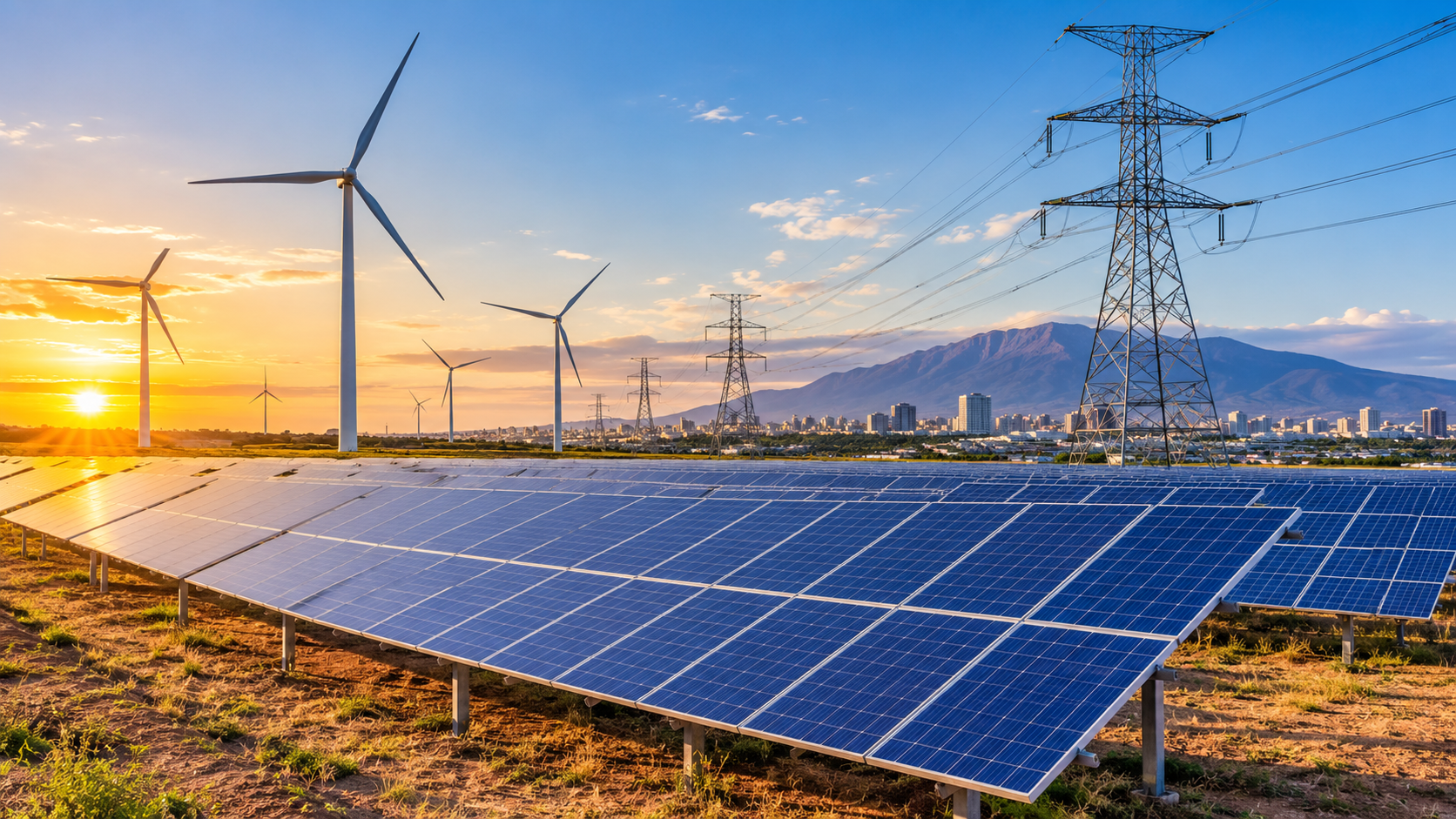
Africa possesses substantial renewable energy resources, including solar, wind, hydropower and geothermal energy. Yet the availability of these resources does not automatically translate into reliable and affordable electricity.
The continent faces a combination of inadequate generation capacity, limited transmission networks, distribution constraints and insufficient investment in energy infrastructure. Even where renewable generation projects have been successfully developed, connecting them to consumers and maintaining reliable electricity supply presents additional challenges.
According to Sustainable Energy for All, approximately 655 million people worldwide still lack access to electricity, with more than 80 per cent of them in Africa. Expanding electricity access is consequently an important part of the continent’s climate and development agenda.
However, access alone is not sufficient. Industries, commercial establishments, hospitals, schools and other productive sectors require electricity that is dependable, affordable and available in sufficient quantities. Expanding electricity generation without developing the transmission and distribution infrastructure to support it risks leaving significant capacity underutilised.
This is one of the important issues emerging from discussions at COP31. A high-level roundtable convened by Sustainable Energy for All, the United Nations Economic Commission for Africa and other partners on 13 November examined how clean energy investment could support African industrialisation. Participants emphasised the need to connect energy access and security with manufacturing, employment and domestic value addition.
The implication for engineering is significant. Africa’s energy transition will require much more than the construction of solar farms and wind turbines. It will involve power stations, substations, transmission lines, distribution networks, storage facilities, control systems and the digital technologies needed to coordinate increasingly complex electricity systems.
Modernising electricity grids and expanding energy storage
One of the most demanding technical challenges associated with renewable energy is managing variability in electricity generation.
Solar and wind installations do not produce electricity at a constant rate. Their output depends on weather conditions, time of day and other environmental factors. As their contribution to national electricity systems increases, utilities must develop the capacity to balance supply and demand while maintaining frequency, voltage stability and system reliability.
This requires investment in transmission infrastructure, grid automation, forecasting systems, flexible generation and energy storage.
Battery energy storage systems are becoming an important component of this transition. They can absorb surplus electricity when renewable generation is high and release it when demand increases or generation declines. Depending on their configuration, they can also provide frequency regulation, voltage support and other grid services.
Pumped-storage hydropower offers another approach, using surplus electricity to pump water to an elevated reservoir before releasing it through turbines when additional power is required. Although these projects require suitable geographical conditions and substantial capital investment, they can provide large-scale storage over extended periods.
The engineering requirements extend to battery management systems, power conversion equipment, protection systems, grid connection infrastructure and advanced energy management software.
For utilities, the transition also means developing more sophisticated operational capabilities. Accurate electricity demand forecasting, renewable generation forecasting and automated dispatch systems will become increasingly important.
Morocco’s ambitions illustrate the scale of investment required
Morocco provides a useful example of the infrastructure ambitions emerging across Africa.
The country has established an ambitious renewable energy programme, targeting more than 15GW of installed renewable electricity capacity by 2030. Its updated Nationally Determined Contribution, submitted to the United Nations Framework Convention on Climate Change in September 2025, also raises its greenhouse gas emissions reduction ambition to 53 per cent by 2035, compared with a business-as-usual scenario.
The country’s energy transition includes investments in solar and wind generation, electricity infrastructure and emerging technologies associated with green hydrogen.
The Noor Ouarzazate solar complex, one of the world’s prominent concentrated solar power developments, demonstrates the scale of infrastructure that can be developed around Africa’s renewable energy resources. The complex combines concentrated solar power technologies with thermal storage capabilities, allowing electricity generation to extend beyond periods of direct sunshine.
Morocco’s ambitions also highlight the importance of integrating renewable generation with transmission networks, storage and industrial demand. The development of green hydrogen, for example, requires substantial renewable electricity, electrolysers, water treatment facilities, storage infrastructure and transportation systems.
The country’s Nationally Determined Contribution provides a framework for these commitments, but their delivery will depend on financing, project development, technology deployment and the availability of technical expertise.
Morocco’s experience offers lessons for other African countries considering how to connect renewable energy investments with industrial development.
Kenya’s next challenge is system integration
Kenya enters this phase of the energy transition from a relatively strong renewable electricity position.
Geothermal, hydropower, wind and solar already contribute significantly to the country’s electricity generation. The International Energy Agency’s March 2026 report, Integrating Variable Renewable Energy in Kenya, estimates that nearly 90 per cent of the country’s electricity generation mix comes from renewable sources. The report also records an increase in electricity access from 37 per cent in 2013 to 79 per cent in 2025.
However, Kenya’s experience demonstrates why increasing renewable generation capacity is only part of the solution.
As variable renewable energy sources account for a greater share of electricity supply, the electricity system must become more flexible. The IEA identifies three mutually reinforcing priorities: open access, flexibility and storage, and ancillary services.
These priorities have direct implications for engineering investment.
Transmission infrastructure must be developed to move electricity from generation centres to demand centres. Distribution networks require modernisation to accommodate changing consumption patterns and distributed generation. Grid operators need improved forecasting, monitoring and control capabilities.
Energy storage will also become increasingly important as the country seeks to balance variable generation with electricity demand.
The challenge is particularly relevant to Kenya as it considers the electricity requirements of industrial expansion, electric mobility, commercial developments and emerging data centre investments.
The growing demand for digital infrastructure introduces another dimension. Data centres require continuous electricity supply, reliable backup systems, sophisticated cooling infrastructure and robust connectivity. Their development will place additional demands on electricity planning and power system reliability.
For Kenya’s engineers, the opportunity extends across electrical engineering, civil and structural works, instrumentation, telecommunications, mechanical systems and software development.
Digital technologies will become central to infrastructure delivery
The energy transition is taking place alongside rapid advances in artificial intelligence, data science, industrial automation and the Internet of Things.
These technologies are increasingly being applied to improve the performance of electricity systems and other infrastructure assets.
In power generation, predictive maintenance systems can analyse equipment operating data to identify potential faults before they result in equipment failure. In transmission and distribution networks, intelligent monitoring systems can help utilities detect abnormal operating conditions, identify losses and improve maintenance planning.
Artificial intelligence and machine learning can also improve renewable energy forecasting by analysing historical generation data alongside weather information. Better forecasts allow system operators to plan electricity dispatch, manage reserves and anticipate fluctuations in supply.
Smart meters and energy management platforms provide additional opportunities to monitor consumption, manage demand and improve energy efficiency.
Digitalisation, however, introduces its own engineering requirements. Critical electricity infrastructure increasingly depends on interconnected control systems, communication networks and digital platforms. Cybersecurity, data integrity and operational resilience must consequently be incorporated into the design and management of modern energy systems.
For African engineering firms, this creates opportunities to develop expertise beyond conventional equipment installation and construction. System integration, software development, data analytics, automation and cybersecurity will form an increasingly important part of infrastructure projects.
Climate adaptation requires a broader engineering response
Although energy transition is an important part of COP31, Africa’s infrastructure requirements extend to climate adaptation.
Changing rainfall patterns, prolonged droughts, flooding, rising temperatures and extreme weather events pose risks to existing infrastructure and future development projects.
Roads, bridges, drainage systems, dams, water supply networks and buildings must be designed with greater consideration of changing climatic conditions.
For civil and structural engineers, this involves incorporating appropriate climate projections into design assumptions, reviewing drainage capacity, assessing flood risks and selecting materials and construction methods suitable for expected environmental conditions.
Water infrastructure is another priority. Droughts and changing rainfall patterns affect water availability, agricultural production and hydropower generation. Investments in water storage, treatment, distribution, irrigation efficiency and wastewater reuse will be important in strengthening resilience.
The engineering challenge is to move beyond designing infrastructure around historical climatic conditions where those conditions may no longer provide a reliable basis for future performance.
Climate-resilient infrastructure can require higher initial investment, but inadequate design can result in expensive repairs, service interruptions and premature asset failure.
Financing remains a major obstacle
The scale of infrastructure investment required across Africa raises questions about the availability, affordability and accessibility of financing.
Renewable energy projects, transmission networks, storage facilities and climate-resilient infrastructure require substantial capital. Many African countries also face competing development priorities, constrained public budgets and high borrowing costs.
COP31 discussions have continued to highlight the need to improve access to climate finance and strengthen international cooperation. However, commitments to provide funding must ultimately translate into financing arrangements that can support viable projects.
Development finance institutions, commercial banks, pension funds, infrastructure funds and private investors will all have roles to play.
Project preparation is equally important. Infrastructure proposals must be supported by credible feasibility studies, technical designs, environmental and social assessments, realistic cost estimates and clear implementation arrangements.
For engineering consultants and contractors, this creates an opportunity to participate earlier in project development rather than entering the process only when construction contracts are awarded.
There is also a need to strengthen local technical capacity. African countries should seek to develop domestic expertise in renewable energy engineering, equipment maintenance, grid management, infrastructure design and clean technology manufacturing.
The transition should create opportunities for local enterprises, professionals and manufacturing industries rather than relying entirely on imported equipment, technology and technical services.
Building Africa’s engineering capacity for the transition
The discussions at COP31 provide an important reminder that Africa’s energy transition must be linked to its broader development objectives.
The continent needs electricity systems that can support industrialisation, infrastructure that can withstand climate impacts and technologies that improve productivity. These requirements will generate demand for engineering services across multiple disciplines.
Regional cooperation will also be important. Electricity interconnectors, cross-border power trading and shared infrastructure planning can help countries make better use of available generation resources and improve system reliability.
Initiatives such as Mission 300, which aims to connect 300 million Africans to electricity by 2030, and the African Single Electricity Market provide frameworks for advancing electricity access and regional integration.
However, achieving these ambitions will require coordinated investment in generation, transmission, distribution and the institutional systems needed to operate interconnected electricity networks.
For Kenya and other African countries, the immediate task is to identify the infrastructure gaps that constrain development and establish credible programmes to address them.
Engineers will be central to this process, from preparing feasibility studies and designing projects to supervising construction, commissioning systems and maintaining infrastructure throughout its operational life.
COP31 will not, by itself, deliver the power stations, transmission lines, storage facilities and climate-resilient infrastructure that Africa needs. Its significance will ultimately be judged by how effectively the commitments and partnerships emerging from the conference translate into funded projects and measurable improvements.
The next phase of Africa’s climate response will be built on engineering decisions, investment choices and the capacity to deliver infrastructure at scale. For the continent’s engineering profession, this is a transition that will require technical innovation, stronger institutions and greater participation in shaping the projects that define Africa’s development.

-
Product on sale
 AWEBook Volume 2Original price was: KShs 3,500.00.KShs 3,000.00Current price is: KShs 3,000.00.