Last Updated 3 hours ago by Kenya Engineer
A Kenyan technology company is seeking to make factory monitoring and data-driven production more accessible to smaller manufacturers through a locally developed industrial IoT platform.
A Nairobi-based technology company has announced international recognition for an industrial Internet of Things (IIoT) platform designed to help smaller manufacturers adopt digital monitoring and automation without the high costs often associated with imported industrial systems.
Factora IoT, developed by Tamalaki Business Network Ltd, was named a winner in the Industrial Ecosystem Enablers (Deployable Solutions) category at the 2026 AIM Global Action Forum, held in Vienna, Austria, on 25–26 November, according to the company.
The recognition comes under the Global Call for Sustainable Industrial AI-Powered Solutions, an initiative launched by the United Nations Industrial Development Organization (UNIDO) in October 2026 in collaboration with the UN Trade and Development (UNCTAD), the UN Office for Digital and Emerging Technologies, the International Telecommunication Union and other partners.
The initiative seeks to identify practical AI-powered technologies capable of addressing industrial challenges in developing and middle-income economies. It considers solutions at different stages of maturity, including established technologies deployed at scale, solutions ready for pilot deployment in new markets and emerging innovations.
For Tamalaki, the recognition centres on a challenge facing many smaller manufacturers in Africa: the cost and complexity of introducing industrial digital technologies into production environments.
Connecting factory equipment to production data
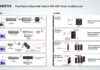
Factora IoT combines industrial sensors, communication gateways and a software platform designed to collect operational data from factory equipment and make it available for monitoring and decision-making.
The sensors are designed to measure parameters including temperature, humidity, vibration, electrical current, energy consumption, liquid levels, flow, weight and machine operating status.
Industrial gateways collect readings from connected equipment and transmit them to the platform, which presents the information through a plant monitoring interface. The system is designed to generate alerts when operating conditions move outside configured limits.
Its integration with FactoraERP, Tamalaki’s enterprise resource planning platform, is intended to connect factory-floor information with wider business operations. Machine downtime, production counts, energy consumption and quality information can be linked to maintenance work orders, production records and product costs.
The approach is particularly relevant to manufacturers seeking to move beyond manual equipment inspections and disconnected production records towards more continuous monitoring of their operations.
The company’s technical documentation identifies industrial communication protocols such as Modbus RTU/RS485 and Modbus TCP, which are widely used in industrial equipment and control systems.
Making industrial digitalisation more accessible
Tamalaki says Factora IoT was developed in response to the difficulty smaller manufacturers face in adopting industrial automation and monitoring technologies.
While large manufacturing facilities may have the financial and technical capacity to implement sophisticated industrial systems, smaller factories often operate with limited investment budgets and fewer specialised technical personnel.
The company says its platform is hosted and operated locally and is designed to make industrial IoT adoption financially accessible to smaller enterprises.
Its announcement cites a small water-bottling company with an investment budget of approximately US$5,000 as an example of a potential user able to introduce IoT monitoring into its production line.
The actual investment required will depend on the number of machines and processes to be monitored, the sensors and gateways required, existing factory infrastructure and installation and integration requirements.
For manufacturers, the potential benefits include improved visibility of equipment operating conditions, quicker identification of abnormal readings and better information for maintenance planning.
However, the extent to which these translate into reduced downtime, lower energy consumption or improved production efficiency will need to be established through operational deployments.
Applications across manufacturing
The platform’s proposed applications extend to food and agro-processing, where monitoring operating conditions can support production management and quality control.
In tea processing, for instance, monitoring temperature and equipment conditions can provide operators with information about production processes. In dairy operations, temperature monitoring can support cold-chain management, while grain milling facilities could use sensors to monitor storage conditions, equipment performance and energy consumption.
Such applications illustrate the potential of industrial IoT to improve the availability of operational information in facilities where monitoring has traditionally relied on manual inspections and periodic reporting.
Tamalaki has also outlined a system that can retain readings when internet connectivity is interrupted and synchronise them when communication is restored. This is relevant to industrial environments where connectivity may be unreliable.
The platform’s current capabilities should, however, be distinguished from more advanced predictive maintenance systems. In a technical account published in October 2026, the company’s founder explained that its alerts operate on configured operating thresholds, while its AI copilot is intended to help users query plant data rather than predict equipment failures.
From development to industrial deployment
The next stage for Factora IoT will be demonstrating its performance in operational manufacturing environments.
In the same technical account, Isaac Mwendwa Muthui, founder and chief executive of Tamalaki Business Network, described the system’s development architecture and disclosed that pilot deployments were being opened, with production gateway and sensor commissioning still ahead at the time of publication.
This makes practical deployment, rather than the technology’s stated capabilities alone, an important measure of its progress.
Questions around installation costs, compatibility with existing factory equipment, data security, technical support and measurable operational improvements will also influence adoption by manufacturers.
For Kenya, locally developed industrial technologies offer an opportunity to build domestic capacity in automation, industrial software and digital manufacturing systems. They could also create opportunities for collaboration between technology developers, equipment suppliers, engineering firms and manufacturing enterprises.
The wider challenge is ensuring that these technologies move from development and demonstration into reliable, commercially sustainable applications across the country’s industrial sector.
Factora IoT’s recognition provides an international platform for a Kenyan-developed industrial technology. Its longer-term significance will depend on how effectively it translates that recognition into working installations and demonstrable improvements in manufacturing operations.

-
Product on sale
 AWEBook Volume 2Original price was: KShs 3,500.00.KShs 3,000.00Current price is: KShs 3,000.00.