Last Updated 28 mins ago by Kenya Engineer
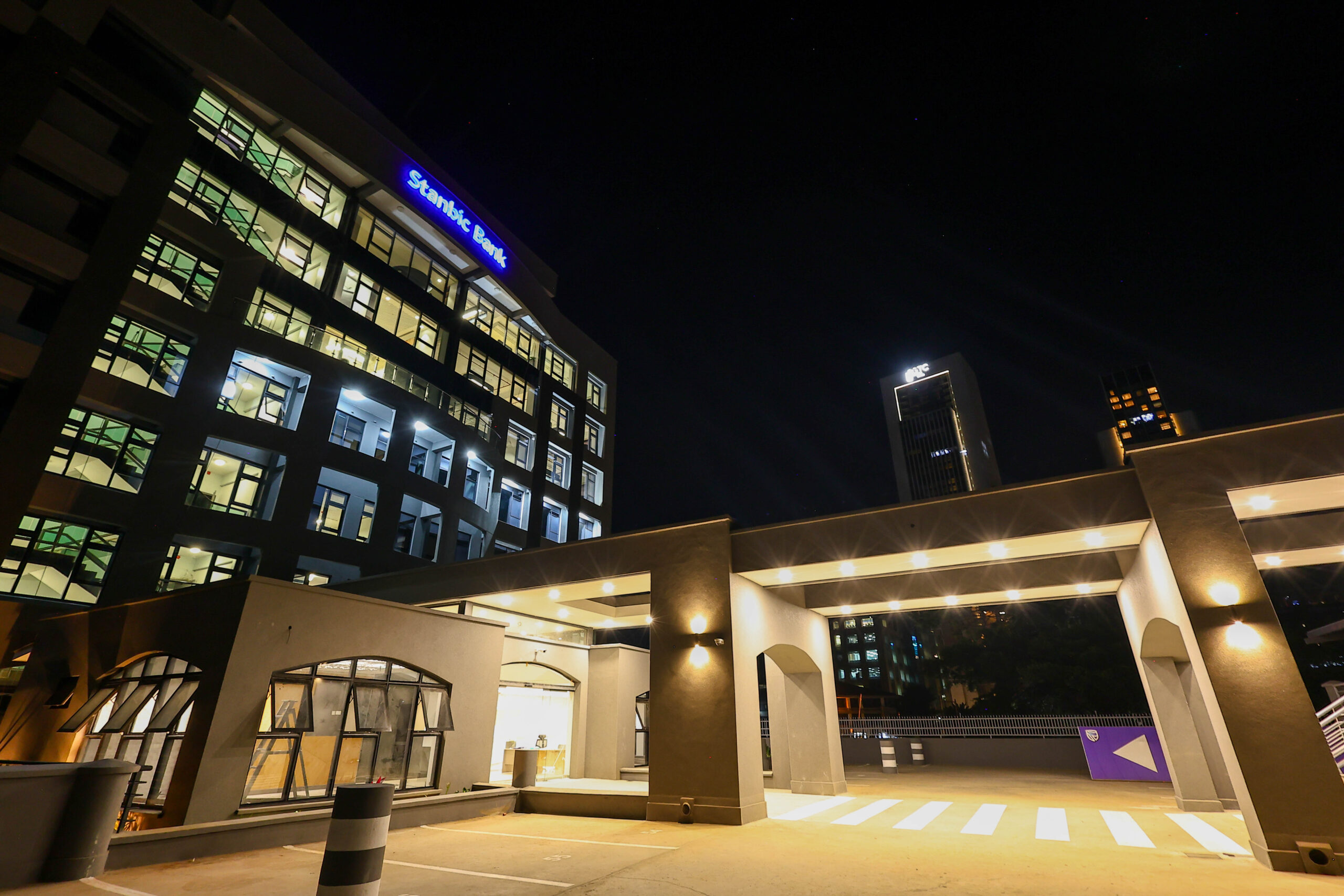
Stanbic Bank Kenya’s refurbished headquarters has secured EDGE Advanced and Net Zero Carbon certifications, highlighting the potential of existing commercial buildings to achieve substantial improvements in environmental performance.
The refurbishment of Stanbic Bank Kenya’s headquarters on Chiromo Road in Westlands, Nairobi, offers an example of how existing commercial buildings can be upgraded to meet increasingly demanding environmental standards without necessarily resorting to demolition and new construction.
The bank announced on 26 November 2026 that Stanbic Bank Centre had attained EDGE Advanced certification from Green Business Certification Inc. (GBCI) and Net Zero Carbon certification from the Green Building Council South Africa (GBCSA). The two certifications recognise different aspects of sustainable building performance, placing emphasis on resource efficiency and carbon emissions.
According to the bank, the refurbishment incorporates renewable energy solutions, resource-efficient technologies and sustainable design principles. The improvements are projected to deliver 72.93 per cent energy savings, 33.93 per cent water savings and an 82.42 per cent reduction in embodied energy in materials.
The figures highlight the potential of building refurbishment as an approach to improving the environmental performance of existing infrastructure. Commercial buildings consume energy throughout their operational life, with substantial demand often associated with cooling, ventilation, lighting, water pumping and other building services. Upgrading these systems can reduce resource consumption while extending the useful life of existing assets.
The engineering case for building refurbishment
Retrofitting an existing building presents a different set of engineering considerations from designing a new development. Engineers must work within an established structural arrangement, existing service routes and architectural constraints while introducing technologies that improve efficiency and meet current operational requirements.
Electrical and mechanical building services are particularly important in this process. Improvements to lighting systems, cooling equipment, ventilation, pumps and their associated controls can influence overall energy consumption. Integrating renewable energy generation can further reduce dependence on conventional electricity sources.
Water efficiency presents another opportunity. Appropriate plumbing fixtures, efficient distribution systems and water management technologies can reduce demand without compromising the functionality of the building.
Material selection and retention also have implications for the environmental performance of a refurbishment. Retaining suitable existing building elements can avoid some of the material extraction, manufacturing, transportation and construction activities associated with replacing an entire structure.
For property owners and developers, these considerations introduce an important dimension to decisions about whether to refurbish, extend or replace an existing building.
Understanding the two certifications
EDGE, which stands for Excellence in Design for Greater Efficiencies, is an international green building certification system developed by the International Finance Corporation (IFC), a member of the World Bank Group.
The certification evaluates improvements in energy consumption, water use and embodied energy in building materials against a conventional building baseline. Its Advanced level requires at least 40 per cent predicted energy savings, alongside minimum 20 per cent savings in water and embodied energy in materials.
Stanbic’s reported savings exceed these minimum thresholds, particularly in energy and materials efficiency.
The Net Zero Carbon certification from the Green Building Council South Africa provides an additional assessment of the building’s carbon performance. The council’s rating framework covers existing buildings as well as new developments and distinguishes between modelled performance and assessments based on actual operational data.
Together, the certifications provide two complementary perspectives on the building’s environmental performance, although the specific certification levels and assessment boundaries are important when interpreting the results.
Implications for Kenya’s commercial property sector
The Stanbic Bank Centre refurbishment comes at a time when improving the environmental performance of existing buildings is becoming an important consideration for the construction and property sectors.
Nairobi has a substantial stock of established commercial buildings, many of which will require periodic refurbishment of their electrical, mechanical, plumbing and other building services. Improving their efficiency presents opportunities for engineering consultants, contractors, facilities managers and specialist technology providers.
The experience also raises questions about how property owners assess the long-term value of refurbishment investments. Beyond the initial construction cost, energy consumption, water demand, maintenance requirements and the remaining useful life of building components influence the economics of operating commercial properties.
Green building assessments can help introduce measurable performance objectives into these decisions. They also provide a framework through which developers and building owners can evaluate proposed improvements against recognised standards.
For Kenya, the opportunity extends beyond prestigious office developments. Similar principles can be applied to institutional buildings, hospitals, educational facilities, industrial premises and other existing infrastructure.
Linking building performance with sustainable finance
Stanbic has positioned the headquarters refurbishment within its wider sustainability strategy, which also includes financing for businesses and projects adopting environmentally responsible practices.
As at the end of September 2026, the bank reported disbursements of KSh949 million in solar financing and KSh1 billion in climate-smart agriculture financing.
Other initiatives included recycling 30,928 kilograms of operational waste and supporting the planting of more than 409,000 trees, comprising indigenous trees and mangroves. The bank also reported that its environmental and social risk management protocols require environmental and social due diligence for all credit facilities exceeding US$1 million.
The refurbishment is also aligned with the bank’s climate targets of achieving net-zero carbon emissions for newly built facilities by 2030 and across its existing facilities by 2040.
Michael Mutiga, Chief Executive of Stanbic Bank Kenya and South Sudan, said the project reflected the bank’s intention to apply sustainability principles within its own operations, alongside the financing it provides to clients.
The project provides a useful reference point for Kenya’s building industry. As pressure grows to reduce the environmental footprint of the built environment, improving existing buildings will be an important part of the transition. The engineering challenge will be to translate certification targets into durable improvements in building performance, operational efficiency and the long-term management of infrastructure.

-
Product on sale
 AWEBook Volume 2Original price was: KShs 3,500.00.KShs 3,000.00Current price is: KShs 3,000.00.