Last Updated 7 hours ago by Kenya Engineer
The programme brings together adaptive traffic signals, CCTV surveillance and centralised traffic monitoring, with three implementation phases planned to expand Nairobi’s existing intelligent transport infrastructure.
The Kenya Urban Roads Authority (KURA) has showcased its Intelligent Transportation System (ITS) programme in Nairobi, outlining plans to expand technology-driven traffic management across the capital’s road network.
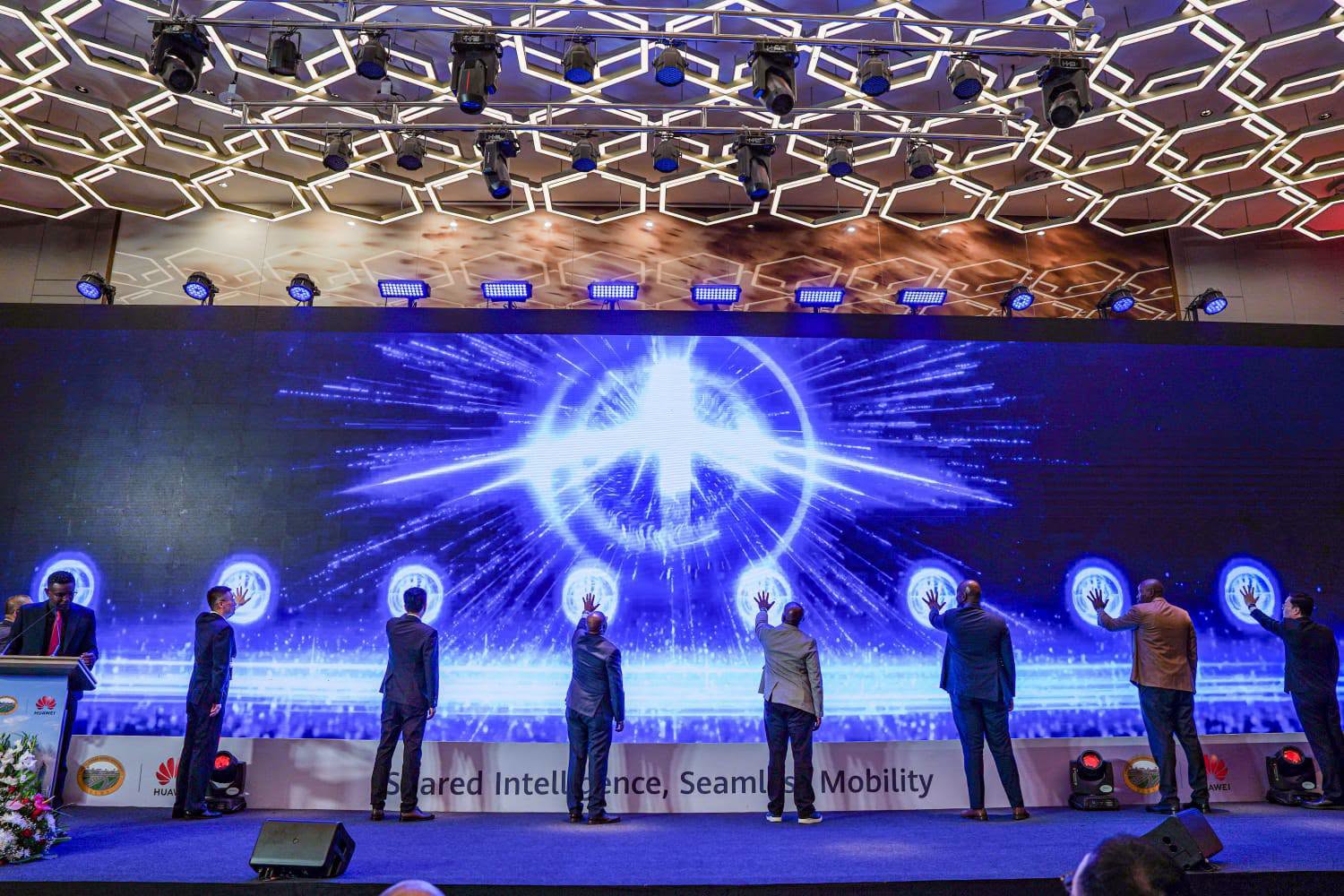
The showcase, held on Friday, 27 November 2026, brought together government officials and project partners, with Roads Principal Secretary Joseph Mbugua presiding over the event. Huawei Kenya Vice President Kerry Xu represented the technology partner, while KURA Director General Silas Kinoti highlighted the role of intelligent monitoring and traffic data analysis in managing urban mobility.
The programme is intended to move Nairobi’s traffic management beyond conventional signal control towards a coordinated system capable of monitoring traffic conditions, identifying incidents and adjusting signal operations in response to changing road conditions.
The latest programme details indicate an ambitious expansion covering up to 230 intersections, building on infrastructure KURA has already deployed at 20 intersections along the Western Ring Roads, Ngong Road and the Eastern Missing Links.
The earlier installations comprise traffic signals, vehicle detectors, intelligent controllers, CCTV cameras and communications infrastructure linked to a Traffic Management Centre. The proposed expansion is organised into three phases, covering 25 junctions under Phase I, 60 under Phase II and 125 under Phase III.
Phase I is being implemented by Samsung Construction and Trading Corporation under a KSh7.88 billion contract. The project includes upgrading 25 junctions and establishing a Traffic Management Centre at City Cabanas. Its implementation period was expected to run to February 2027.
Phase II is supported by financing from the Korean Economic Development Cooperation Fund (EDCF), with the procurement documentation indicating a financing package of approximately US$83.834 million. Its scope includes 60 traffic signal systems, 60 CCTV cameras, 13 vehicle detection systems, two variable message signs and 60 vehicle enforcement systems. The works also provide for the construction of one new bridge and extensions to two existing bridges. The contract provides for 30 months of design and construction, followed by four years of operational support.
Phase III involves China Wu Yi and Huawei, whose project announcement identifies 125 junctions for upgrading and the establishment of a traffic data centre. The implementation period is indicated at 36 months, with completion expected in 2029.
The wider ITS programme has also been associated with a reported financing package of US$185 million from China EximBank. The different financing arrangements reflect the scale of the programme, although a consolidated breakdown of costs and funding allocations across all three phases has yet to be made public.
At the operational level, the system is expected to combine CCTV surveillance, vehicle detection, intelligent traffic signals and centralised monitoring. Traffic data collected from the road network can support the identification of congestion patterns, incident detection and more responsive allocation of signal time at busy intersections.
The technology also creates opportunities for more coordinated traffic management, including the use of predictive analysis to anticipate congestion rather than relying exclusively on responses after traffic has built up. Huawei has highlighted computer-vision-based incident detection and adaptive signal optimisation among the capabilities associated with the expanded system.
Its effectiveness, however, will ultimately depend on how well the different components are integrated and how consistently the system is operated across the road network.
The programme also has implications for Nairobi’s wider public transport plans. KURA is implementing the BRT Line 5 corridor between Allsops and Taj Mall, a 10.5-kilometre route designed to provide dedicated bus lanes and 13 stations. Integrating intelligent traffic signals with BRT operations could help improve bus movement through intersections, although the specific arrangements for signal priority and data sharing between the two systems have not yet been detailed publicly.
The ITS programme represents a significant investment in the digital management of Nairobi’s road infrastructure. Its success will be judged less by the number of cameras and traffic signals installed than by whether it delivers measurable improvements in journey times, intersection delays, incident response and road safety.
For now, the 27 November showcase provides a further indication of the scale and direction of KURA’s planned investment as the authority moves towards a more coordinated approach to urban traffic management.

-
Product on sale
 AWEBook Volume 2Original price was: KShs 3,500.00.KShs 3,000.00Current price is: KShs 3,000.00.