Last Updated 13 years ago by Kenya Engineer
Energy efficiency refers to using less energy to provide the same level of service. On the other hand, energy conservation is achieved through efficient energy use in which case energy use is decreased while achieving a similar outcome or by reduced consumption of energy and related services. Efficiency and conservation measures are important for any given nation. Efficiency and conservation measures often used at consumer level include use of energy saving devices, rational saving methods including switching off devices when not in use, using alternatives fuels, Use of quality light and cooking devices which are efficient and good maintenance of appliances.
As Kenya aspires to be a middle income economy as envisaged in its Vision 2030, it faces an enormous task of meeting energy needs due to the high expectations in growth to power the economy. The country therefore needs to come up with strategies and investment plans to secure sustainable supply of energy to meet the growing demand. The energy sector is considered a key factor to achieving Vision 2030.
Energy Efficiency methods are employed to Reduce production cost, Reduce pressure on the national electricity generation, transmission and distribution facilities, Reduce environmental degradation and green house gas emissions, Improve energy utilization and cost index, Reduce pressure in imports and Improve in energy conservation measures.
The energy sector in Kenya is largely dominated by petroleum and electricity, with wood fuel providing the basic energy needs of the rural communities, urban poor, and the informal sector. Wood fuel and other biomass account for 68% of the total energy consumption. Petroleum and Electricity account for 22% and 9% respectively. Electricity access in Kenya is low despite the government’s ambitious target to increase electricity connectivity from the current 18% to at least 65% by the year 2022. Kenya has an installed capacity of 1.593 GW.
Fuel wood demand in the country is estimated to be 35 million tons per year while its supply is 15 million tons per year, representing a deficit of 20 million tons. The massive deficit in fuel wood supply has led to high rates of deforestation in both exotic and indigenous vegetation resulting to adverse environmental effects.
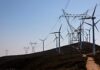
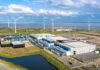
Kenya’s Long term focus is on green energy (geothermal, wind & hydro imports). In the electricity sector, green electricity is going to be the energy of the future. Government efforts to increase power generation are in geothermal and wind sources of electricity. GDC has embarked on an ambitious programme to increase the number of wells in Olkaria and other potential areas while in wind, Kenya Power and Lighting Company (KPLC) already signed a PPA with Lake Turkana Power Company to supply 300MW of electricity. In petroleum; there have been increased activities in exploration of hydrocarbons in Northern and Coastal regions in the country. The government has also intensified search for coal deposits in Kitui. Future government policy in energy is leaning towards improvement of the working modalities with Public Private Partnerships (PPPs). All these initiatives are aimed at ensuring energy security in the country in order to meet increased energy demand as envisaged in Vision 2030.
Energy as used by households and enterprises may make a large difference if enough measures are employed towards efficiency and conservation. While 26% of electricity users do not apply any efficiency or conservation methods in its use, 28% utilize energy saving appliances and devices to save energy. 50% of fuel wood users do not apply any efficiency measures while 27% of charcoal users do not use any efficiency measures.
In 2011, KPLC purchased 7.303GWh and sold 6.123GWh of electricity as compared to 2012 where the company purchased 7.670GWh and sold 6.341GWh. This translates to 16.2% system losses in 2011 and 16.0% in 2012. The number of Kenya Power’s clients rose from 1,753,348 in 2011 to 2,038,625 in 2012. This effectively led to a rise in the system peak demand from 1194MW in 2011 to 1236MW in 2012. Evening Lighting demand from households accounts for a major portion of the peak load. Efficient lighting technologies will hence offer the cheapest and the fastest option of bridging the supply – demand gap by reducing the evening peak. This consequently leads to a reduction in the system load factor which is a measure of the efficiency of utilization of the available capacity.
The Kenyan government, through Kenya Power, has initiated several projects aimed at ensuring efficient use of energy. These projects are at different levels of implementation and include; use of Energy Efficient transformers, Grid Extension projects, Renewable energy projects at the off grid power stations, Capacitors installation on the power system, CFL Roll out in the residential sector, Energy Efficiency Improvement in buildings, Replacing electromagnetic ballasts with electronic ones in big buildings, Use of Solar Water Heaters (SWH), Energy efficient street lighting program and encouraging use of Solar Lanterns. There are deliberate loss reduction efforts by Kenya Power through System reinforcement to cater for growing load through; Establishment of more primary substations to reduce the length of distribution lines, Line reconductoring to upgrade thin conductor with thick conductor, Specifications for low loss transformers & equipment, Transformer relocation to load centers and Capacitor installations on transmission & distribution lines and substations.
There are also a number of Demand Side Management (DSM) efforts that have been put in place to ensure efficient use of Energy. DSM involves influencing the level & pattern of electricity usage by customers. DSM aims at among others; reducing the customer load to reduce losses on the supply side, create capacity on the system to serve more customers, reducing use of fossil fuels, hence reduction in GHG emissions – environmental conservation, Rolling out of energy saving bulbs – reduced peak demand by an estimated 50MW and Interruptible facility to switch off water heating load during peak period.
It is necessary to encourage users to shift to modern energy sources by encouraging marketers as well as providing incentives to increase production and use of these modern energy sources. There is also need for creating an enabling environment to achieve low and affordable prices for fuels, appliances and equipment, gadgets and apparatus among the majority of the citizens. Since fuel wood has been the main fuel in the rural areas, there is need to encourage and enforce adoption of wood saving cookers, outside the traditional three stones. This should continually be done in the medium term to protect the environment.
It is necessary to encourage and enhance energy saving and efficiency methods in charcoal production and use in areas in which they have not permeated to protect the environment from degradation There is need for continuous and deliberate measures to provide economic instruments to regulate biomass production and use so as to achieve sustainability of supply and protect the environment following Kyoto protocol and Copenhagen resolutions among other environmental protection conventions. There is need to pilot sewage based biogas plants in institutions of higher learning and electricity generation from flower farm waste through. Domestic biogas plants installation under the KENDBIP supported by the Netherlands Government target 8000 plants in 4.5 years by 2014.
There is need to increase funding and resources in the electricity sector to increase clean electricity generation from wind and other green energy sources. This will not only put more electricity to the national grid, but also ensure improved access and reduction in cost of power as well as protect the environment from carbon dioxide emissions.
Due to health problems associated with smoke from use of Kerosene, there is need for the Kenyan government to increase the penetration of other alternative fuels such as biogas and LPG by making them available and cheaper to the users. In order to increase usage and penetration of LPG in the country, there is need to provide more fiscal incentives both to the users and suppliers and particularly for the appliances such as cookers which are currently expensive and other peripherals that discourages prospective users.
There is need to put in place deliberate measures to improve penetration of renewable technologies by providing fiscal incentives as well as credit facilities for both consumers and providers of energy in this sub sector. The renewable technologies (solar, wind, biogas) are the fuels for rural Kenya since they are stand alone. Moreover, self regulations in the renewable energy sub sector e.g. in solar and other forms of energy to ensure quality supply of products, should be promoted.
For a nation that seeks security for energy in order to meet the foreseeable increasing energy demands it is crucial for the government through relevant bodies to formulate and implement Policies and Regulations in Energy Efficiency. This policies and regulations should; be guided by standards and possibly provide incentives for relevant projects. Energy Management Awards by Kenya Association of Manufacturers is an example where energy efficiency practice is encouraged through incentives.
References:
1.A COMPREHENSIVE STUDY AND ANALYSIS ON ENERGY CONSUMPTION PATTERNS IN KENYA – By KIPPRA for ERC
2.Kenya Energy Situation – Energypedia
3.Energy Efficiency Programs – KPLC/MOE (2012)
4.Performance Based incentives for Energy Efficiency – Murithi Njeru, ERC
-
Product on sale AWEBook Volume 2Original price was: KShs 3,500.00.KShs 3,000.00Current price is: KShs 3,000.00.