Last Updated 2 hours ago by Kenya Engineer
Ghana’s pursuit of nuclear electricity generation has entered a new chapter following an announcement that Russia will work with the West African country to develop a proposed 2,000 MW nuclear power plant. The commitment, announced after bilateral discussions during the Russia-Africa Summit in October 2026, has renewed attention on a programme that has been under development for decades.
The proposed facility would represent one of the most significant additions to Ghana’s electricity infrastructure. At 2,000 MW, its generating capacity would be substantial in relation to the country’s existing power system, with potential implications for industrial development, electricity security, regional power trading and the composition of its generation mix.
However, the announcement comes against a much longer history of nuclear planning. Ghana has spent years establishing the institutions, regulatory arrangements, technical capabilities and international partnerships required to introduce nuclear power. It has also explored reactor technologies from China and the United States, identified potential plant locations and undertaken preparatory investigations.
The latest Russian commitment consequently raises important questions about the direction of the programme. Is the proposed 2,000 MW plant a new project, a revision of earlier plans or another option within Ghana’s broader nuclear development strategy? What technical and institutional preparations have already been completed? And what would it take to integrate a nuclear power station of this scale into Ghana’s electricity network?
Understanding these questions requires looking beyond the latest diplomatic announcement to examine the engineering and infrastructure programme that Ghana has been building.
A nuclear ambition spanning six decades
Ghana’s interest in nuclear technology predates its current electricity expansion plans. The country’s first major nuclear initiative was conceived during the presidency of Kwame Nkrumah in the early 1960s, when the government sought to establish a nuclear research facility at Kwabenya, near Accra.
The initiative formed part of a broader industrialisation and scientific development agenda. Ghana established the Ghana Atomic Energy Commission (GAEC) in 1963, creating an institutional foundation for nuclear research and the peaceful application of atomic energy. The original reactor ambition was interrupted following the political upheaval of February 1966, although nuclear research activities continued.
The country subsequently developed capabilities in nuclear science, radiation applications, agriculture, medicine and industrial research. Its research infrastructure includes the Ghana Research Reactor-1, a miniature neutron source reactor commissioned in 1995 at the Ghana Atomic Energy Commission’s facilities. The research reactor, supplied through cooperation with China, is used for research, neutron activation analysis, education and training rather than commercial electricity generation.
The modern nuclear power programme gained renewed momentum in 2006, following electricity supply challenges and growing projections of future demand. Ghana began working with the International Atomic Energy Agency (IAEA) to assess the feasibility of introducing nuclear power and identify the institutional and technical requirements.
The programme was restructured in 2008, and a dedicated project organisation was subsequently established. Nuclear Power Ghana (NPG), incorporated in 2018, became the proposed owner and operator of the country’s first nuclear power plant.
The distinction between the various institutions is important. GAEC provides the country’s nuclear research and technical foundation, while the Nuclear Power Institute (NPI), operating under GAEC, supports nuclear power programme development. NPG is responsible for developing the proposed generating project, while the Nuclear Regulatory Authority (NRA) provides independent regulatory oversight.
This institutional framework is intended to separate the responsibilities of promoting, developing and operating nuclear power from those of regulating it.
Preparing the ground for a nuclear power station
Introducing nuclear electricity generation requires much more than identifying a suitable reactor and negotiating with a supplier. The IAEA has developed a structured framework known as the Milestones Approach to guide countries through the process of establishing a nuclear power programme.
The framework divides development into three phases.
Phase 1 involves considering whether nuclear power is an appropriate option for the country. It includes national energy planning, preliminary feasibility assessments, evaluation of alternative generation technologies and examination of the legal, institutional and financial implications.
Phase 2 covers the preparatory work required before a country is ready to invite bids or negotiate a contract for its first nuclear power plant. It involves developing the regulatory framework, selecting and characterising a site, establishing the project organisation, preparing financing arrangements, developing human resources and addressing the other infrastructure requirements.
Phase 3 begins after the country has demonstrated readiness to make the necessary commitments and proceeds with implementing the first nuclear power plant. This includes detailed design, licensing, construction, commissioning and preparation for commercial operation.
Ghana officially entered Phase 2 in August 2022. As of November 2026, the country is still working towards completing the requirements of this phase. It has not yet reached the stage of a fully licensed nuclear construction project.
The distinction is significant because the completion of Phase 2 is an important prerequisite to making an informed investment decision and entering into the full contractual and implementation arrangements for construction.
Ghana’s progress has included the establishment of a nuclear power programme organisation, development of regulatory capabilities, engagement with international technical partners and identification of potential plant sites. However, funding limitations and outstanding institutional and regulatory requirements have slowed the programme.
In February 2026, officials from the Nuclear Power Institute acknowledged that the country was progressing more slowly than anticipated, citing funding constraints and competing national priorities. The Institute identified site characterisation, organisational development, public communication and vendor negotiations among the priorities requiring further attention.
A further initiative emerged on 30 October 2026, when the Institute of Economic Affairs Ghana launched a one-year programme to support priority Phase 2 activities. The initiative is intended to strengthen institutional coordination, workforce planning, regulatory preparedness and investment readiness.
These developments illustrate that Ghana’s nuclear programme is still in the preparatory stage, despite the growing number of international cooperation agreements.
Nsuban and Obotan: Identifying a suitable site
One of the most consequential decisions in developing a nuclear power station is selecting a location that can safely support the facility throughout its operating life.
In September 2023, Nuclear Power Ghana announced Nsuban in the Western Region as its preferred site for the proposed nuclear power station, with Obotan in the Central Region identified as an alternative.
Site selection for a nuclear facility involves a detailed assessment of geological, seismic, hydrological, meteorological, environmental and population-related factors. These investigations establish whether the site can accommodate the plant and whether potential external hazards can be adequately managed.
For a coastal location such as Nsuban, access to cooling water is an important consideration. Nuclear power stations require substantial quantities of water to remove heat from their steam-cycle systems, although the precise requirement depends on reactor technology and cooling-system design.
A coastal location may provide access to seawater for once-through cooling or support alternative cooling configurations. However, the design must account for marine conditions, water temperature, intake and discharge arrangements, corrosion, marine ecology, coastal erosion and the effects of climate change and sea-level rise.
The geological assessment is equally important. Investigations must establish the characteristics of the underlying rock and soil, groundwater conditions, faulting, seismic hazards and the suitability of the foundation for a large industrial installation. The assessment must also consider potential flooding, extreme rainfall, storm surges and other natural hazards.
Ghana has been advancing its site investigation programme. In September 2026, the Minister of Environment, Science and Technology reported that meteorological monitoring systems had been installed at the preferred and alternative sites. Geographic Information System-based verification, supported by aeromagnetic survey data, was also being used to improve understanding of subsurface conditions.
Land acquisition activities were reported to be progressing alongside these investigations.
These are important preparatory steps, but they should not be confused with the completion of nuclear site characterisation. Before a site can receive the necessary approvals, it must undergo comprehensive investigations and demonstrate that its geological, environmental and external hazard characteristics meet applicable nuclear safety requirements.
Environmental and social impact assessments will also be necessary. These will examine the effects of construction and operation on surrounding communities, water resources, biodiversity, land use and local economic activities.
The final site decision will influence the plant’s engineering configuration, cooling technology, transmission connections, construction logistics and long-term operating costs.
Competing technology partnerships: China, the United States and Russia
Ghana’s nuclear programme has attracted interest from several international nuclear technology suppliers. Before the latest Russian announcement, two major development tracks had emerged, involving conventional large reactors and small modular reactors.
In April 2024, Nuclear Power Ghana and China National Nuclear Corporation (CNNC) Overseas Limited signed a cooperation and framework agreement covering the proposed development of a nuclear power plant using China’s HPR1000 technology, commonly known as Hualong One.
The HPR1000 is a third-generation pressurised water reactor design developed in China. It uses water under high pressure to transfer heat from the reactor core to steam generators, where a secondary water circuit produces steam to drive a turbine connected to an electrical generator.
The technology incorporates multiple safety systems and is designed for large-scale electricity generation. Ghana’s earlier programme envisaged a reactor of approximately 1,200 MW under a proposed build-operate-transfer arrangement.
The second track involved small modular reactors (SMRs). In August 2024, Nuclear Power Ghana signed a two-year framework agreement with US-based Regnum Technology Group for a proposed NuScale VOYGR-12 installation.
The proposed configuration comprised 12 modules, each rated at approximately 77 MW, giving a combined generating capacity of 924 MW.
Small modular reactors differ from conventional large reactors in their unit capacity and intended construction approach. Their designs seek to standardise components, increase factory fabrication and potentially reduce some of the construction and project delivery challenges associated with large nuclear installations.
In May 2024, Ghana had also signed arrangements to establish a NuScale Energy Exploration (E2) Centre at GAEC. The facility is intended to provide a simulator of an SMR control room for training engineers and future nuclear operators. A regional welding certification programme was also being developed to strengthen technical skills relevant to nuclear construction.
In March 2025, Nuclear Power Ghana announced the selection of CNNC and the US-linked NuScale/Regnum partnership for the respective large-reactor and SMR development tracks. At that stage, however, formal construction contracts had not been signed.
Russia’s entry into the latest phase of discussions adds another dimension. Following the October 2026 Russia-Africa Summit, Ghana’s Foreign Ministry announced that Russia had agreed to work with the country towards establishing a 2,000 MW nuclear power plant.
Russia has an established international nuclear industry through Rosatom, which offers reactor design, engineering, construction, fuel supply, training and other nuclear services. Its international portfolio includes large pressurised water reactor projects, particularly the VVER series.
However, the Ghanaian announcement did not identify a specific Russian reactor design, project site, financing structure, construction timetable or contractual arrangement. It would consequently be premature to describe the proposed Ghanaian plant as a confirmed VVER installation or to assign it a specific configuration.
The relationship between the Russian proposal and Ghana’s earlier agreements with China and the United States also remains to be clarified.
The country could be considering alternative suppliers, additional generating capacity or different technology options within a wider nuclear development programme. But no publicly established decision has yet demonstrated that the Russian proposal has formally replaced the earlier development tracks.
This is an important issue for Ghana’s policymakers. Nuclear technology partnerships involve long-term commitments covering fuel supply, technical support, maintenance, spare parts, training, safety systems and decommissioning. Selecting a technology supplier is consequently a strategic infrastructure decision that extends well beyond the construction period.
The engineering challenge: designing a nuclear installation for the national grid
Regardless of the technology supplier eventually selected, Ghana will face a complex engineering undertaking in developing a nuclear power station.
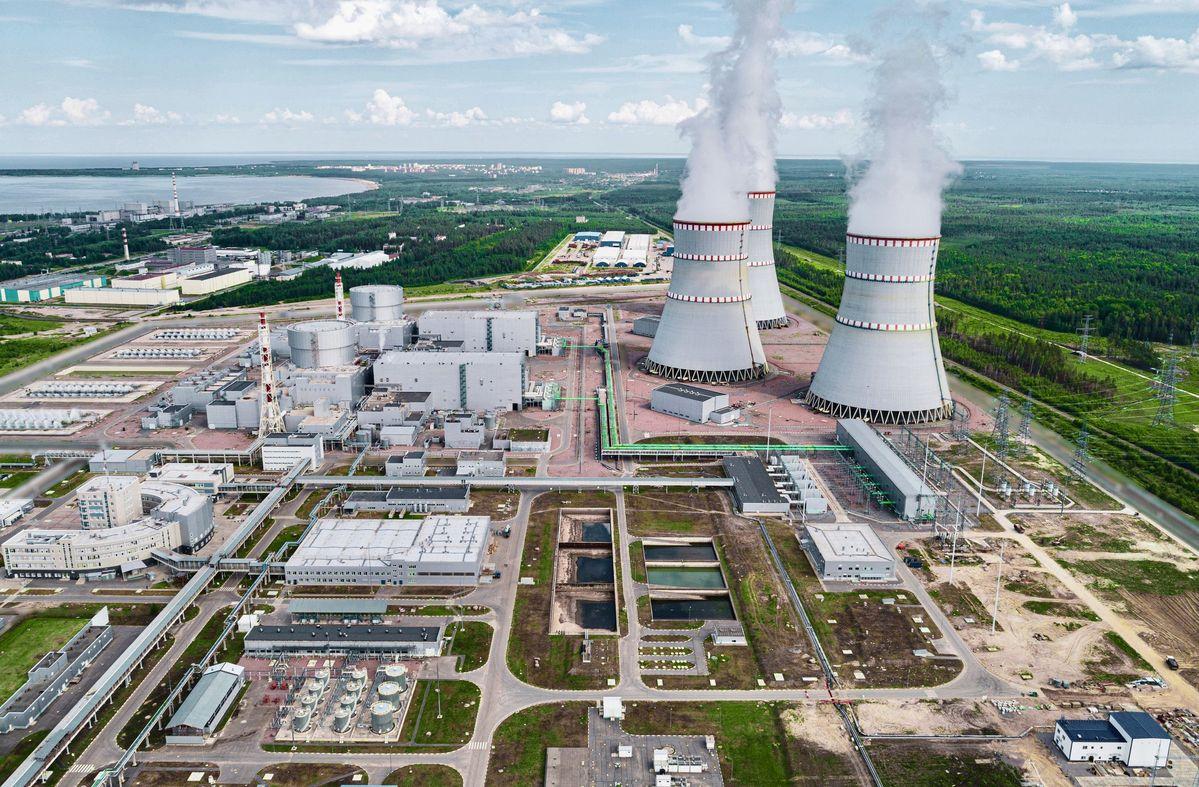
A conventional nuclear power station uses heat generated through controlled nuclear fission to produce steam, which drives a turbine connected to an electrical generator. In a pressurised water reactor, the reactor coolant circulates under high pressure through the reactor core, absorbing heat without boiling. The heat is transferred through steam generators to a separate secondary water circuit, where steam is produced to drive the turbine.
The principal systems include the reactor pressure vessel, fuel assemblies, control and protection systems, primary coolant pumps, steam generators, turbines, condensers, cooling-water infrastructure and electrical systems. These must operate as an integrated installation, supported by multiple layers of safety and monitoring.
The reactor building itself is designed as a controlled and protected environment. Its containment structure provides a physical barrier against the release of radioactive material, while engineered safety systems are designed to maintain cooling and protect the reactor under both normal operating conditions and specified accident scenarios.
Modern reactor designs incorporate redundant and diverse safety systems, with combinations of active and passive mechanisms depending on the technology selected. These may include emergency core cooling, backup electrical supplies, containment heat removal and systems designed to maintain safe conditions even when normal power supplies are unavailable.
For Ghana, the engineering challenge will extend beyond the reactor island.
Cooling water and thermal management
A nuclear power station converts only part of its thermal energy into electricity. A substantial proportion of the heat must be rejected through its cooling system.
The choice between once-through cooling, cooling towers and other configurations will influence water requirements, land use, environmental effects and plant efficiency.
At Nsuban, access to coastal water could offer an important advantage, subject to the findings of detailed marine and environmental studies. A seawater cooling arrangement would require carefully engineered intake structures, screening systems, pumps, pipelines and discharge facilities.
The design must also address marine biofouling, corrosion, sedimentation, changing seawater temperatures and the potential effects of extreme weather. Discharged cooling water must meet environmental requirements to prevent unacceptable impacts on marine ecosystems.
Electrical generation and grid integration
The proposed capacity introduces another significant engineering consideration: the ability of Ghana’s electricity network to receive and transmit power from a large nuclear installation.
A nuclear plant of 2,000 MW would require a carefully designed high-voltage connection to the national transmission system. This would involve transmission corridors, substations, transformers, protection systems, switchyards and associated control infrastructure.
The connection arrangement would depend on whether the project comprises one large generating unit or multiple smaller units. Two 1,000 MW reactors, for example, would offer a different operating and grid-management profile from a single 2,000 MW unit.
The loss of a large generating unit through an unexpected shutdown is a major contingency for a national grid. Ghana’s system operator would need to demonstrate that sufficient reserve capacity, spinning reserves, interconnections and other balancing resources are available to manage such an event without widespread disruption.
This makes the choice of reactor configuration an electricity-system planning decision as much as a nuclear engineering decision.
Nuclear safety, security and emergency preparedness
The development of a nuclear power station requires an independent regulator with the legal authority, technical expertise and resources to review designs, issue licences, conduct inspections and enforce safety requirements.
The Nuclear Regulatory Authority of Ghana was established under the Nuclear Regulatory Authority Act, 2015 (Act 895). It has been developing its regulatory infrastructure, technical guidelines and staff competencies with support from international partners.
However, the establishment of the regulator is only one part of the process. Ghana must demonstrate that its regulatory framework is sufficiently complete to cover the full lifecycle of a commercial nuclear facility.
A Ghana News Agency investigation in March 2026 reported that several supporting nuclear regulatory instruments were still progressing through legal and parliamentary processes. The status of these instruments will need to be established before the project advances to formal licensing.
The eventual plant will also require physical protection against unauthorised access, sabotage and other security threats. Emergency preparedness arrangements must cover the plant, surrounding communities, relevant local authorities, health facilities and national emergency-response agencies.
Ghana’s arrangements will need to comply with applicable IAEA safety standards and its international nuclear safety and safeguards obligations.
Radioactive waste and decommissioning
Radioactive waste management is another long-term responsibility that must be addressed before construction.
Spent nuclear fuel contains radioactive materials and requires controlled handling, storage and eventual management under a national policy and regulatory framework. Depending on the reactor technology and national strategy, spent fuel may initially be stored in specially designed cooling pools before being transferred to dry storage systems.
Other operational waste, including contaminated protective equipment, filters and maintenance materials, must be segregated, treated, conditioned and stored according to its radioactive characteristics.
Ghana will also need a long-term strategy for spent fuel, radioactive waste disposal and eventual plant decommissioning. These obligations extend well beyond the operating life of the station and must be reflected in the project’s financial and institutional arrangements.
What 2,000 MW could mean for Ghana’s electricity mix
The scale of the proposed project becomes clearer when compared with Ghana’s existing electricity generation capacity.
According to the Ministry of Energy and Green Transition’s 2026–2029 Sector Medium-Term Development Plan, Ghana had approximately 5,749 MW of installed grid-connected generation capacity in the second quarter of 2025. Thermal power accounted for approximately 4,032 MW, hydroelectricity for 1,584 MW and renewable energy sources, mainly solar, for 133 MW.
This represented a generation capacity mix of approximately 70% thermal, 28% hydroelectricity and 2% renewables.
The country’s electricity generation in 2024 reached approximately 25,550 GWh. Thermal plants contributed 15,476 GWh, or about 61%, while hydroelectric plants generated 9,893 GWh, representing approximately 39%. Other renewable sources contributed a relatively small share.
The figures reveal Ghana’s continued dependence on thermal generation, particularly natural gas, alongside its substantial hydropower resources.
A nuclear installation rated at 2,000 MW would be equivalent to approximately 35% of the country’s existing installed grid-connected capacity. If fully developed, it would represent a major change in the structure of the electricity system.
However, installed capacity should not be confused with annual electricity production.
Nuclear power stations are generally designed to operate continuously at high capacity factors, with planned maintenance and refuelling outages scheduled in advance. To illustrate the potential scale, a hypothetical 2,000 MW installation operating at a 90% capacity factor would produce approximately 15.8 TWh of electricity annually.
That would be equivalent to about 62% of Ghana’s total electricity generation in 2024. This is an illustrative comparison, not a forecast of the proposed plant’s output or Ghana’s future demand.
Actual production would depend on the number and rating of reactors, their availability, maintenance requirements, the final commissioning schedule and the ability of the electricity network to accommodate their output.
Reducing exposure to thermal fuel constraints
Thermal generation has played a central role in Ghana’s electricity system, but its operation is exposed to fuel supply and price risks.
Natural gas is a major fuel for the country’s thermal fleet, supplemented when necessary by liquid fuels such as light crude oil, heavy fuel oil and diesel. The Ministry of Energy’s 2026–2029 plan identifies natural gas supply constraints as an important challenge for electricity generation.
Nuclear power could provide a substantial source of electricity that does not depend on continuous deliveries of natural gas or petroleum products. Uranium fuel has a high energy density, and nuclear reactors generally require refuelling at intervals rather than continuous fuel deliveries.
This could improve the diversity of Ghana’s electricity supply and reduce the exposure of its power system to some international fuel market disruptions.
However, nuclear fuel security requires its own long-term arrangements, including procurement, conversion, enrichment and fuel fabrication where applicable, transportation, safeguards and spent-fuel management. Ghana would need reliable contractual arrangements and appropriate international cooperation to support the entire fuel cycle.
Working alongside hydroelectricity and renewables
Nuclear power would not necessarily displace Ghana’s existing hydroelectric or renewable generation resources.
The Akosombo, Kpong and Bui hydroelectric facilities provide substantial generating capacity and operational flexibility. Hydropower can be particularly useful in balancing fluctuations in electricity demand and variable renewable generation, subject to reservoir levels, water availability and environmental operating constraints.
Solar generation, meanwhile, can contribute electricity during daylight hours, reducing the amount of energy that must be supplied by other generators at those times.
Nuclear generation could provide a stable source of low-carbon electricity, while hydropower and other flexible resources help manage changes in demand and supply.
The actual operating strategy would need to be developed through integrated electricity-system planning. Nuclear reactors are generally designed for high utilisation, although some modern designs can adjust output within specified technical limits. Their operating characteristics, maintenance schedules and minimum stable output would need to be considered alongside solar, hydro and thermal generation.
The objective should be to develop a complementary generation portfolio rather than build nuclear capacity without considering how the rest of the electricity system will operate.
Supporting industrial development and regional electricity trade
Ghana’s nuclear ambition is closely linked to its industrialisation agenda.
Reliable electricity supply is essential for energy-intensive manufacturing, mining, mineral processing, cement production, data centres and other large industrial users. A nuclear power station could contribute to a more diversified electricity supply and provide a long-term source of generation for an expanding economy.
The country also participates in regional electricity trade through the West African Power Pool, exporting electricity to neighbouring countries including Togo, Benin and Burkina Faso.
Additional generation capacity could strengthen Ghana’s position as a regional electricity supplier, provided that domestic demand, transmission capacity, commercial arrangements and cross-border infrastructure develop accordingly.
However, a large increase in installed generation capacity does not automatically translate into cheaper electricity or greater industrial competitiveness. The final cost of nuclear-generated electricity, financing terms, transmission investment, plant availability and the structure of power purchase agreements will determine how much benefit reaches consumers and industry.
Financing a project that takes years to build
Nuclear power stations are among the most capital-intensive infrastructure projects. Their financial requirements are shaped by the size and technology of the reactor, construction duration, financing costs, local participation, fuel arrangements and long-term operating obligations.
Unlike many conventional power projects, nuclear investments involve a substantial period during which capital is committed but no electricity revenue is generated.
Construction delays can increase interest during construction, raise contractor costs and affect the eventual price of electricity. This makes project preparation, risk allocation and financing structure especially important.
Ghana’s earlier nuclear development tracks offer some indication of the financing approaches under consideration.
The proposed Chinese large-reactor project was associated with a build-operate-transfer model involving local equity participation. The proposed NuScale project was expected to use a public-private partnership arrangement.
For the Russian proposal, however, the financing structure has not been publicly disclosed.
Rosatom has experience with a range of international project arrangements, including state-backed financing and build-own-operate structures. Whether any of these would be offered to Ghana remains to be established.
The government will need to consider the implications of sovereign guarantees, foreign-currency borrowing, long-term power purchase agreements, construction risk and the possibility of changes in electricity demand over the project’s lifetime.
There is also the question of the country’s ability to absorb the investment without placing excessive pressure on public finances or electricity tariffs.
Local equity participation could help retain some economic benefits within Ghana, but domestic investors would require a clear understanding of the risks, revenue arrangements and long-term obligations associated with nuclear infrastructure.
A credible financial model must account for the complete project lifecycle, including construction, operation, fuel procurement, waste management and decommissioning. It must also identify how cost overruns and delays will be allocated among the government, technology supplier, project company and lenders.
For Ghana, the financing challenge is not limited to raising the capital required for construction. Resources are also needed to complete site investigations, environmental assessments, regulatory development, technical training and other preparatory activities before the main construction contract can be executed.
The funding constraints already reported within the nuclear programme demonstrate why this early investment is essential.
Developing the skills and industrial capacity to operate a nuclear plant
A nuclear power station requires a specialised workforce that extends well beyond reactor operators.
Its construction and operation will involve nuclear engineers, electrical and mechanical engineers, civil and structural engineers, instrumentation and control specialists, materials engineers, radiation protection officers, safety analysts, environmental scientists, project managers and regulatory inspectors.
The workforce must also include technicians, welders, quality assurance specialists, cybersecurity professionals, emergency-response personnel and specialists in radioactive waste management.
Ghana has been developing this capability through its existing nuclear research and academic institutions.
The School of Nuclear and Allied Sciences, established through collaboration involving GAEC and the University of Ghana, has contributed to training in nuclear science and related disciplines. The country has also benefited from IAEA technical cooperation and international training programmes.
The proposed NuScale Energy Exploration Centre at GAEC provides another example of the emphasis on practical training. Its control-room simulator is intended to expose students and professionals to the operating environment of an SMR facility.
The September 2026 national statement to the IAEA also identified human-resource development as a central part of the programme’s progress.
However, operating a research reactor and developing a commercial nuclear power station require different levels of expertise and organisational capability. Ghana will need to establish comprehensive training and qualification pathways for reactor operators, maintenance teams, nuclear safety professionals and the independent regulator.
There is also an opportunity to develop domestic industrial participation.
Local engineering companies could potentially contribute to civil works, conventional plant construction, electrical installations, transmission infrastructure, fabrication, logistics, maintenance and selected support services.
The extent of local participation will depend on the technology supplier’s requirements, the quality assurance systems available in Ghana and the ability of local contractors to meet nuclear industry standards.
Nuclear construction demands rigorous traceability of materials, certified welding procedures, documented quality management and strict inspection regimes. Companies seeking to participate will need to invest in the relevant technical competencies and certification systems.
Developing these capabilities could provide benefits beyond the nuclear project itself, strengthening Ghana’s wider engineering and manufacturing sectors.
From international agreement to commercial operation
The path from the latest political commitment to electricity generation will involve a series of technical, regulatory and commercial decisions.
The immediate priority is to clarify the relationship between the proposed Russian project and the earlier Chinese and American technology partnerships. Ghana will need to establish whether it intends to pursue a single preferred large-reactor project, a multi-vendor strategy or a phased programme involving both large reactors and SMRs.
It will then need to undertake or complete the detailed technical and commercial evaluations required to select the most appropriate technology.
These assessments should consider reactor safety, capital costs, construction schedules, financing terms, fuel supply, local industrial participation, grid compatibility, cooling-water requirements and the long-term availability of technical support.
The preferred site will require comprehensive characterisation, followed by the relevant environmental and nuclear regulatory assessments. A project company will need to be adequately structured, and the owner-operator must demonstrate the organisational capability to manage the design, procurement, construction and eventual operation of the facility.
Ghana must also complete the regulatory framework and establish the licensing processes necessary to review the reactor design and site.
Only after these requirements have been sufficiently addressed can the country move towards the major project commitments associated with construction.
The construction period itself will involve site preparation, excavation, foundation works, installation of nuclear island structures, turbine and generator systems, cooling infrastructure, electrical connections and extensive testing. Before commercial operation, the plant must undergo a comprehensive commissioning programme, including fuel loading, reactor start-up, low-power testing and progressive demonstration of operating performance.
The entire process can take many years. The IAEA framework is intended to prevent countries from rushing into construction before the institutional, technical and safety foundations are in place.
Ghana’s previously stated objective was to introduce approximately 1,000 MW of nuclear capacity by 2034. The World Nuclear Association’s October 2026 assessment considers that target unlikely to be achieved, given the outstanding financing, licensing and project development requirements.
The new 2,000 MW announcement does not, by itself, establish a revised commissioning date. Any credible timetable will need to be based on the actual status of site investigations, technology selection, licensing, financing and contract negotiations.
Ghana’s nuclear journey and the wider African energy landscape
Ghana’s programme is part of a wider resurgence of interest in nuclear energy across Africa.
South Africa remains the continent’s only country operating a commercial nuclear power station, with the Koeberg Nuclear Power Station supplying electricity to the national grid.
Egypt is constructing the four-reactor El Dabaa nuclear power plant with Russian assistance. Other countries, including Uganda and Ethiopia, have also pursued nuclear power ambitions and engaged international technology suppliers.
The renewed interest reflects growing electricity demand, industrialisation plans, the need to diversify energy sources and the search for dependable low-carbon electricity.
However, nuclear power presents challenges that are particularly significant for countries developing their first commercial facilities. These include high upfront capital costs, limited domestic experience, complex regulatory requirements, dependence on international technology suppliers and the need for long-term institutional stability.
Ghana’s experience could offer important lessons to other African countries considering nuclear energy. Its long-standing nuclear research institutions, regulatory development, academic partnerships and engagement with the IAEA provide a foundation on which a commercial programme can be built.
At the same time, the delays encountered so far demonstrate that political commitment and international agreements must be matched by sustained funding, technical preparation and clear institutional responsibilities.
The African nuclear opportunity will ultimately depend on countries’ ability to develop projects that are safe, affordable, financially sustainable and appropriately sized for their electricity systems.
A major ambition still awaiting its engineering and financial blueprint
The proposed 2,000 MW nuclear power plant represents a significant development in Ghana’s long-running pursuit of nuclear electricity. It could provide a major source of dependable low-carbon generation, reduce the electricity system’s exposure to thermal fuel constraints and support the country’s ambitions for industrial expansion and regional electricity trade.
Yet the most important work remains ahead.
Ghana must establish exactly what it intends to build, where it will be located, which reactor technology will be selected, how the project will be financed and how the plant will be integrated into the national grid. It must also demonstrate that its regulatory institutions, workforce, emergency arrangements and waste-management systems are capable of supporting a commercial nuclear installation.
The Russian agreement adds a new international partner and a larger capacity proposal to an already established programme. Its success will depend on how effectively it is integrated with Ghana’s existing nuclear strategy and whether the country can convert political commitments into a fully developed, financeable and licensable infrastructure project.
For a country whose nuclear ambitions date back to the early years of independence, the challenge is no longer just to demonstrate an interest in nuclear technology. It is to build the institutional, technical and financial capacity to deliver a power station safely and operate it for generations.
That is the real road to Ghana’s first nuclear power plant.

-
Product on sale
 AWEBook Volume 2Original price was: KShs 3,500.00.KShs 3,000.00Current price is: KShs 3,000.00.