Last Updated 2 weeks ago by Kenya Engineer
As climate variability intensifies and rainfall patterns become increasingly unpredictable, Kenya’s agricultural sector is facing a defining moment. For millions of smallholder farmers who rely on rain-fed agriculture, irrigation is no longer a luxury—it is a necessity. Yet the success or failure of small-scale irrigation schemes often hinges on one critical factor that is frequently overlooked: sound mechanical engineering design.
In the upcoming March–April 2026 issue of Kenya Engineer Magazine (Vol. 54, Issue 2), Eng. Elijah M. Ombiro, PE, presents an in-depth technical feature that explores how mechanical engineering solutions can transform small-scale irrigation into a reliable, efficient, and sustainable driver of food security in Kenya.
While policy, financing, and institutional support are important, Eng. Ombiro argues that many irrigation projects fail at a much more practical level. Inadequate pump selection, poor energy planning, inefficient water distribution systems, and weak maintenance regimes continue to undermine otherwise well-intentioned schemes. The result is wasted investment, high operating costs, and systems that fall into disuse within a few years of commissioning.
The full article takes readers through the entire irrigation value chain, from water abstraction to on-farm distribution, highlighting the mechanical engineering decisions that determine system performance. It examines the suitability of common pumping technologies, explains why correct pump sizing and energy efficiency are fundamental, and shows how mismatched components can lead to excessive power consumption and premature equipment failure.
A major focus is placed on renewable energy integration, particularly solar-powered and hybrid irrigation systems that are rapidly gaining traction in off-grid and rural areas. With energy costs accounting for a significant portion of operating expenses, the article demonstrates how properly engineered solar and hybrid solutions can dramatically improve affordability and long-term sustainability.
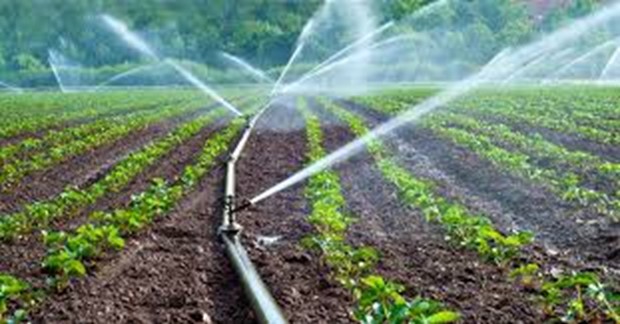
The feature also compares irrigation application methods—surface, sprinkler, and drip irrigation—through an engineering lens, showing how mechanical design choices directly influence water efficiency, crop yield, and system reliability. Beyond installation, the article underscores the importance of preventive maintenance and technology appropriateness, advocating for designs that match local technical capacity and available spare parts.
Importantly, Eng. Ombiro situates mechanical engineers at the heart of Kenya’s food security agenda. By translating policy goals into practical, resilient infrastructure on the ground, engineers play a pivotal role in ensuring that irrigation systems deliver lasting value—especially in the face of climate uncertainty.
This article is essential reading for mechanical engineers, agricultural engineers, county officials, development practitioners, and policymakers involved in irrigation and rural infrastructure.
Read the full technical feature in the upcoming March–April 2026 issue of Kenya Engineer Magazine (Vol. 54, Issue 2).
-
Product on sale
 Kenya Engineer Magazine - Digital Edition (January-February 2026)Original price was: KShs 350.00.KShs 300.00Current price is: KShs 300.00.
-
Product on sale
 AWEBook Volume 2Original price was: KShs 3,500.00.KShs 3,000.00Current price is: KShs 3,000.00.