Last Updated 9 mins ago by Kenya Engineer
Changes in the sound produced by industrial machinery can provide early warning signs of developing mechanical faults. Detecting these changes before they escalate into equipment failure is an important part of preventive maintenance, particularly in industries where unplanned stoppages can disrupt production and increase operating costs.
SKF has introduced the TKST 31 connected stethoscope, an acoustic monitoring instrument designed to help maintenance personnel identify abnormalities in bearings and other rotating equipment, including in noisy industrial environments.
The instrument captures and analyses machine sounds across a frequency range of 30 Hz to 15 kHz. It is supplied with a high-quality Bluetooth-connected headset featuring noise-cancellation technology, allowing operators to listen to acoustic signals while reducing interference from surrounding industrial noise. The headset is also designed to provide hearing protection.
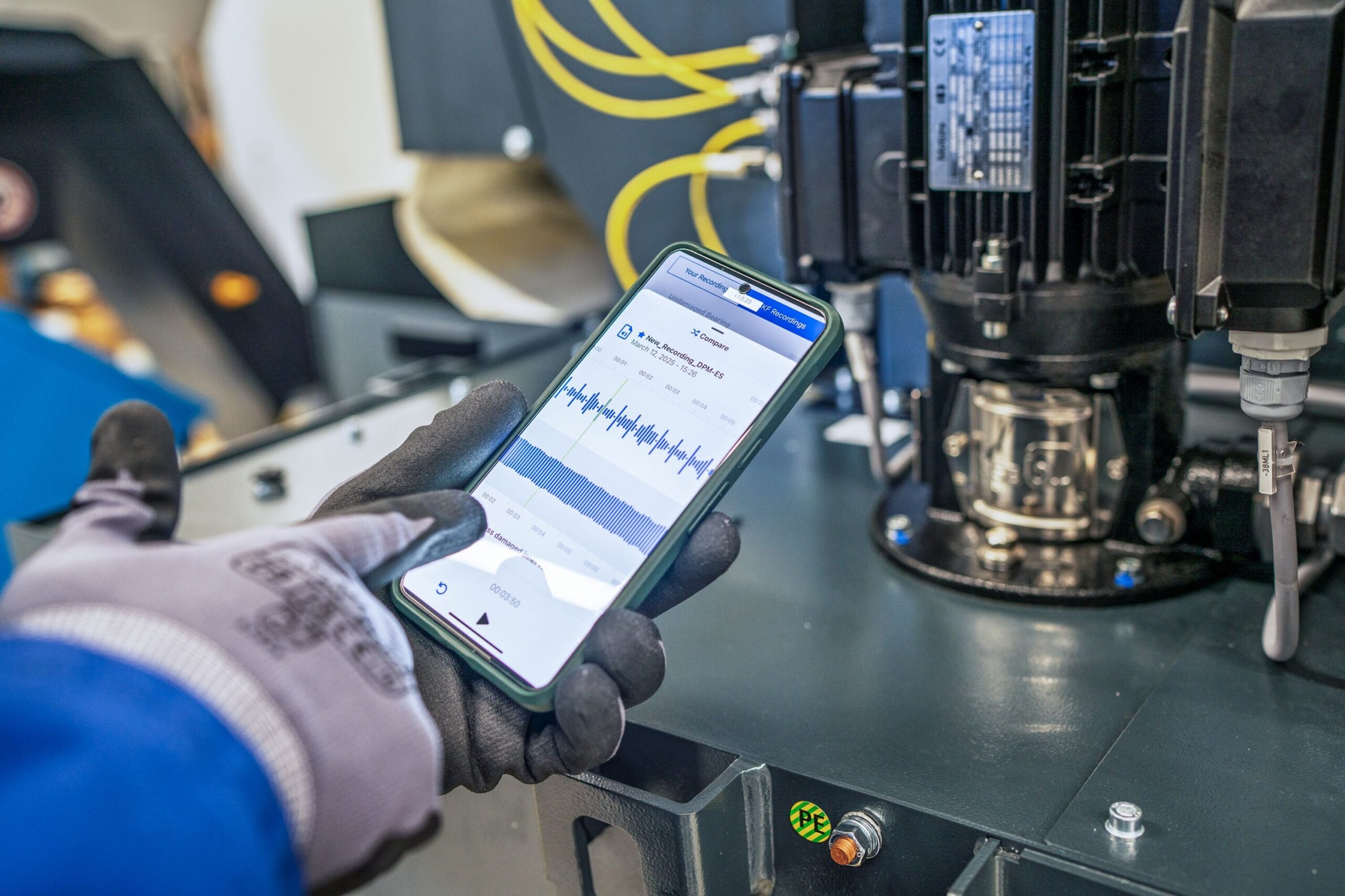
A key feature of the TKST 31 is its integration with SKF’s dedicated mobile application, ‘Detect. Document. Prove.’ The application connects to the instrument through Bluetooth and provides tools for recording, editing, organising and analysing acoustic data. Users can save recordings to a smartphone or tablet, share them with colleagues and generate reports to support maintenance assessments and equipment condition records.
The application also allows maintenance teams to compare current recordings with previous measurements and samples from SKF’s sound library. This provides a means of tracking changes in equipment noise over time and investigating potential deterioration before it develops into a more serious fault.
According to Eddie Martens, SKF Product Manager, MaPro, the connected system extends the role of conventional acoustic inspection by combining sound capture with digital documentation and reporting capabilities.
The application supports audio editing, file management and report generation for individual recordings or groups of recordings. Maintenance personnel can trim and rename files, store them locally and export reports for service records, customer documentation and other maintenance-related requirements.
The TKST 31 also incorporates a library of demonstration audio samples covering common bearing-related fault conditions. Available online and offline, the reference recordings help users familiarise themselves with different machine sounds and compare them against acoustic signals captured during inspections.
On the instrument itself, users have access to 15 sound-recording slots, alongside volume adjustment and a mute function. A large backlit colour display provides access to the operating menu and recording functions.
Power requirements have also been kept relatively modest. The device operates on two AA batteries, providing at least eight hours of continuous use. An optional automatic switch-off function helps conserve battery power when the instrument is idle.
For field inspections, the TKST 31 is supplied with two probes measuring 70 mm and 300 mm respectively, a headset and a protective carrying case. The longer probe allows operators to access bearing components located in difficult-to-reach positions. Its compact construction and one-handed operation are intended to make inspections easier in confined or demanding industrial environments.
Supporting the wider maintenance process
SKF positions the TKST 31 as part of a wider maintenance offering that extends beyond fault identification to equipment repair and maintenance.
Once a potential bearing problem has been detected, maintenance teams may require additional equipment and consumables to address the underlying issue. SKF’s complementary solutions include automatic lubrication systems, bearing greases, portable lubrication tools, bearing pullers and bearing installation kits.
These products support different stages of bearing maintenance, from lubrication management and routine servicing to the removal and installation of replacement components.
The introduction of connected acoustic monitoring also reflects the growing role of digital tools in industrial maintenance. By combining conventional listening techniques with electronic recording, mobile applications and digital reporting, equipment inspections can produce information that is easier to document, compare and share across maintenance teams.
For industrial operators, the ability to establish a record of machine sound patterns can support more consistent condition assessments and help inform decisions on when equipment requires further inspection or intervention. Early identification of abnormal acoustic signatures can contribute to better maintenance planning, reduced exposure to unexpected equipment failures and improved reliability of rotating machinery.

-
Product on sale
 AWEBook Volume 2Original price was: KShs 3,500.00.KShs 3,000.00Current price is: KShs 3,000.00.