

Last Updated 2 months ago by Kenya Engineer
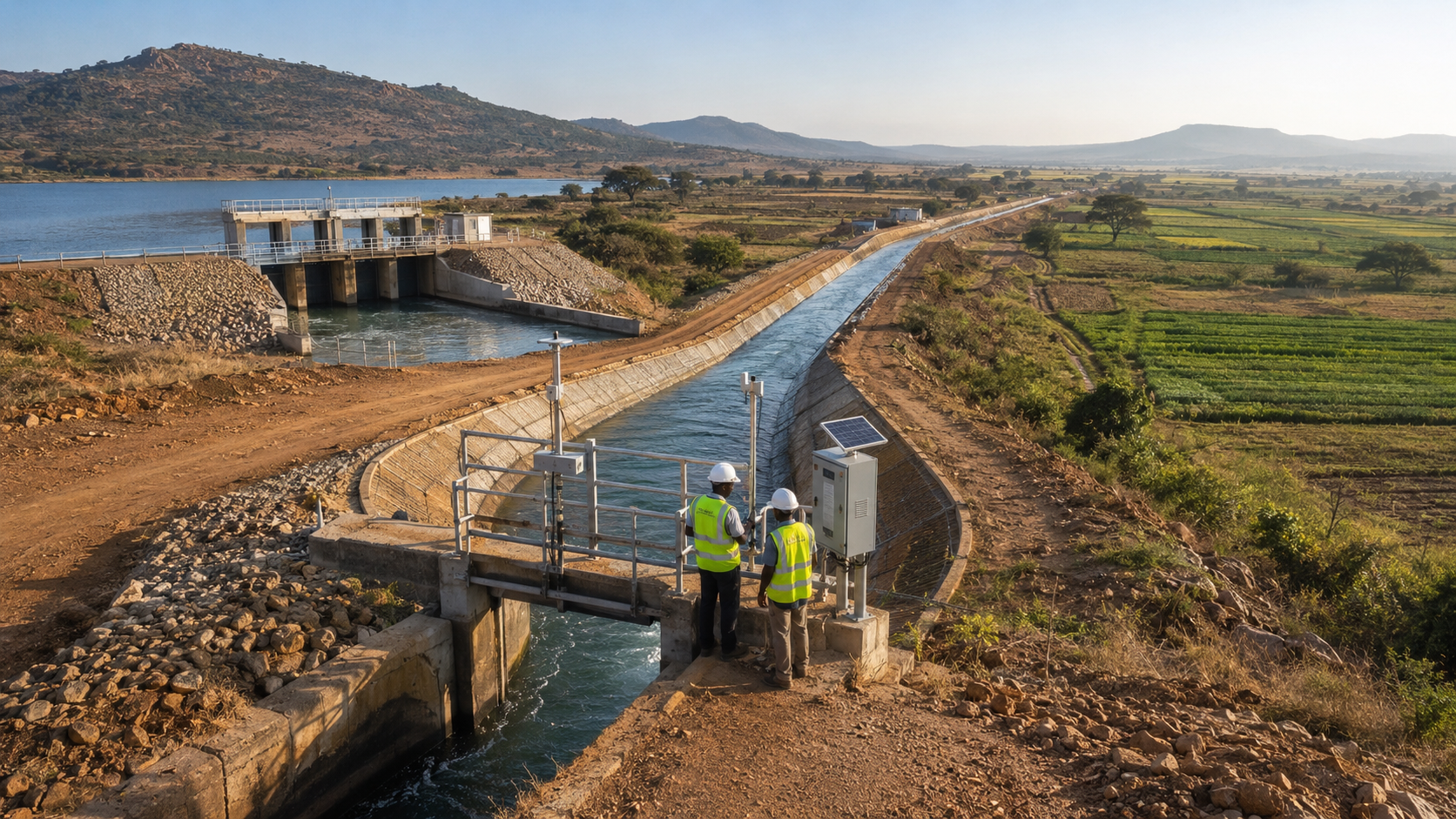
Kenya’s latest irrigation reform is built on a proposition that engineers will immediately recognise: a water-storage structure, a flood-control work, a conveyance system, a drainage network and an irrigated field are not separate outcomes. They are parts of one hydraulic chain. When they are planned by different institutions, the interfaces can become the failure points—storage without command area, canals without dependable yield, flood works without an operating owner, or schemes whose maintenance budget arrives only after performance has deteriorated.
That is the strongest case for the Irrigation (Amendment) Bill, 2026. It proposes to merge the National Irrigation Authority and the National Water Harvesting and Storage Authority, creating a National Irrigation and Water Storage Authority. A companion Water (Amendment) Bill would remove the storage authority from the Water Act. In principle, the reform could give one institution responsibility for the path from captured water to productive use. In its present form, however, the legislation is better at transferring an organisation than transferring its complete engineering mandate.
Why the merger has engineering logic
The scale of Kenya’s irrigation challenge supports integrated planning. The Government’s National Irrigation Sector Investment Plan estimates national irrigation potential at about 3.35 million acres, but records only 540,000 acres—16 per cent of that potential—as developed by 2020. It says the 2022–2026 strategy targeted 100,000 additional acres a year, while the recent pace has been approximately 25,000 acres. The plan estimates that KSh598 billion will be required over ten years to expand equipped area by one million acres and improve the output of existing public and community assets.
Institutional fragmentation is not the only reason for that gap; financing, project preparation, land, permits, catchment yield, procurement and operation all matter. Still, combining bulk storage expertise with irrigation design can improve scheme sequencing. Reservoir yield can be tested against crop-water demand before a command area is promised. Sedimentation allowances, conveyance losses, environmental flows, drainage capacity, energy demand and climate-adjusted hydrology can be considered as one system rather than as separate projects. The Bill’s expanded definition of irrigation infrastructure—covering harvesting and storage structures, flood-control works, abstraction, conveyance, distribution, on-farm facilities and drainage—reflects this systems view.
What the two Bills do and what they leave behind
| Provision reviewed | Proposed change | Kenya Engineer finding |
| Water Bill clauses 4–9 and Water Act sections 30–35 | Abolish the storage authority and repeal its board, functions, chief executive and staffing provisions. | The Irrigation Bill does not insert the full repealed functions into section 8 of the Irrigation Act. Drought response, storage strategy, infrastructure safety and bulk-water powers are not fully carried across. |
| Irrigation Bill clause 3 and Irrigation Act section 4 | Extend the Irrigation Act’s precedence to irrigation infrastructure and water harvesting and storage for irrigation. | The text needs an express saving for Water Resources Authority permits, the statutory water reserve and environmental approvals, especially because ‘water harvesting’ is expanded to include sub-surface extraction. |
| Irrigation Bill clause 8 and Irrigation Act section 19 | Replace section 19(2), which supports management transfer to user bodies, with a new infrastructure-operation provision. | Section 19(3) would still refer to agency contracts ‘under subsection (2)’, although the replacement subsection no longer contains them. The amendment also duplicates part of section 19(1). |
| Irrigation Bill clause 11 and proposed section 35A | Transfer NWHSA assets, liabilities, contracts, cases and employees to the merged authority. | The asset carve-out points to section 148 of the Water Act, a spent transition concerning the former Water Resources Management Authority—not a clear boundary for water-service assets. Mixed-use works need an asset-by-asset schedule. |
| Bill text and memorandum | The operative clauses create the National Irrigation and Water Storage Authority. | The memorandum calls it the National Irrigation and Water Harvesting Authority. Parliament should settle one legal name throughout both Bills and all consequential instruments. |
The missing operating mandate
The companion Water Bill would repeal section 32 of the Water Act. That section currently authorises the National Water Harvesting and Storage Authority to develop, maintain and manage national public water works for storage and flood control; collect information for national storage and flood-control strategies; develop harvesting policy; undertake strategic drought interventions; advise the Cabinet Secretary; appoint agents for operation, maintenance and safety; and enter specified bulk-water purchase agreements.
The Irrigation Bill does not amend section 8, which contains the National Irrigation Authority’s powers and functions. Instead, it broadens definitions, adds land reclamation and flood control to the national government’s role, and gives the Cabinet Secretary oversight of irrigation infrastructure through the renamed Authority. Those changes are not equivalent to transferring the repealed section 32 functions. If both Bills passed unchanged, the new Authority would receive assets and employees while some of the legal powers used to operate those assets would disappear. Dam and reservoir safety is the sharpest example: the Water Act expressly mentions safety when permitting the storage authority to appoint operating agents; the proposed replacement text does not recreate that duty.
This can be corrected by replacing section 8 with a consolidated mandate, rather than relying on implied authority scattered across definitions and ministerial functions. The revised provision should distinguish the merged body as developer and operator from the Water Resources Authority as allocator and regulator. It should expressly preserve water permits, reserve flows, dam-safety rules, environmental approvals and basin planning.
An asset transfer needs an engineering register
Clause 11 attempts to move property, liabilities, contracts, court cases and employees through a single transitional section. Its wording is too thin for a portfolio of dams, pans, boreholes, flood works, offices, vehicles, designs, land interests and projects at different stages of procurement. The clause transfers assets ‘not linked to water services provision’ and cites section 148 of the Water Act. Yet section 148 is the old transition from the former Water Resources Management Authority to today’s Water Resources Authority; it does not clearly define the assets that must remain with water-service institutions. The wording appears to reproduce an old transition formula without correcting the cross-reference for the new merger.
The distinction also cannot be made reliably by project name. A multipurpose dam may support domestic supply, livestock, irrigation, drought relief and flood attenuation. Its spillway, outlet works, treatment connection and downstream releases may serve different owners and statutory duties. Parliament should require a published transfer schedule identifying each asset, its legal owner, condition, intended uses, land status, permits, contracts, liabilities, operating entity and maintenance budget. Where an asset has mixed uses, an operating agreement should allocate water, cost and safety responsibilities before vesting takes effect.
The people and maintenance questions
The Bill provides that NWHSA employees will become employees of the merged Authority on terms ‘to be determined’ by the Salaries and Remuneration Commission. That formulation should be aligned with Article 230 of the Constitution, under which SRC advises national and county governments on remuneration and benefits for public officers; it does not ordinarily become the employer or determine the entire employment relationship. A transition plan should map engineering competencies, protect accrued rights, identify duplicated posts, preserve field teams and specify the employing authority’s role with SRC advice and, where necessary, Public Service Commission oversight.
The memorandum also states that enactment may not occasion additional public expenditure. A merger can reduce recurrent duplication over time, but integration is not cost-free. Asset verification, condition surveys, dam-safety reviews, data migration, laboratory and monitoring systems, staff harmonisation, contract novation and regional deployment all require resources. Treating those costs as invisible is a route to inheriting infrastructure without the information or capacity needed to operate it.
Counties, communities and the last kilometre
Clause 8 excludes irrigation infrastructure under county governments and community-owned schemes from the new national oversight provision. That respects an important boundary, but it does not explain how national storage feeding county or community distribution will be operated. Nor does the Bill prescribe service agreements for trans-county schemes, flood works that protect settlements, or national assets whose benefits are shared by irrigation and water supply. The statute should require national–county interface agreements covering abstraction, delivery points, telemetry and data access, maintenance standards, emergency procedures, tariffs or service fees, and dispute escalation.
There is also an unintended governance consequence in section 19. The Bill removes the subsection that requires resources and technical support for irrigation water-user associations, scheme committees and other farmer bodies to assume management responsibility through agency contracts. Yet the next subsection would still refer to agreements made ‘under subsection (2)’. Beyond correcting that broken cross-reference, Parliament should decide whether irrigation management transfer remains policy. A storage-to-farm institution will still fail at the last kilometre if water-user organisations cannot maintain distribution systems, collect service fees or enforce delivery schedules.
What Parliament should amend before passage
- Transfer the mandate, not only the institution. Insert in section 8 a complete list of storage, harvesting, flood-control, drought-response, information, bulk-water, operation, maintenance and safety functions that will survive repeal of Water Act section 32.
- Correct the internal and cross-statute references. Repair section 19(3), identify the correct Water Act provisions for water-service assets and use one name for the merged Authority in both Bills and their memoranda.
- Require an asset and condition schedule. Make vesting conditional on a verified register covering ownership, land, permits, design records, condition, liabilities, contracts, operational status and lifecycle cost.
- Protect regulation and multiple water uses. State expressly that the Irrigation Act’s precedence does not displace Water Resources Authority permits, the water reserve, environmental approvals or public-water obligations. Provide rules for multipurpose reservoirs.
- Put safety and maintenance in the Act. Assign responsibility for inspections, instrumentation, emergency action plans, sediment management, rehabilitation and ring-fenced operation and maintenance funding.
- Set measurable engineering outcomes. Report not only storage built and hectares announced, but dependable yield, hectares actually supplied, scheme uptime, conveyance loss, water productivity, asset condition, safety compliance and cost per productive hectare.
A sound concept that needs a stronger statute
Kenya has a persuasive reason to organise irrigation as a complete water-delivery system. A merged institution could reduce interface delays, improve reservoir-to-command-area design and concentrate scarce engineering skills. The Irrigation (Amendment) Bill is therefore not misguided. It is unfinished.
The test is not whether two logos become one. It is whether every transferred dam has a legal operator, every operator has a safety duty and maintenance budget, every reservoir has an enforceable allocation plan, every county interface has an agreement, and every scheme can demonstrate reliable water at the farm gate. Parliament can preserve the Bill’s integrated engineering logic while correcting the mandate, asset, staffing and governance gaps. Doing so before enactment will be cheaper—and safer—than discovering them after the new Authority inherits the portfolio.
Sources reviewed
- Parliament of Kenya — Irrigation (Amendment) Bill, 2026
- National Assembly — Bills Tracker as at 30 July 2026
- Kenya Law — Irrigation Act, Cap. 347
- Kenya Law — Water Act, Cap. 372, version at 10 July 2026
- Kenya Law — Water (Amendment) Bill, 2026
- State Department for Irrigation — National Irrigation Sector Investment Plan
Editorial note: Legal status and online sources were checked on 5 August 2026. This is a policy and engineering review, not legal advice.

-
Product on sale
 AWEBook Volume 2Original price was: KShs 3,500.00.KShs 3,000.00Current price is: KShs 3,000.00.