
Last Updated 1 hour ago by Kenya Engineer
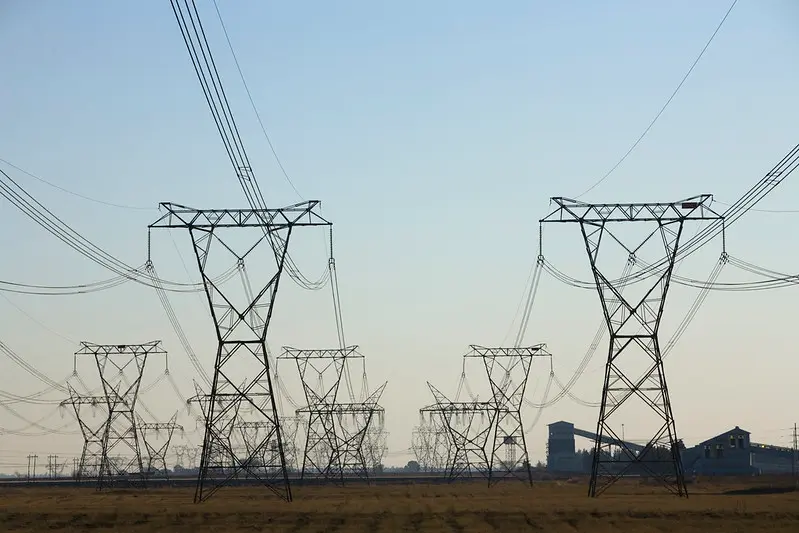
A 200-kilometre high-voltage transmission line linking Zambia and the Democratic Republic of Congo is moving towards construction, in a project that could change how major power infrastructure is developed and financed across Africa.
The Kalumbila–Kolwezi Interconnector Project (KKIP) will connect Zambia’s electricity network at Kalumbila with Kolwezi in the DRC, providing a new transmission route into the Copperbelt, one of Africa’s most important mining and industrial regions.
The project has an estimated construction cost of about US$300 million and will have a thermal transmission capacity of 700MW. It is designed to initially enable the DRC to import up to 550MW of electricity, while allowing the capacity to be increased beyond 1GW in the future.
The latest development came on October 6, when the Strategic Investment Fund of the Democratic Republic of Congo (FIS-RDC), Enterprise Power DRC (EnPower), Trafigura and Gridworks Development Partners signed a Strategic Framework Agreement to jointly finance, build and operate the interconnector.
The project is significant for another reason. According to its developers, KKIP will be the first privately developed and financed cross-border transmission infrastructure project of its kind on the African continent.
A transmission project built around industrial demand
The immediate driver is the DRC’s electricity deficit.
The country’s Copperbelt has some of the world’s largest concentrations of copper and cobalt mining activity, but electricity shortages have constrained mining, processing and industrial expansion. The project partners estimate the DRC has a structural power deficit of more than 1GW.
KKIP is intended to provide another source of electricity by connecting the DRC more directly to Zambia and, through Zambia, the wider Southern African Power Pool (SAPP).
This makes the project more than a bilateral transmission line. It becomes part of a regional electricity market in which power can move across national borders according to available generation and demand.
For Zambia, the line creates additional export capacity for licensed power producers. For the DRC, it provides access to additional electricity for mines and industrial users. The developers also expect the interconnector to support new generation capacity on the Zambian side by creating an additional market for electricity.
Engineering a 330 kV connection
The interconnector is being developed as a high-voltage 330 kV transmission line.
Project information from EnPower puts the route at approximately 190 kilometres, with around two-thirds of the line located in Zambia. The line will connect Kolwezi with the ZESCO substation serving the Kalumbila area in north-western Zambia.
Further technical information disclosed in the DRC describes the project as a 330 kV line using two-bundle conductors and an N-1 redundancy configuration, together with three associated substations, including two in the Kolwezi area.
The N-1 configuration is particularly important for a transmission asset expected to serve mining and industrial loads.
In practical terms, the network is designed to maintain service when a major component is unavailable. This provides greater resilience than a system that depends on every major transmission element remaining continuously in service.
The line’s thermal capacity is rated at 700MW, although the initial electricity imports into the DRC are expected to reach up to 550MW. The physical design also allows the transmission capacity to be expanded beyond 1GW as demand and generation develop.
That expandable design is important in a region where electricity demand is being pushed by mining and mineral processing.
Why mining is driving the investment
Copper and cobalt production requires large and reliable amounts of electricity.
Mining operations consume power throughout the production chain, from extraction and crushing to concentration, refining and other processing activities. Interruptions can have consequences well beyond lost electricity consumption because production systems cannot always be restarted immediately after an outage.
The DRC’s copper and cobalt sector is also moving towards greater local processing. More processing means more electrical load.
The KKIP developers expect the additional power supply to unlock mining and refining projects that have been delayed by a lack of available and competitively priced electricity.
This creates an infrastructure cycle.
New transmission capacity makes additional generation commercially useful. More reliable electricity allows mines and processing facilities to expand. Increased industrial activity creates additional electricity demand, which in turn supports further investment in generation and transmission.
The project is consequently being developed around an existing industrial demand base rather than waiting for demand to emerge after construction.
A different way to finance transmission
The financing structure is as significant as the line itself.
Gridworks Development Partners is expected to become the lead equity investor and majority shareholder. FIS-RDC and EnPower have also committed to investing equity, while discussions are continuing with Zambian entities over possible participation.
Trafigura has agreed to arrange a significant share of the project’s debt financing.
This combination of public and private capital is notable because transmission networks have traditionally been closely associated with governments and state-owned utilities.
KKIP instead places a privately developed transmission asset at the centre of a cross-border electricity trade arrangement.
The DRC’s strategic investment fund is participating as an equity investor, while Gridworks provides specialist transmission investment experience and Trafigura brings financing and commodity-market expertise.
FIS-RDC described the transaction as its inaugural investment since the fund was established in 2025. Its stated objective is to use sovereign capital to catalyse private investment rather than replace it.
That approach could become increasingly important as African countries look for ways to expand transmission networks without placing the entire financing burden on national utilities and government budgets.
Connecting the Copperbelt to a wider power market
KKIP will also strengthen the DRC’s connection to the Southern African Power Pool.
SAPP links national electricity systems across Southern Africa and enables participating countries to trade electricity across borders. Greater interconnection allows power shortages in one market to be partially addressed by available generation elsewhere, subject to transmission capacity and market arrangements.
For the DRC, the new line provides another route into the regional electricity system. For Zambia, it creates additional export capacity.
The result is a transmission asset that can potentially serve both sides of the border rather than functioning as a one-directional supply line.
The project partners also see the interconnector as a platform for further cross-border transmission investment across Southern Africa.
More than a line between two countries
The geography of the project gives it significance beyond Zambia and the DRC.
The Copperbelt extends across the two countries and is increasingly important to global supply chains for copper and other critical minerals.
At the same time, the region is attracting investment in mineral processing and industrial infrastructure. Reliable electricity is one of the basic requirements for converting mineral resources into higher-value products locally.
Transmission infrastructure is consequently becoming part of the industrial strategy.
The KKIP developers also point to potential wider benefits for communities and businesses along the system, although the initial commercial case is anchored heavily around mining and industrial demand.
This is an important feature of the project. A transmission line can be designed around a large industrial customer while still creating additional capacity that can support other users.
The project is not yet generating electricity
Despite the scale of the announcement, KKIP should not be confused with a new 700MW power station.
The project is a transmission connection.
The electricity will have to come from generating capacity available in Zambia and the wider Southern African Power Pool. The interconnector provides the infrastructure required to move that electricity into the DRC.
That distinction is important when assessing the project’s potential impact.
A transmission line can remove one major constraint without solving every problem in the electricity system. Generation availability, power purchase arrangements, cross-border trading rules, network stability and the ability of the receiving grid to distribute the imported electricity will all affect how much of the 700MW capacity can actually be used.
The project is designed to address part of that equation.
What the project means for African transmission
Africa’s electricity challenge is often discussed in terms of generation. More power plants are proposed. Solar and wind projects are announced. Gas, hydro and geothermal resources are developed.
But generation cannot solve an electricity shortage if the grid cannot move the power to where it is needed. Transmission is increasingly becoming the constraint.
The Zambia–DRC project illustrates another emerging approach: build transmission around a clearly identified industrial market, connect that market to a regional power pool and use a combination of public and private capital to finance the network.
It is a model that could become increasingly relevant as African economies develop energy-intensive industries.
For countries seeking to expand manufacturing, mineral processing, data centres and other high-load industries, the availability of electricity will depend not only on how many megawatts are generated, but also on whether the transmission network can deliver those megawatts reliably.
A potential model for regional power infrastructure
KKIP is now at the final stage of development, with the project partners saying the necessary concessions, licences and authorisations have been secured. The construction cost is estimated at about US$300 million, although a commissioning date has not yet been announced.
The next challenge will be execution.
A cross-border transmission project has to coordinate technical standards, land access, environmental and social requirements, grid codes, electricity trading arrangements and regulatory approvals across two countries.
It also has to maintain the commercial structure that makes the investment viable over the operating life of the asset. If successfully delivered, the Kalumbila–Kolwezi Interconnector could provide more than an additional 550MW of electricity to the DRC’s Copperbelt.
It could demonstrate how transmission networks can be developed as commercial infrastructure, using industrial demand to support investment, regional power markets to broaden the customer base and private capital to supplement government resources.
For Africa’s expanding electricity markets, that may be as important as the 700MW capacity of the line itself.
-
Product on sale
 AWEBook Volume 2Original price was: KShs 3,500.00.KShs 3,000.00Current price is: KShs 3,000.00.