
Last Updated 2 hours ago by Kenya Engineer
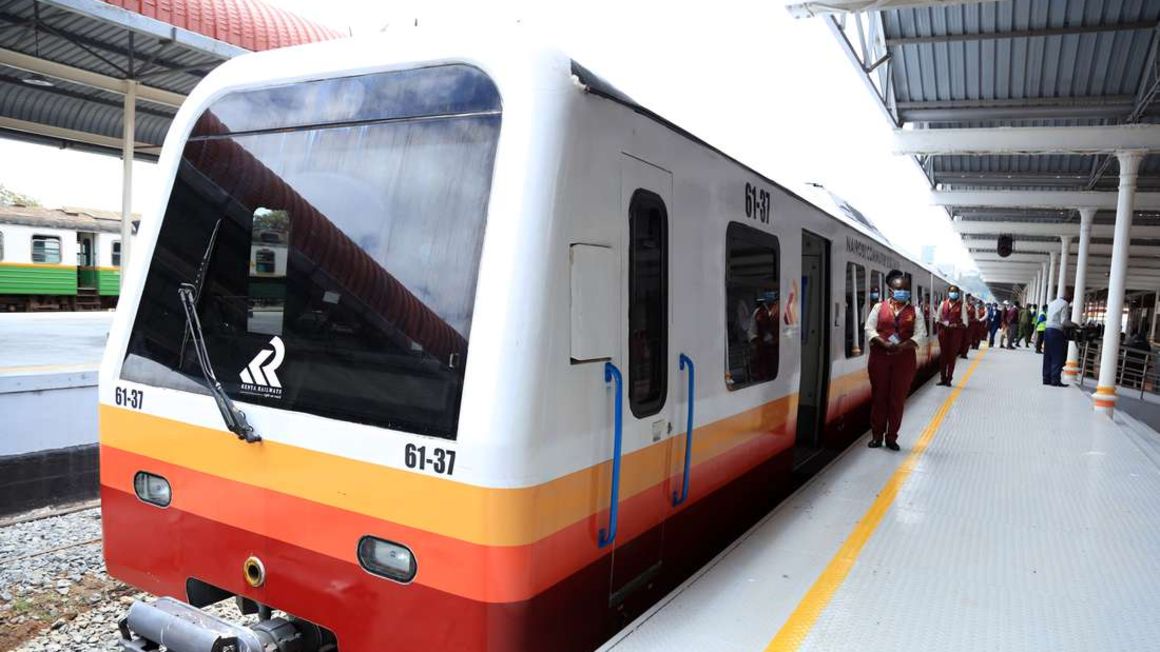
For decades, Nairobi’s commuter railway has occupied an awkward position in the city’s transport system. It has the infrastructure, the right-of-way and the potential to move large numbers of people, yet its role in the daily movement of the metropolitan population has remained modest compared with road-based public transport.
That could change substantially under the Kenya Urban Mobility Improvement Project (KUMIP), a World Bank-supported programme that is now moving towards implementation. The project is not simply about repairing railway tracks or buying new trains. Its stated objective is to improve urban mobility along the Nairobi metropolitan commuter corridors while integrating rail with land-use planning, station development, feeder transport and transit-oriented development.
The World Bank currently lists KUMIP as a US$500 million project, approved on 12 August 2026, with implementation running towards August 2032. Kenya Railways is the principal implementing agency for the rail component, working with other national and metropolitan transport institutions.
The scale of the proposed change becomes clearer when the individual components are examined.
From a railway service to an urban rail system
The most important distinction is that KUMIP is treating Nairobi’s commuter railway as part of the city’s wider public-transport architecture rather than as a stand-alone railway.
Kenya Railways’ current KUMIP programme identifies four major interventions: development of the Nairobi Central Station–Thika commuter corridor, electrification of the Nairobi Commuter Railway Network, acquisition of modern trainsets, including electric and diesel-electric multiple units, and development of transit-oriented areas along the Central Station–Thika corridor.
This represents a significant shift in engineering philosophy.
A conventional railway upgrade can concentrate on track geometry, bridges, stations, signalling and rolling stock. An urban rail system has to deal with a much wider chain of movement. Passengers have to reach stations on foot, by bicycle, bus, matatu or private vehicle. They have to enter and exit stations efficiently, pay fares, transfer between modes and continue their journeys after leaving the train.
KUMIP therefore brings railway engineering together with transport planning, traffic management, land-use planning, pedestrian infrastructure, fare collection and station-area development.
That is why the project is potentially more consequential than the individual rail works might suggest.
The Nairobi–Ruiru–Thika corridor is the first major target
The first major construction focus is the Nairobi Central Station–Ruiru–Thika corridor.
Earlier KUMIP preparation documents identified the Nairobi Central–Ruiru section of the Thika line, approximately 32 km, as the initial investment focus because of its projected demand and the population and economic activity along the corridor. The wider technical assignment, however, was designed to examine the entire Nairobi Commuter Rail Network and prepare the engineering basis for future upgrades.
Kenya Railways’ January 2025 market-engagement material subsequently described the first phase as targeting the highly trafficked Nairobi–Ruiru route, with extension to Thika Railway Station. It also identified additional corridors, including Nairobi–Ngong and Nairobi–Kiambu Town, for subsequent development.
This makes the Nairobi–Thika line important for another reason: it can become the first demonstrator of how a modernised commuter railway is supposed to operate across the metropolitan area.
The corridor is not simply a track between two stations. It passes through some of the most intensely developed parts of Nairobi and Kiambu counties, where the railway is competing with heavily congested road corridors for passengers.
What actually gets upgraded?
The technical scope is considerably broader than replacing sleepers and rails.
The preparatory engineering assignment for KUMIP calls for feasibility studies, preliminary engineering and preparation of design-build bidding documents for the Nairobi Commuter Rail Network. The network identified for assessment includes Nairobi–Limuru, Nairobi–Thika, Nairobi–Konza, Nairobi–JKIA, Nairobi–Embakasi Village, Ngong–Kiserian and the Kiserian–Ongata Rongai–Nyayo Stadium link.
For the priority Nairobi–Ruiru–Thika corridor, the planned engineering interventions include track rehabilitation and upgrading, train-control systems, station improvements, passenger facilities and multimodal interchange infrastructure.
The earlier project-preparation scope also envisaged approximately seven selected stations along the priority corridor receiving improvements, including bus interchange facilities. It included improved feeder-bus connections, an enterprise resource-planning system for railway operations, integrated fare collection and strengthening of Kenya Railways’ commuter-rail operating capability.
That is important because the limiting factor in a commuter railway is rarely the train alone.
A fast train arriving at an overcrowded station, with poor pedestrian access and no organised interchange with buses, does not create a fast public-transport journey. KUMIP is therefore trying to address the system around the train as well.
The train itself is changing
One of the more significant elements of KUMIP is rolling-stock modernisation.
Kenya Railways says the programme will include the acquisition of Electric Multiple Units and Diesel Electric Multiple Units. The early market engagement held in June 2026 specifically highlighted modern trainsets, maintenance workshops and the electrification of the commuter network as major procurement opportunities.
This introduces a technological transition that Nairobi has not previously implemented at metropolitan scale.
The existing commuter system relies heavily on diesel traction. Multiple-unit trains change the operating model because propulsion equipment is distributed across the train rather than concentrated in a locomotive. That can allow more rapid acceleration and braking, characteristics particularly useful where stations are relatively close together.
For a commuter railway, acceleration is almost as important as maximum speed.
A train that can accelerate rapidly after leaving a station and brake efficiently for the next one can reduce journey times without requiring very high top speeds. It can also potentially support more frequent services on a corridor where trains must share infrastructure and negotiate numerous stations.
The project preparation documents also anticipated the development of a roadmap for greener multiple-unit railway technology, while later KUMIP material has put greater emphasis on the transition towards electrified urban rail.
Electrification is the bigger engineering story
The proposed electrification of the Nairobi Commuter Railway Network may ultimately prove to be one of the most technically consequential elements of KUMIP.
Electrifying an existing railway is not simply a matter of putting wires above the track.
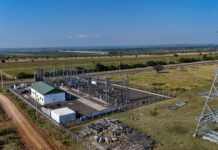
It requires traction-power substations, overhead contact systems, return-current arrangements, protection systems, sectioning equipment, earthing and bonding, signalling compatibility, clearances, telecommunications and modifications to stations and maintenance facilities.
The electricity supply also has to be sufficiently reliable to support a railway whose performance depends on maintaining headways throughout the day.
The decision to electrify the commuter network therefore connects railway engineering directly with Kenya’s electricity infrastructure.
KUMIP’s current programme identifies electrification of the commuter railway network as one of its principal activities, while earlier project documents envisaged the development of a greener multiple-unit railway roadmap.
For Kenya, this also creates a potentially important interaction with the country’s increasingly renewable electricity system. But the engineering challenge will be ensuring that the railway’s traction-power requirements, grid connection and operational resilience are designed as one system rather than as separate projects.
Signalling could matter as much as the tracks
Another less visible component is train control.
The KUMIP preparation documents specifically identify train-control systems as part of the Nairobi Central–Ruiru track upgrade.
For a busy commuter railway, signalling determines much more than whether a train is allowed to proceed.
It governs how closely trains can follow one another, how movements are protected at junctions, how conflicting movements are managed and how the railway responds when something goes wrong.
As passenger numbers increase, simply putting additional trains onto the existing railway can eventually run into capacity constraints. The signalling system therefore becomes an important determinant of the number of trains that can safely operate within a given period.
Modernisation of the railway consequently needs to consider track, signalling and rolling stock as a single operating system.
Stations become transport interchanges
The station is where the railway meets the city.
Under KUMIP, station improvements are intended to go beyond conventional platforms and shelters. The project preparation documents include multimodal interchange facilities and feeder-bus connections, while the wider programme introduces transit-oriented development around selected stations.
This changes the role of a station from a place where passengers simply board trains into a transport interchange.
A commuter arriving from a residential neighbourhood should be able to reach the station safely, transfer between modes, access the platform without unnecessary delay and continue the journey after leaving the train.
Pedestrian crossings, footpaths, cycling facilities, lighting, drainage, bus bays and traffic management consequently become part of the railway’s effective catchment infrastructure.
The engineering boundary of the project becomes the city itself.
Transit-oriented development is part of the railway project
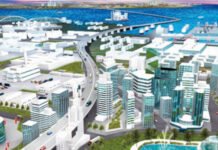
Perhaps the most interesting element of KUMIP for urban planners is its transit-oriented development component.
Earlier project documents proposed planning and investment around commuter-rail stations rather than treating the railway corridor simply as transport infrastructure. The concept includes station-area planning, pedestrian connectivity and mechanisms for using railway land and surrounding development to support investment in the transport system.
This is particularly relevant to Nairobi because many railway stations occupy strategically located land surrounded by rapidly developing neighbourhoods.
The principle is relatively straightforward: concentrate more development and activity around high-capacity public-transport nodes so that more people can reach the railway without depending entirely on private cars.
For Nairobi, however, implementing this approach will require much more than an urban-design plan. It will involve land ownership, zoning, access roads, pedestrian infrastructure, drainage, parking policy, development rights and the commercial use of railway property.
That is why KUMIP includes institutional and land-use planning elements alongside the physical railway works.
The railway will need a new digital layer
Another aspect that could easily be overlooked is the digital infrastructure.
The earlier KUMIP design included an enterprise architecture for commuter-rail operations covering communications, asset management, integrated fare collection, customer support and integration between commuter rail and feeder services. It also proposed an automated fare collection system aligned with national standards.
For passengers, this may ultimately be the part of the transformation they notice most. Instead of the railway functioning as a collection of individual routes and ticketing processes, the intention is to create a more integrated passenger system.
Behind that system would be databases, communications networks, operational control, asset-management systems and passenger information.
For Kenya Railways, this also creates the possibility of moving from reactive maintenance towards condition-based asset management. Track, signalling, rolling stock, stations and power systems can increasingly be monitored as assets with defined operating conditions and maintenance histories.
That is an important step if Nairobi wants a commuter railway that can scale without simply increasing its maintenance burden.
A railway network rather than a single corridor
The Nairobi–Thika corridor is the immediate priority, but KUMIP’s engineering footprint is considerably larger.
The preparatory studies identify the wider Nairobi Commuter Rail Network, including the Nairobi–Limuru, Nairobi–Konza, Nairobi–JKIA, Nairobi–Embakasi Village and Ngong/Kiserian corridors.
Meanwhile, separate developments are moving on other corridors.
In September 2026, Kenya Railways said the proposed Riruta–Ngong commuter line had entered stakeholder engagement as part of pre-feasibility and feasibility studies. The proposed route would connect Nairobi and Kajiado counties, with consultations covering the alignment, station locations, land acquisition and resettlement issues.
There is also a separate proposal for a railway spur from Nairobi Central through the Nyayo Stadium area and Kibera towards Talanta Sports City, being developed in connection with preparations for AFCON 2027. Kenya Railways said in January 2026 that land along the proposed corridor was being repossessed to facilitate construction.
These projects should not automatically be presented as if they are all financed or constructed under KUMIP. They are separate initiatives at different stages. But collectively they illustrate the direction of Nairobi’s emerging commuter-rail network.
The 57-kilometre question
The Nairobi Central–Thika corridor is commonly described in current KUMIP material as approximately 57 km, while earlier preparation documents focused the first investment on the roughly 32 km Nairobi Central–Ruiru section.
The 32 km figure describes the initial priority investment section identified during project preparation. The longer corridor extends to Thika and represents the wider transport corridor that the programme is intended to serve.
Kenya Railways’ more recent KUMIP engagement has explicitly placed the Central–Thika corridor at the centre of the programme.
Nairobi Railway City is only one part of the transformation
The relationship with Nairobi Railway City is also important.
The new Central Station is being developed as the centrepiece of Nairobi Railway City, with planned integration of commuter rail, SGR, BRT, NMT and other urban transport modes. Kenya Railways describes the Central Station as the focal point of a new multimodal transport network.
KUMIP, however, extends the railway transformation far beyond the Central Station.
Railway City deals primarily with the redevelopment of the central railway precinct and surrounding city fabric. KUMIP is concerned with how the commuter railway functions across the metropolitan area.
The two therefore need to work together.
A modern Central Station without modernised approaches and commuter services would constrain the value of Railway City. Conversely, a substantially upgraded commuter railway arriving at an inadequate central interchange would create another bottleneck.
The projects are different, but their engineering interfaces will be critical.
Financing has now moved from concept towards implementation
The World Bank’s current project record gives KUMIP a US$500 million commitment, with approval dated August 2026 and a closing date in August 2032. The project is currently listed as being in the pipeline on the World Bank’s project page.
Kenya’s own 2026 budget records a KSh432.12 million allocation for KUMIP and identifies completion of the feasibility and preliminary studies for the Nairobi commuter rail network as a 2026 target.
The much larger transformation will therefore unfold through successive procurement and construction packages rather than through one contract.
Kenya Railways’ June 2026 early-market-engagement forum was specifically intended to familiarise consultants, contractors, suppliers, investors and development partners with the coming procurement opportunities. The areas discussed included Central Station, electrification, rolling stock and maintenance workshops.
That makes the next phase particularly important to watch.
The engineering concept is becoming clearer. The procurement structure, detailed designs, contract packages, financing arrangements and construction programme will determine how quickly that concept becomes physical infrastructure.
The difficult part is integration
Nairobi does not lack transport projects. It has roads, BRT plans, commuter rail, SGR, proposed new railway corridors, matatu networks and an expanding network of non-motorised transport facilities.
The harder problem is making these systems work together.
KUMIP is significant because it attempts to address that problem through one programme. Its railway component is being combined with station access, feeder services, fare collection, land-use planning, transit-oriented development, institutional reform and greener transport.
That makes the programme less about building a new railway and more about changing how Nairobi’s existing railway infrastructure functions within the city.
The real measure of its success will therefore not simply be the number of kilometres rehabilitated, the number of trains purchased or the number of stations upgraded.
It will be whether a passenger living along the Nairobi–Thika corridor can leave home, reach a station, transfer onto a train, change modes in the CBD and complete the journey with fewer delays and transfers than the current road-based system requires.
That is a much larger engineering challenge.
And if KUMIP delivers on its full scope, Nairobi’s commuter railway will cease to be a peripheral component of the city’s transport network and become one of its principal pieces of urban infrastructure.

-
Product on sale
 AWEBook Volume 2Original price was: KShs 3,500.00.KShs 3,000.00Current price is: KShs 3,000.00.