Last Updated 3 hours ago by Kenya Engineer
Reliable industrial operations depend on the condition and performance of machinery. From manufacturing plants and cement factories to mining operations, construction equipment and power generation facilities, equipment reliability has a direct bearing on productivity, maintenance costs and operational efficiency. One of the most important factors influencing machinery performance is lubrication.
When properly applied, lubrication reduces friction between moving components, limits wear, controls operating temperatures and extends the service life of bearings and other critical machine parts. However, achieving these benefits requires more than applying grease or oil at regular intervals. The lubricant must reach the correct point, in the required quantity and at the appropriate time.
This is the principle behind automated lubrication systems offered through SKF South Africa’s Lincoln range, which provides solutions for industrial applications ranging from individual machines to entire production facilities.
Why lubrication precision
Poor lubrication practices remain a major contributor to premature equipment failure. SKF estimates that more than 50% of premature bearing failures are associated with inadequate lubrication or lubricant contamination. Both under-lubrication and over-lubrication can compromise equipment performance, increase maintenance requirements and lead to unplanned production interruptions.
Under-lubrication allows excessive metal-to-metal contact between moving surfaces, accelerating wear and potentially causing overheating, component damage and eventual bearing failure. In industrial environments where machinery operates continuously or under heavy loads, the consequences can include expensive repairs, production losses and increased maintenance interventions.
Over-lubrication presents a different set of problems. Excessive grease or oil can generate additional heat, increase resistance within moving components and damage seals. It also results in unnecessary lubricant consumption, higher operating costs and potential environmental contamination through leakage and spills.
According to Abdul Abdullah, Regional Sales Manager: Lubrication at SKF South Africa, lubrication should be treated as an essential engineering discipline rather than a routine maintenance activity.
“Poor lubrication and lubricant contamination is responsible for more than 50% of premature bearing failures, an eye-watering figure that underscores why lubrication must never be a hit-and-miss or one-size-fits-all approach,” he says.
He adds that both insufficient and excessive lubrication can shorten equipment life, increase energy consumption and contribute to costly downtime.
Automated lubrication and industrial maintenance
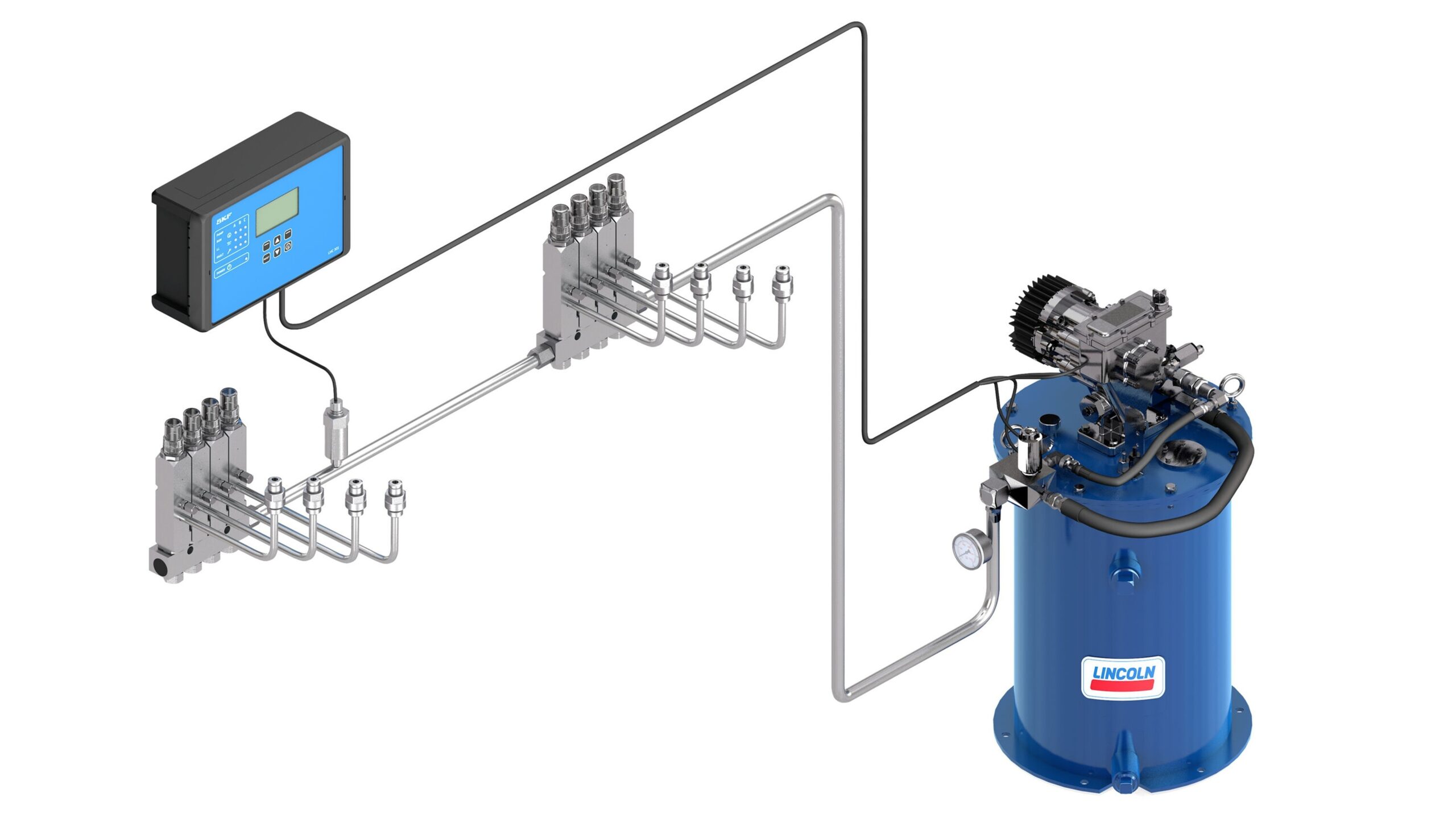
Automated lubrication systems address many of the limitations associated with manual lubrication. Rather than depending entirely on maintenance personnel to service individual lubrication points, a centralised system delivers controlled quantities of lubricant through a network of distribution lines.
The approach allows engineers and maintenance teams to establish consistent lubrication intervals and dosing quantities according to equipment requirements. It also reduces the need for workers to access potentially hazardous or difficult-to-reach lubrication points while machinery is operating.
SKF’s Lincoln lubrication portfolio covers four principal system configurations: single-line, dual-line, multi-line and progressive systems. Each is designed for particular machine configurations, lubrication requirements and operating environments.
Single-line lubrication systems
Single-line systems distribute measured quantities of grease or oil from a central pump station to multiple lubrication points. Their flexibility makes them suitable for a range of industrial applications, including machine tools, printing equipment, construction machinery, cement production, food and beverage processing, rail and steel manufacturing.
By centralising lubricant distribution, these systems help maintain consistent lubrication across connected equipment while reducing the need for individual manual applications.
Dual-line lubrication systems
Designed for larger machinery and installations with extensive lubrication networks, dual-line systems use two main supply lines that operate alternately to distribute lubricant to connected metering devices.
Their configuration makes them suitable for applications requiring the supply of measured lubricant quantities to thousands of lubrication points. They are particularly useful in demanding environments characterised by high pressures, dust, moisture and low operating temperatures.
Industries with large-scale production equipment and heavy machinery can benefit from their ability to serve extensive lubrication networks under challenging operating conditions.
Multi-line lubrication systems
Multi-line systems provide a dedicated lubricant supply line for each lubrication point. This arrangement allows individual points to receive lubricant directly from the pump, making the systems suitable for applications where precise and independent delivery is required.
Typical applications include compressors, engines, mining machinery, presses and pumps. Their relatively straightforward configuration also makes them suitable for equipment requiring dependable lubrication without an extensive distribution network.
Progressive lubrication systems
Progressive systems distribute lubricant through a sequence of metering devices, with each section supplying a predetermined quantity to connected lubrication points.
They are particularly suited to small and medium-sized machines requiring continuous and controlled lubrication. An important feature is their ability to provide system monitoring through the movement of the metering elements. A blockage at one point can interrupt the progressive cycle, providing an indication of a lubrication fault and allowing maintenance teams to investigate before further damage occurs.
Beyond equipment protection
The benefits of automated lubrication extend beyond bearing protection and reduced component wear. Correct lubricant dosing can also reduce grease and oil consumption, lower maintenance interventions and improve overall equipment availability.
SKF indicates that optimised lubrication timing and dosing can generate lubricant cost savings of up to 50%, depending on the application and existing lubrication practices.
There is also an important occupational safety consideration. Manual lubrication can require technicians to work near moving machinery, access elevated platforms or reach equipment in confined spaces. Centralised automated systems reduce the frequency of these interventions, limiting workers’ exposure to hazardous maintenance conditions.
Environmental performance is another consideration. Reducing unnecessary lubricant consumption and preventing leakage can help minimise the risk of contamination affecting workshop floors, surrounding soil and water resources.
For industrial facilities operating under increasingly demanding productivity, safety and environmental requirements, these benefits make lubrication management an important part of wider asset management strategies.
Making lubrication part of the reliability strategy
Selecting an appropriate lubrication system requires an understanding of the equipment being serviced, the number and location of lubrication points, lubricant requirements and prevailing operating conditions. Factors such as machinery size, operating temperature, environmental exposure and the distance between the pump and lubrication points influence system selection.
Automated lubrication should also form part of a broader preventive maintenance programme. Regular inspections, lubricant condition monitoring, contamination control and verification of distribution system performance remain necessary to ensure that equipment receives the intended lubrication throughout its operating life.
Through its Lincoln range, SKF South Africa provides lubrication technologies designed to address these requirements across different industrial applications.
For manufacturers, mining operators, construction companies and other industrial users, the underlying engineering principle is straightforward: machinery reliability depends partly on how effectively friction and wear are controlled. Precision lubrication provides a structured way of managing these factors, protecting equipment assets while supporting safer, more efficient and sustainable industrial operations.

-
Product on sale
 AWEBook Volume 2Original price was: KShs 3,500.00.KShs 3,000.00Current price is: KShs 3,000.00.