Last Updated 3 hours ago by Kenya Engineer
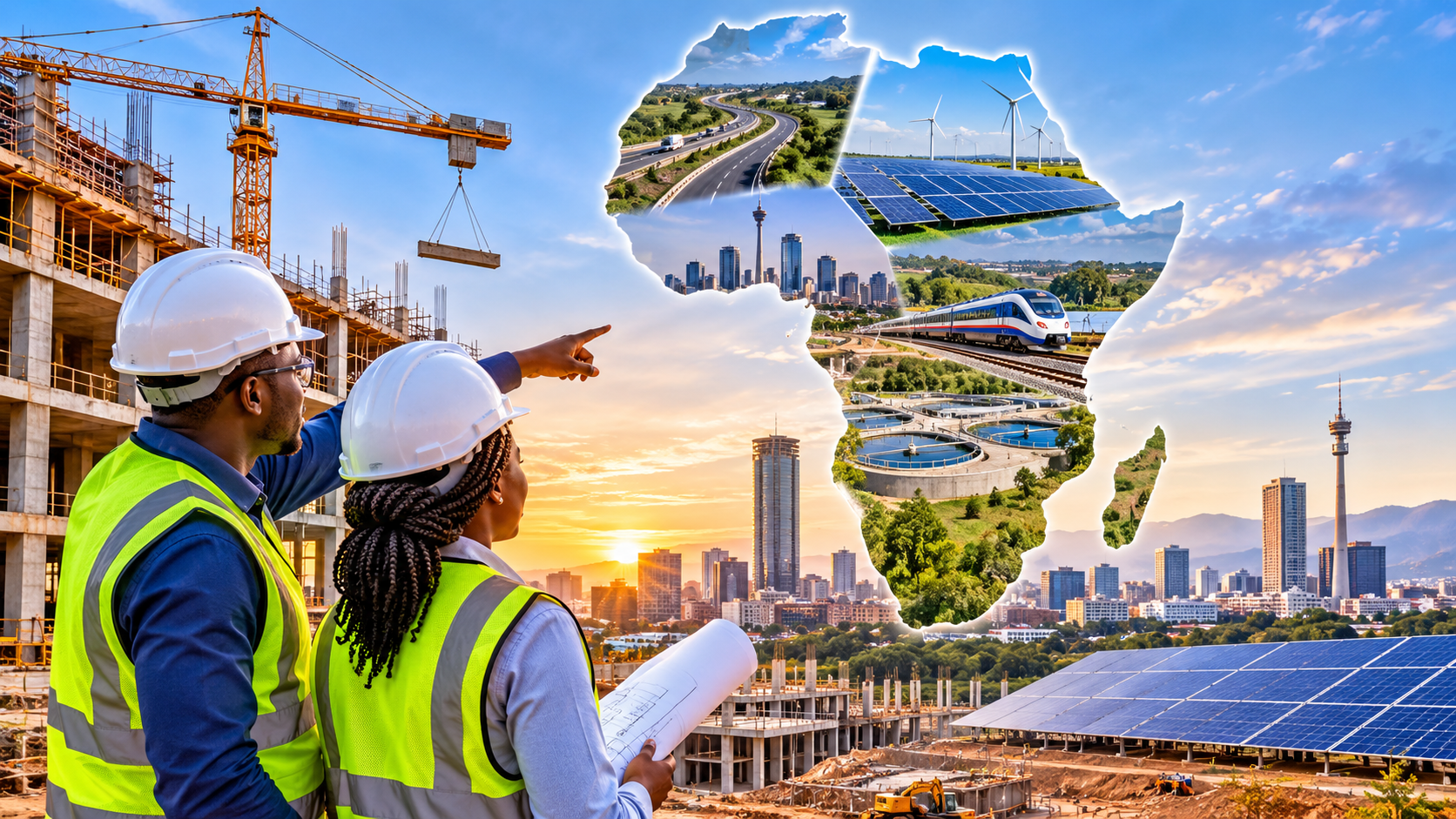
Africa’s construction industry is entering a period of considerable opportunity. Across the continent, governments are under pressure to address infrastructure deficits, accommodate rapidly growing urban populations, improve access to reliable energy and provide the facilities needed to support economic development.
These demands are creating opportunities for the construction sector, from large transport and energy projects to housing, commercial developments, water infrastructure and public facilities. At the same time, the industry continues to contend with familiar challenges, including limited access to affordable financing, rising construction costs, project delays and shortages of specialised skills.
The scale and nature of these challenges vary across countries. However, there are several developments that are likely to influence how construction projects are planned, financed and delivered in the coming years. As the industry looks towards 2027, the following trends deserve particular attention.
Infrastructure investment and project delivery
Infrastructure development remains central to Africa’s economic ambitions. Roads, railways, ports, energy networks, water systems and digital infrastructure are essential to improving connectivity, supporting trade and creating an environment in which businesses can grow.
The African Development Bank and other development institutions have consistently highlighted the continent’s substantial infrastructure financing requirements. The OECD’s Africa’s Development Dynamics 2025 report estimates that annual infrastructure investment of approximately US$155 billion could help bring Africa’s infrastructure closer to the levels of more developed economies. Transport infrastructure, particularly roads and railways, accounts for a significant proportion of these requirements.
Across the continent, major infrastructure programmes reflect this demand. East Africa continues to invest in transport corridors, ports and regional connectivity, while countries such as Ethiopia are pursuing major transport and energy developments. In West Africa, investments in ports, roads, industrial facilities and urban infrastructure are supporting efforts to improve trade and economic activity. North African countries are also pursuing major transport, energy and urban development programmes.
These developments present considerable opportunities for contractors, consultants, quantity surveyors, engineers and suppliers of construction materials and equipment.
However, the availability of funding does not automatically translate into completed infrastructure. Project preparation, feasibility studies, realistic cost estimates, procurement processes and effective contract administration remain critical to successful delivery.
Financing is also a major consideration. Governments across Africa face competing demands on public resources, while high borrowing costs can make infrastructure projects more expensive. This is increasing the importance of public-private partnerships, development finance institutions and other financing arrangements that can mobilise private investment.
For construction professionals, the challenge will be to ensure that projects are properly assessed and costed before implementation. Greater attention to value for money, risk allocation and cost control will be necessary as governments and investors seek to achieve more with limited resources.
Urbanisation and demand for resilient infrastructure
Africa’s urban population continues to grow, placing increasing pressure on housing, transport, water supply, sanitation, electricity and other essential services.
The expansion of cities such as Nairobi, Lagos, Accra, Kigali, Addis Ababa, Cairo and Johannesburg illustrates the scale of this transformation. New residential developments, commercial buildings, industrial parks and transport facilities are changing the built environment, while existing infrastructure struggles to keep pace with growing demand.
The OECD estimates that by 2050, approximately two-thirds of Africa’s population will live in urban agglomerations. This growth will require substantial investment in both new infrastructure and the upgrading of existing facilities.
Housing will remain a major area of demand, particularly affordable housing for low- and middle-income households. However, residential development cannot be considered in isolation. It needs to be supported by roads, drainage systems, public transport, water and sanitation networks, schools and healthcare facilities.
Climate change adds another dimension to this challenge. Flooding, extreme temperatures, drought and other climate-related events are placing existing infrastructure under increasing strain. Recent experience across different parts of Africa has demonstrated the economic and social consequences of inadequate drainage, poorly planned developments and infrastructure that is not designed to withstand changing environmental conditions.
Consequently, resilience needs to become a more prominent consideration in construction planning. This includes better site assessment, appropriate drainage design, improved building standards, climate-responsive materials and infrastructure capable of maintaining essential services during extreme weather events.
For developers and construction professionals, the emphasis will increasingly be on delivering infrastructure that serves growing populations while remaining functional and reliable over its intended service life.
Renewable energy and the changing construction landscape
Africa’s energy requirements are growing alongside its population and industrial activity. Reliable electricity is essential for economic development, but many countries continue to face challenges associated with inadequate generation capacity, ageing transmission networks and limited access to electricity.
Renewable energy is becoming an increasingly important part of the response. Solar, wind, geothermal and hydropower projects are attracting investment across different regions, creating opportunities for construction companies and professionals involved in energy infrastructure.
Kenya’s established geothermal sector, Ethiopia’s hydropower developments, Morocco’s solar and wind investments, and South Africa’s expanding renewable energy market illustrate the different approaches being pursued across the continent.
The International Energy Agency’s 2026 renewable energy outlook projects that sub-Saharan Africa will add more than 120 GW of renewable electricity capacity between 2026 and 2031, with solar photovoltaic systems accounting for more than 80% of the projected additions. South Africa and Nigeria are expected to account for a substantial share of this expansion, alongside growing contributions from Kenya, Ethiopia and other markets.
The implications extend beyond the construction of power generation facilities. Renewable energy development also requires transmission lines, substations, distribution networks, battery storage installations and associated civil and electrical infrastructure.
There is also a growing market for decentralised energy solutions. Commercial buildings, industrial facilities and residential developments are increasingly incorporating rooftop solar installations, battery storage and energy management systems to reduce dependence on conventional electricity supply.
For the construction industry, this means that energy considerations will increasingly influence building design, electrical installations and infrastructure planning. Architects, engineers, quantity surveyors and contractors will need to account for these requirements at the early stages of project development rather than treating them as additions after construction has begun.
Sustainable construction and the lifecycle cost of buildings
Sustainability is becoming an increasingly important consideration in the construction industry. Rising energy costs, pressure on natural resources and growing awareness of the environmental impact of construction are influencing how buildings and infrastructure are designed and developed.
The industry is gradually moving towards construction practices that make more efficient use of materials, reduce waste, conserve water and minimise energy consumption.
This is particularly relevant in Africa, where the demand for new buildings and infrastructure is growing rapidly. Meeting this demand will require significant quantities of cement, steel, aggregates and other construction materials. The production and transportation of these materials carry environmental and financial costs that cannot be ignored.
There is growing interest in alternative building materials, recycled construction products, locally sourced materials and construction methods that reduce material wastage. Improved building designs can also make better use of natural lighting and ventilation, reducing the need for artificial lighting and mechanical cooling.
Water efficiency is another important consideration, particularly in regions that experience prolonged dry periods or unreliable water supplies. Rainwater harvesting, water recycling and efficient plumbing systems can help reduce consumption and improve the long-term performance of buildings.
An equally important development is the growing recognition that the cost of a building extends well beyond its construction price. A building that is inexpensive to construct may become costly to operate and maintain if insufficient attention is given to energy efficiency, material quality and maintenance requirements.
This is where lifecycle costing becomes particularly important. Developers and clients are increasingly required to consider the total cost of ownership, including construction, operation, maintenance, refurbishment and eventual replacement.
Quantity surveyors have an important role to play in this process. Their involvement in evaluating material alternatives, assessing long-term costs and advising clients on value for money can help ensure that sustainability considerations are supported by sound financial decisions.
Technology, productivity and the construction skills gap
The construction industry is also experiencing changes in the way projects are designed, managed and executed. Digital technologies are providing new opportunities to improve coordination, reduce errors and make better use of project resources.
Building Information Modelling (BIM), for example, allows different project teams to work with coordinated digital representations of buildings and infrastructure. This can improve design coordination, identify potential conflicts before construction begins and support more accurate cost estimates.
Other technologies, including drones, digital surveying equipment, construction management platforms and artificial intelligence, are gradually changing aspects of project delivery. These tools can support site monitoring, progress reporting, quantity measurements, cost forecasting and project scheduling.
Although adoption levels vary considerably across African markets, the growing complexity of construction projects is likely to increase demand for professionals who can combine traditional technical expertise with digital skills.
However, technology alone will not address one of the industry’s longstanding challenges: the shortage of specialised and experienced personnel.
Africa’s infrastructure ambitions require a workforce capable of undertaking complex engineering, construction management, project planning and supervision. This includes skilled artisans, technicians, engineers, architects, quantity surveyors, project managers and other built-environment professionals.
The challenge is particularly important given the continent’s large and growing young population. Infrastructure development should create opportunities for young people to acquire practical skills and establish careers in the construction sector.
Achieving this will require stronger collaboration between educational institutions, professional bodies, governments and construction companies. Apprenticeships, graduate training programmes, workplace mentorship and continuous professional development can help bridge the gap between academic qualifications and the practical demands of the industry.
There is also a need to retain experienced professionals and strengthen knowledge transfer. As construction methods, materials and technologies evolve, the industry must ensure that its workforce can adapt without losing the practical experience accumulated over many years.
Preparing for the next phase of construction growth
The trends shaping Africa’s construction industry in 2027 are closely connected. Infrastructure investment will drive demand for new projects, urbanisation will increase the need for housing and essential services, and the energy transition will create opportunities in both power generation and building development. At the same time, sustainability, technology and skills development will influence how these projects are delivered.
The opportunity is considerable, but the industry’s success will not be measured by the number of projects announced or the value of investment commitments alone. What will matter is the ability to deliver infrastructure that is affordable, fit for purpose, completed within reasonable timeframes and capable of serving communities over many years.
For construction companies and built-environment professionals, this will require greater attention to project planning, financial discipline, technical competence and collaboration across the industry.
Africa’s infrastructure needs are well established. The priority now is to turn those needs and investment commitments into completed projects that improve living conditions, support economic activity and contribute to the continent’s long-term development.
-
Product on sale
 AWEBook Volume 2Original price was: KShs 3,500.00.KShs 3,000.00Current price is: KShs 3,000.00.