Last Updated 1 hour ago by Kenya Engineer
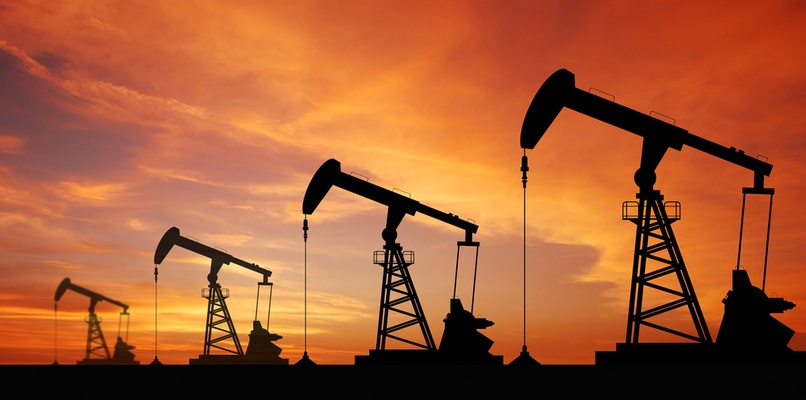
Libya’s plans to expand oil and gas production are bringing a broader infrastructure challenge into focus: how to move additional hydrocarbons from fields to processing plants, refineries, industrial users and export markets while increasing the value retained within the domestic economy.
The challenge will feature at the Libya Energy & Economic Summit (LEES) 2027, scheduled for 23–25 January in Tripoli. The summit will include a dedicated Infrastructure and Integration Forum covering gas processing, maritime logistics, downstream facilities and regional pipeline connections.
The infrastructure agenda comes as Libya pursues major investments in oil production, gas development and industrial capacity. These projects point to an approach in which the value of energy resources depends increasingly on the networks and facilities connecting production to consumers.
From oil production to industrial value
A major component of Libya’s expansion plans is the development of the Waha oil concessions under a long-term agreement involving the state-owned National Oil Corporation (NOC), TotalEnergies and ConocoPhillips. Announced in January 2026, the agreement provides for more than US$20 billion in investment over 25 years, with production capacity targeted to increase substantially. The companies and Libyan authorities have cited a potential capacity of up to 850,000 barrels per day.
Realising that ambition requires more than drilling additional wells. Production growth must be supported by gathering systems, pipelines, pumping facilities, storage terminals and export infrastructure, alongside maintenance and upgrades to existing assets. The capacity of each part of the network influences how much additional production can reach the market.
The downstream sector presents a related opportunity. Libya’s National Oil Corporation is pursuing refinery modernisation and expanded petrochemical manufacturing, with the objective of processing more hydrocarbons domestically and capturing additional value from refined products and industrial feedstocks.
Such a transition depends on reliable supplies of crude oil and natural gas, suitable processing facilities, dependable electricity and water, and transport links connecting industrial plants to domestic customers and export markets. Without these supporting systems, additional upstream capacity does not automatically translate into a broader industrial base.
Gas infrastructure and offshore development
Natural gas is another important part of the infrastructure programme. Offshore production must be connected to shore through subsea pipelines and supported by compression, treatment and processing facilities before the gas can be supplied to industrial users or exported.
Eni’s Structures A&E development is intended to bring offshore gas from the Bahr Essalam area to the Mellitah processing plant. Eni’s published project information identifies a planned start-up in 2028, making the development an important example of the long lead times involved in offshore gas infrastructure.
The project illustrates the coordination required between offshore facilities, subsea connections, onshore treatment capacity and transmission networks. Pipeline specifications, operating pressures, gas quality, corrosion management and equipment reliability all influence the performance and economics of the complete system.
Compression projects also play a role in sustaining production from existing gas fields. By maintaining the pressure required to move gas through production and transmission systems, compression infrastructure can help extend the productive life of reservoirs and improve the utilisation of existing facilities.
For Libya, the wider opportunity lies in connecting gas production to domestic electricity generation and industrial demand while maintaining the ability to supply export markets. Achieving this requires coordinated investment in production, processing, transmission and end-use infrastructure.
Ports as part of the energy and industrial system
The proposed expansion of Misurata Port adds a maritime dimension to Libya’s infrastructure plans. Announced in January 2026, the US$2.7 billion partnership aims to increase the port’s container-handling capacity to four million twenty-foot equivalent units annually through phased development.
The programme is expected to include improvements to berths, yards, handling equipment and terminal operating systems, as well as facilities capable of accommodating larger container vessels. The port’s integration with the adjoining free zone could also support manufacturing, storage, distribution and other value-added activities.
Although container terminals serve a wider range of industries than oil and gas, their performance affects the cost and reliability of industrial supply chains. Energy developments require imported machinery, specialised components, construction materials and maintenance equipment. Efficient ports can reduce delays in receiving these supplies and improve connections between industrial producers and overseas markets.
The planned expansion will consequently need to be assessed in terms of more than nominal handling capacity. Landside access, cargo clearance, storage, digital coordination, equipment maintenance and the movement of goods between the port and industrial facilities will influence how effectively the additional capacity is used.
Regional pipelines and energy trade
Libya is also exploring infrastructure links that could deepen its integration with neighbouring energy markets.
A proposed crude oil pipeline connecting Tobruk to Alexandria in Egypt has been under discussion, with a reported route length of approximately 800 kilometres. Reports in August 2026 placed the preliminary cost above US$1 billion, although financing, implementation arrangements, throughput and final capacity remained under discussion.
If developed, the pipeline could connect Libyan crude supplies with Egyptian refining facilities, creating an additional route for regional energy trade. Its feasibility would depend on the final route, pumping requirements, storage arrangements, pipeline security, environmental safeguards and agreements governing transport volumes and tariffs.
Libya’s existing GreenStream gas pipeline provides another regional connection, linking the country’s gas infrastructure with Italy through the Mediterranean. Its commercial contribution depends on the availability of gas for export, the condition and utilisation of the transmission system, and the balance between domestic demand and overseas commitments.
Cross-border infrastructure can diversify market access, but it also introduces requirements for coordination between governments, regulators, operators and buyers. Financing arrangements, long-term supply agreements, operational standards and the management of interruptions are as important as the physical pipeline itself.
The integration challenge
The projects outlined in Libya’s investment agenda share a common requirement: individual infrastructure investments must work as parts of a connected system.
A new oil field needs gathering and export capacity. An offshore gas development needs pipelines and treatment facilities. A refinery requires reliable feedstock, utilities and product distribution. An expanded port needs efficient connections to industrial users and transport networks.
This makes infrastructure planning, sequencing and asset reliability central to the success of the wider programme. Capacity must be matched across the value chain to avoid situations in which production facilities are ready but processing, storage or transport infrastructure becomes a bottleneck.
The investment environment is another consideration. Libya’s history of political and security disruptions has affected oil production and infrastructure operations. Long-term projects consequently depend on continuity of investment, access to finance, maintenance capability and arrangements that support reliable operation over the life of the assets.
The environmental and safety requirements are equally important. Pipeline integrity, leak detection, emergency response, offshore safety and the management of industrial emissions must be incorporated into project design and operations. For gas developments, reducing routine flaring and preventing methane losses can improve both environmental performance and the quantity of gas available for productive use.
The Infrastructure and Integration Forum at LEES 2027 will bring these issues into a wider discussion of Libya’s energy investment plans. The underlying engineering question extends beyond how quickly the country can increase production. It is how effectively the supporting infrastructure can convert that production into dependable energy supplies, industrial output, trade and sustained economic value.
-
Product on sale
 AWEBook Volume 2Original price was: KShs 3,500.00.KShs 3,000.00Current price is: KShs 3,000.00.