Last Updated 1 hour ago by Kenya Engineer
Electricity generation capacity is often measured by how much power a country can produce at peak output. Yet the performance of an electricity system also depends on whether that power is available when consumers need it, and whether the network can deliver it to the right location.
This presents a growing engineering challenge as electricity systems incorporate more solar and wind generation. These technologies can produce large amounts of electricity when sunlight and wind conditions are favourable, but their output does not always coincide with demand. At certain times, available generation may exceed what consumers require or what the network can accommodate.
When this happens, operators may have to reduce the output of some generating plants, even when they could otherwise produce electricity. This is known as curtailment. In other circumstances, excess water may be spilled at hydropower facilities or geothermal plants may need to reduce output or vent steam, depending on operating conditions.
The central question is how to make better use of available energy rather than allowing potentially useful generation to go unused. The answer involves more than batteries. It requires coordinated planning of generation, storage, transmission networks, electricity markets and consumer demand.
Kenya’s changing electricity requirements
Kenya has established a substantial renewable electricity base, with geothermal, hydropower, wind and solar contributing to its generation mix. The next challenge is to integrate these resources efficiently while maintaining reliable and affordable supply.
In its March 2026 report, Integrating Variable Renewable Energy in Kenya, the International Energy Agency (IEA) identifies flexibility and storage, open access to electricity networks, and ancillary services as priorities for strengthening the country’s power system. The report notes that increasing generation capacity alone will not address the operational and market challenges associated with a changing generation mix.
The distinction between excess generation and electricity shortages is important. A system can have more electricity available than it can use economically during some hours and still face tight supply conditions during others. Transmission constraints can also prevent electricity generated in one location from reaching consumers elsewhere.
For Kenya, this means the case for investment must begin with a detailed understanding of the power system. Planners need to establish when surpluses occur, how long they last, where network constraints arise and whether the underlying problem is a temporary operating condition or a recurring mismatch between generation and demand.
These findings determine whether the most effective intervention is energy storage, improved transmission, more flexible generation, demand management or a combination of measures.
Batteries can shift electricity across hours
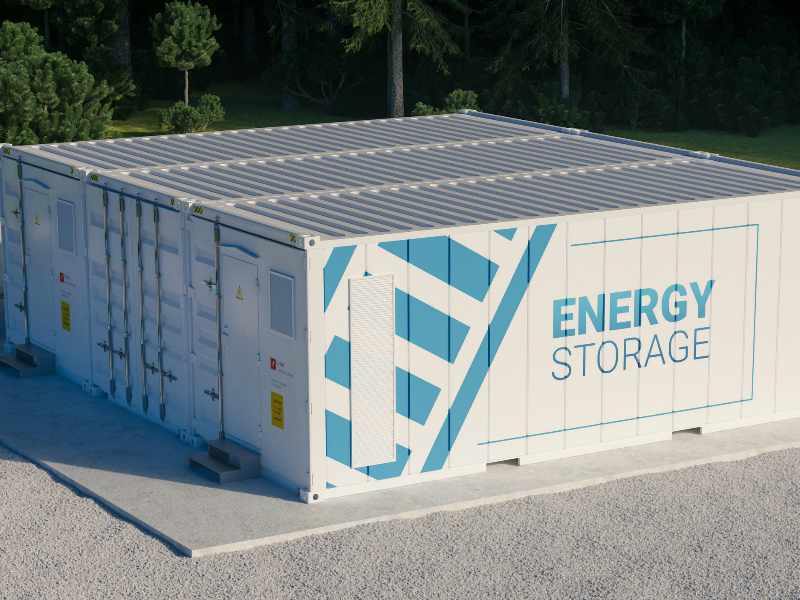
Battery energy storage systems offer one way to capture electricity when it is plentiful and release it when demand increases or generation falls. They can respond rapidly to changing grid conditions and provide services such as frequency regulation, operating reserves and short-duration balancing.
A grid-scale battery installation comprises battery cells and modules, power-conversion equipment, control and monitoring systems, thermal management, fire protection and a connection to the electricity network. Its design must account for power output, energy capacity, efficiency, degradation, operating temperatures, safety requirements and expected service life.
Power and energy capacity describe different characteristics. A battery rated at 100 megawatts (MW) with an energy capacity of 200 megawatt-hours (MWh) could, in simplified terms, deliver 100 MW for two hours when fully charged and operating within its rated limits.
The distinction is important because a battery’s ability to respond quickly does not mean it can supply electricity indefinitely. Once its usable energy is depleted, it must be recharged before it can repeat the process. Charging and discharging also incur energy losses, while repeated cycling gradually reduces battery capacity.
Batteries are particularly suited to shifting energy across relatively short periods, including moving some daytime solar generation into the evening peak. Their economic value depends on the frequency of use, the difference between charging and discharging costs, the grid services provided and the cost of maintaining or replacing equipment.
Where the requirement extends over several days or seasons, other technologies or a combination of storage options may be more appropriate.
Pumped hydro and longer-duration storage
Pumped-storage hydropower provides an alternative where suitable geography and water resources are available. During periods of surplus electricity, pumps move water from a lower reservoir to an upper reservoir. When electricity is required, the water flows back through turbines to generate power.
Unlike a conventional hydropower plant that relies on naturally available inflows, a pumped-storage facility deliberately uses electricity to move water uphill, storing energy in the difference in elevation. The facility subsequently recovers part of that energy during generation.
Its storage duration depends on the volume of water available, the difference in elevation between reservoirs and the installed generating capacity. Such projects can provide substantial storage capacity, but they require suitable sites, major civil engineering works, environmental assessment, water-management arrangements and significant upfront investment.
Other technologies address different storage requirements. Thermal storage can retain heat or cold for later use in buildings and industrial processes. Compressed-air systems store energy using pressurised air, while hydrogen can be produced through electrolysis when electricity is available.
Hydrogen has potential applications beyond electricity generation, including industrial feedstocks and some energy-intensive processes. However, using electricity to produce hydrogen and subsequently converting it back into electricity involves substantial energy losses. It is therefore important to assess hydrogen against direct electricity use and other storage options rather than assuming it is the preferred destination for every surplus.
The engineering decision should be based on the required storage duration, power output, response time, site conditions, efficiency, safety and whole-life cost.
Demand can become part of the solution
Not all surplus electricity needs to be stored. Some of it can be used directly by shifting suitable activities to periods when generation is plentiful.
Industrial facilities may be able to schedule energy-intensive processes around periods of greater electricity availability, provided production schedules, equipment limits and product requirements permit. Water utilities could investigate running pumps during suitable off-peak periods to fill reservoirs for subsequent distribution.
Buildings and industrial facilities can also use thermal storage to produce cooling or heating ahead of demand. This allows some electricity consumption to be moved without necessarily changing the time at which occupants require comfortable indoor conditions or industrial processes need heat.
Electric vehicle charging presents another opportunity. Charging can be coordinated with periods of high electricity availability, reducing pressure on the grid during peak demand and creating an additional source of flexible consumption. Effective implementation requires appropriate tariffs, charging controls and sufficient local network capacity.
However, demand shifting must be managed carefully. If thousands of devices begin charging simultaneously when a tariff changes, the resulting concentration of demand could create a new peak. The objective is to distribute consumption intelligently rather than move one system constraint to another time of day.
Flexible demand can be particularly attractive where it uses existing infrastructure and avoids the cost of installing additional storage. Its practical potential will depend on the nature of the load, the ability to interrupt or reschedule it and the financial incentives available to consumers.
Transmission and regional electricity trade
Surplus generation can also be used elsewhere if the network has sufficient capacity to move it. Transmission infrastructure connects generating stations with demand centres, while interconnectors allow neighbouring electricity systems to exchange power.
Regional electricity trade can improve the utilisation of generating assets when countries have complementary demand patterns or different generation conditions. One system may have electricity available while another experiences higher demand or reduced domestic generation.
However, cross-border trade is not an automatic solution. Its effectiveness depends on available interconnector capacity, domestic transmission constraints, operating rules, commercial agreements and the needs of participating systems at the same time.
Strengthening transmission can also reduce curtailment within a country by allowing electricity to move from areas with excess generation to areas with unmet demand. In some cases, upgrading a constrained line or improving network operations may deliver greater value than installing a battery at the generating site.
The appropriate investment therefore depends on where the constraint occurs. Storage can defer some network upgrades or help manage congestion, but it cannot replace transmission infrastructure in every situation.
The economics of storing surplus electricity
The existence of surplus generation does not automatically make an energy-storage project commercially viable. Investors and system planners must establish how much electricity can be captured, how often the system will operate and what value the stored energy or grid services will provide.
A project assessment should include capital costs, financing, charging electricity, conversion losses, operating expenses, equipment degradation, replacement requirements and the expected operating life. It should also account for the value of avoided curtailment, peak-demand support, reserve provision and other services the installation can deliver.
A battery that operates frequently may recover its investment more effectively than one used only during occasional surplus periods, although intensive cycling can increase degradation. Conversely, a system providing several services may be more valuable than one used solely to shift energy from midday to evening.
The comparison must also consider alternatives. Better forecasting and dispatch, improved coordination between generating plants, transmission reinforcement and flexible demand can sometimes address the same problem at a lower overall cost.
For Kenya, the regulatory framework will be important in determining how storage projects connect to the grid, who may own and operate them, how charging electricity is treated and how services such as frequency regulation and reserves are procured and paid for. Clear arrangements can help developers assess investment risks while ensuring that the costs and benefits of storage are allocated fairly.
Planning for a more flexible power system
The first step towards making better use of surplus electricity is a detailed assessment of generation, demand, transmission constraints and operating conditions at hourly or finer intervals. Future scenarios should examine how the system will perform as demand grows and the generation mix changes.
Planners can then identify the main requirement. Short-duration balancing may call for batteries or improved operational controls. Longer-duration storage may favour pumped hydro or other technologies, where suitable. Persistent network congestion may require transmission investment, while predictable consumption could be shifted through demand-management programmes.
Pilot projects can test technical performance, safety arrangements, operating procedures and commercial models before larger investments are made. Their performance should be evaluated against measurable outcomes, including energy shifted, conversion losses, availability, response time, avoided curtailment and total system cost.
Kenya’s renewable electricity resources provide a strong foundation, but their full value depends on how effectively the power system accommodates variations in generation and demand. Storage will be part of that effort, alongside transmission, flexible consumption, regional electricity trade and improved system operations.
The objective is not to store every surplus unit of electricity. It is to determine the most economical way to use available generation, at the time and place where it provides the greatest value. That is the engineering challenge facing a power system moving from a focus on generation capacity towards greater flexibility and efficiency.

-
Product on sale
 AWEBook Volume 2Original price was: KShs 3,500.00.KShs 3,000.00Current price is: KShs 3,000.00.