Last Updated 1 hour ago by Kenya Engineer
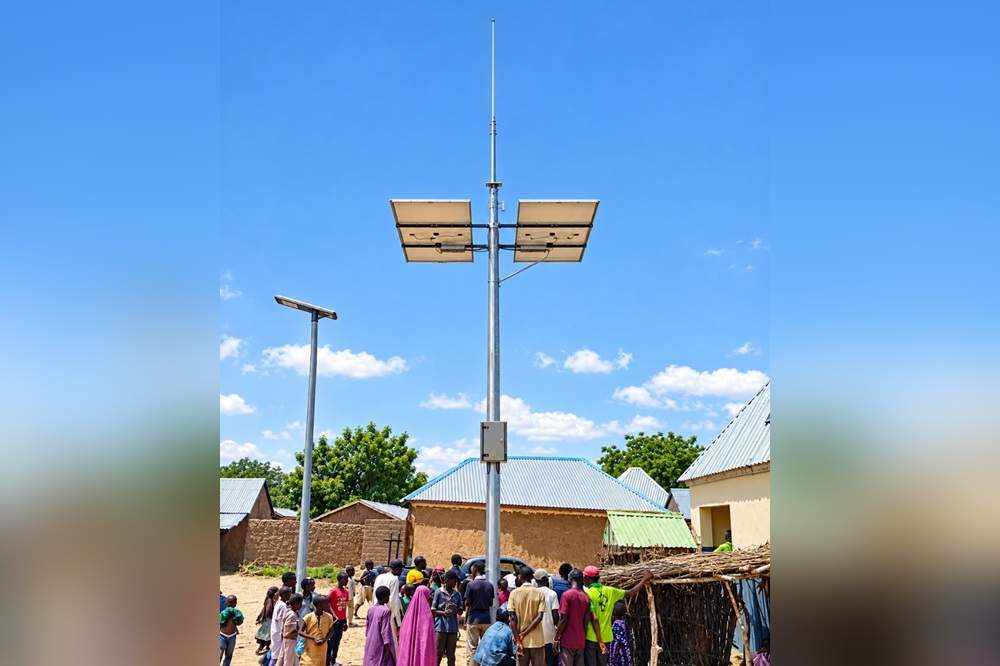
Africa Mobile Networks (AMN) has activated its 2,000th base station in Nigeria, marking a significant expansion of mobile telecommunications infrastructure in communities that have historically lacked reliable network coverage.
The company announced the milestone on 27 October 2026, reporting that its infrastructure now accounts for approximately 10% of the active tower footprint of Nigeria’s largest mobile network operator. AMN says its Nigerian network connects more than 4.7 million people in previously unserved or underserved communities to 2G, 3G and 4G services.
The company plans to exceed 2,100 sites in Nigeria by the end of 2026, with expansion continuing into 2027 at a projected rate of more than 60 new sites per month in the country.
Satellite Backhaul Supports Rural Network Expansion
A key feature of AMN’s latest deployment is the integration of low-Earth-orbit (LEO) satellite connectivity with its proprietary AMN Radio Node (ARN) technology. The company’s first Nigerian site to combine the two technologies is located in Yebu.
Satellite backhaul provides an alternative means of connecting remote base stations to the wider telecommunications network, particularly in areas where deploying fibre-optic links or other terrestrial transmission infrastructure may be difficult or costly.
By combining satellite connectivity with radio access equipment supporting multiple generations of mobile technology, operators can extend coverage without relying exclusively on conventional terrestrial backhaul infrastructure.
AMN says its ARN technology has been deployed across its towers since 2024. The equipment supports 2G, 3G and 4G services, while dual-band configurations allow mobile operators to deliver connectivity across multiple frequency bands.
Recent testing at the Yebu dual-band site recorded 4G download speeds exceeding 81 Mbps, according to the company. Actual user experience will depend on factors including network loading, radio conditions, device capabilities and available backhaul capacity.
Infrastructure Model Targets Underserved Communities
AMN builds, owns, operates and maintains mobile network infrastructure designed for rural and remote locations. Its business model involves sharing revenue with Tier 1 mobile network operators, with the company describing its arrangement as a zero-capital-expenditure and zero-operating-expenditure risk model for participating operators.
Under this approach, infrastructure investment and operating responsibilities are handled by the infrastructure provider, reducing the upfront deployment burden on mobile network operators. The arrangement is intended to support expansion into areas where the expected returns may not justify conventional network investment.
AMN reports operating more than 5,350 sites across 10 African countries, connecting more than 15 million people. Nigeria is a major part of its expansion programme, with the company having previously installed as many as 114 sites in a single month.
Connectivity and Essential Services
Beyond extending mobile coverage, rural telecommunications infrastructure can support digital services in healthcare, education and commerce.
AMN says its expanding network is helping local businesses access digital markets, supporting remote education and enabling healthcare facilities to connect with specialists for consultations and emergency medical assistance.
For communities beyond the reach of reliable communications networks, these capabilities depend on more than radio coverage alone. Reliable power supplies, resilient backhaul, equipment maintenance and sufficient network capacity are also necessary to sustain service delivery.
The company’s expansion illustrates how alternative backhaul technologies and infrastructure-sharing arrangements can contribute to closing rural connectivity gaps. The longer-term impact will depend on the reliability and affordability of the services delivered, as well as the ability to maintain coverage as demand grows.
As African countries pursue broader digital inclusion, the deployment of telecommunications infrastructure in underserved areas remains an engineering challenge involving radio planning, transmission systems, energy supply and the economics of rural network operations.

-
Product on sale
 AWEBook Volume 2Original price was: KShs 3,500.00.KShs 3,000.00Current price is: KShs 3,000.00.