Last Updated 36 mins ago by Kenya Engineer
As industries face growing pressure to reduce carbon emissions, improve energy efficiency and manage operating costs, attention is increasingly turning to the performance and lifespan of the equipment that powers industrial production.
Bearings, lubrication systems, rotating machinery and industrial cooling equipment may appear to be relatively small components of large industrial installations. However, their performance has a direct influence on energy consumption, equipment reliability, maintenance requirements and the overall environmental footprint of industrial operations.
This is the focus of technologies that Swedish engineering company SKF is showcasing at the 31st United Nations Climate Change Conference (COP31), scheduled to take place in Antalya, Türkiye, from 9 to 20 November 2026.
The company’s portfolio brings together energy-efficient magnetic bearings, condition monitoring, industrial oil regeneration, bearing remanufacturing and additive manufacturing. These technologies address two important aspects of industrial decarbonisation: reducing the energy required to operate machinery and reducing the material and resources consumed over equipment lifecycles.
Magnetic bearings and the energy demands of data centres
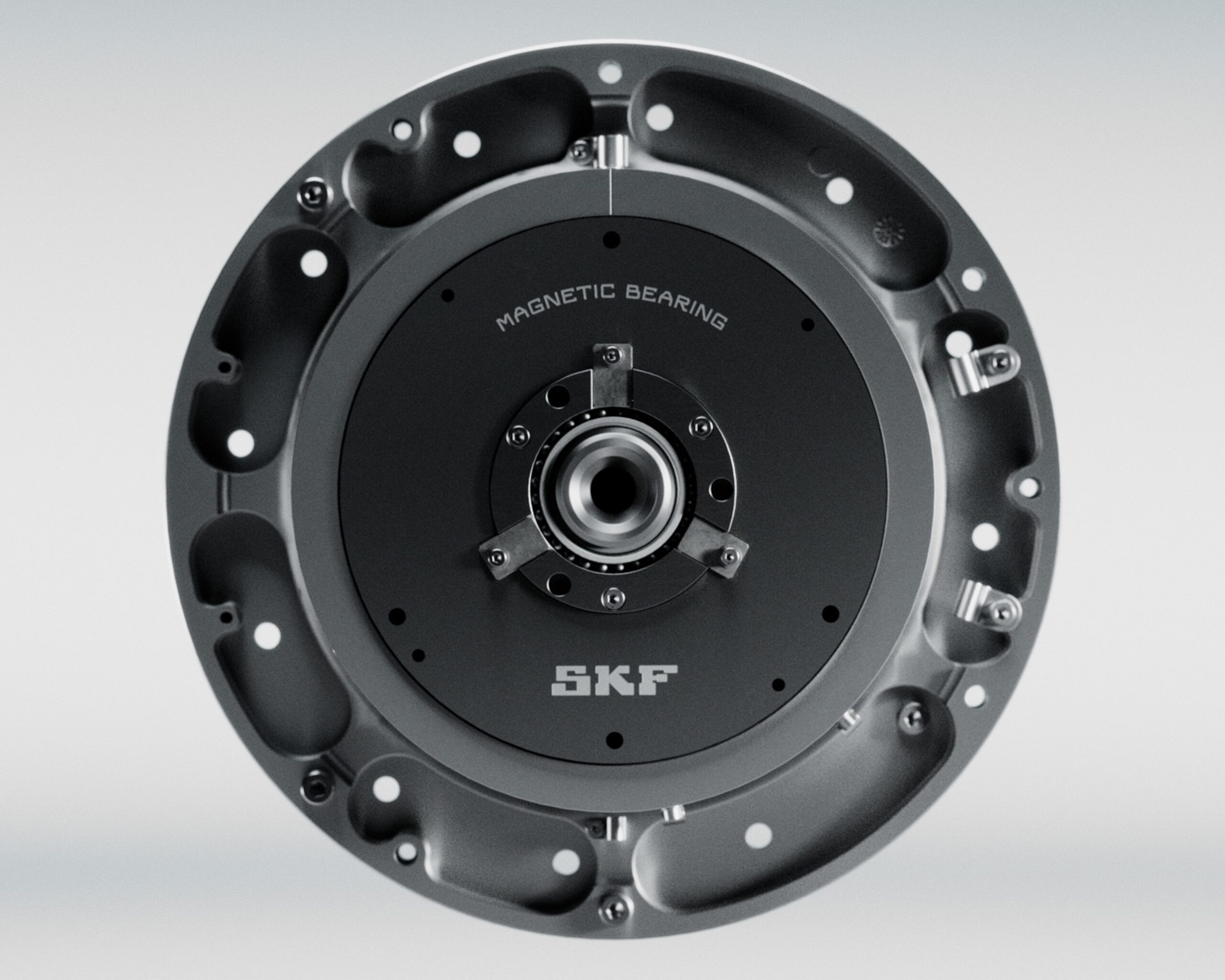
One of the technologies SKF is highlighting is its magnetic bearing system, which is particularly relevant to the expanding data centre industry.
Data centres require substantial amounts of electricity to operate servers, networking equipment and storage infrastructure. Cooling systems add another significant component to their energy requirements, as they must maintain operating temperatures and prevent equipment from overheating.
Conventional bearing arrangements in rotating machinery rely on physical contact between moving components, usually supported by lubrication. This creates friction, which contributes to energy losses, mechanical wear and maintenance requirements.
Magnetic bearings use electromagnetic forces to suspend and position a rotating shaft without physical contact between the bearing surfaces. By eliminating contact-related friction, the technology reduces mechanical wear and removes the need for conventional bearing lubrication within the magnetic bearing arrangement.
In industrial cooling applications, this can improve the efficiency and reliability of compressors used in chillers. It can also reduce maintenance associated with conventional bearing and lubrication systems.
The technology is particularly relevant as demand for artificial intelligence (AI) computing increases the need for data centre capacity and cooling infrastructure.
SKF estimates that chillers equipped with its magnetic bearings and commissioned in 2030 could help avoid approximately 3.4 million tonnes of carbon dioxide equivalent (CO₂e) emissions over their operating lifetimes. The projection is based on lower electricity consumption and improved equipment availability compared with conventional oil-lubricated bearing systems. This is a company estimate rather than an independently verified industry-wide emissions reduction figure.
Condition monitoring and predictive maintenance
Beyond reducing energy losses during equipment operation, improving maintenance practices can also contribute to industrial sustainability.
Unplanned equipment failures can result in production interruptions, emergency repairs, replacement of components and additional material consumption. In some industrial processes, equipment degradation can also lead to declining energy efficiency before a failure becomes apparent.
SKF is showcasing its Insight bearing technology, which incorporates sensing capabilities to support condition monitoring and equipment reliability.
Condition monitoring involves collecting and analysing information about the operating state of machinery. Parameters such as vibration, temperature and other indicators of equipment performance can help maintenance teams identify developing faults and assess changes in operating conditions.
This information supports predictive maintenance, where servicing and component replacement are planned according to the actual condition of equipment rather than relying exclusively on fixed maintenance intervals.
For industrial facilities operating pumps, motors, compressors, conveyors and other rotating machinery, early identification of developing faults can help prevent extensive equipment damage, reduce downtime and extend asset life.
The approach also has implications for industrial energy management. Machinery operating with worn components, poor alignment or deteriorating mechanical conditions can consume more energy than equipment maintained within its intended operating parameters.
Regenerating industrial oil and reducing waste
Lubricating oil is essential in many industrial applications, but its useful life is limited by contamination and degradation during operation.
Conventional maintenance practices may involve draining and replacing oil once it no longer meets the required operating specifications. This creates recurring costs associated with purchasing replacement lubricants, handling used oil and managing waste.
SKF’s RecondOil technology focuses on regenerating industrial oil so that it can remain in circulation for longer.
The approach uses filtration and separation processes to remove contaminants and maintain oil quality. By recovering and reusing industrial lubricants, the technology can reduce demand for fresh oil and limit the volume of waste lubricant requiring disposal.
For industries with substantial lubrication requirements, including manufacturing, mining, power generation and heavy engineering, extending oil service life can offer both operational and environmental benefits.
However, regenerated oil must continue to meet the technical specifications required by the machinery and its operating conditions. Effective monitoring and quality control remain essential to ensuring equipment protection and reliability.
Remanufacturing and extending bearing life
Another area of SKF’s COP31 showcase is the remanufacturing of industrial bearings.
Bearings are essential components in a wide range of equipment, from electric motors and industrial pumps to turbines, mining machinery and manufacturing systems. Their replacement can involve significant material and manufacturing inputs, particularly for large industrial bearings.
Remanufacturing offers an alternative to automatically replacing worn components with newly manufactured ones.
The process involves inspecting used bearings, assessing their condition and determining whether they can be restored to the required operating specifications. Depending on the extent of wear or damage, restoration may involve cleaning, machining, replacing selected components and other specialised processes.
When technically suitable, a remanufactured bearing can return to service without requiring the manufacture of an entirely new component.
This approach supports a circular industrial economy in which products and materials are kept in productive use for longer, reducing waste and the demand for new raw materials.
Additive manufacturing for large bearing restoration
SKF is also presenting SKF Infinium, which applies additive manufacturing to the restoration of large bearings.
Additive manufacturing builds material through successive layers rather than relying exclusively on conventional subtractive machining or manufacturing processes.
In bearing restoration, this approach can be used to renew worn or damaged surfaces, potentially allowing large components to be refurbished instead of discarded.
The significance is particularly evident in applications involving large, specialised bearings, where replacing an entire component can be expensive and may require considerable manufacturing time.
By restoring selected surfaces while retaining usable portions of the original component, additive manufacturing can support longer equipment lifecycles and more efficient use of materials.
The technology illustrates how advanced manufacturing processes can contribute to circularity beyond their traditional role in producing new components.
Industrial efficiency as part of the decarbonisation agenda
SKF’s participation at COP31 reflects a growing emphasis on practical technologies that can reduce emissions through improvements in existing industrial operations.
The company is also joining the Energy Efficiency Movement, a global initiative that brings together organisations seeking to accelerate the adoption of energy-efficient technologies and practices in industry.
The broader engineering challenge is to make industrial systems more efficient throughout their lifecycles. This requires attention to equipment selection, operating conditions, maintenance strategies, component refurbishment and resource management.
For industrial operators, energy efficiency is also an economic consideration. Reducing electricity consumption, preventing unplanned downtime, extending equipment life and lowering material replacement requirements can improve operating costs alongside environmental performance.
For developing industrial economies such as Kenya, these considerations are relevant to manufacturing facilities, mining operations, power infrastructure, water treatment plants and other asset-intensive sectors.
As industrial capacity expands and investment in digital infrastructure grows, the efficiency of supporting mechanical and electrical systems will become increasingly important.
The technologies being presented by SKF demonstrate that industrial decarbonisation does not depend exclusively on replacing existing energy sources. Improving how machinery operates, maintaining equipment more effectively and recovering materials for continued use can also contribute to lower-emission industrial systems.

-
Product on sale
 AWEBook Volume 2Original price was: KShs 3,500.00.KShs 3,000.00Current price is: KShs 3,000.00.