Last Updated 1 hour ago by Kenya Engineer
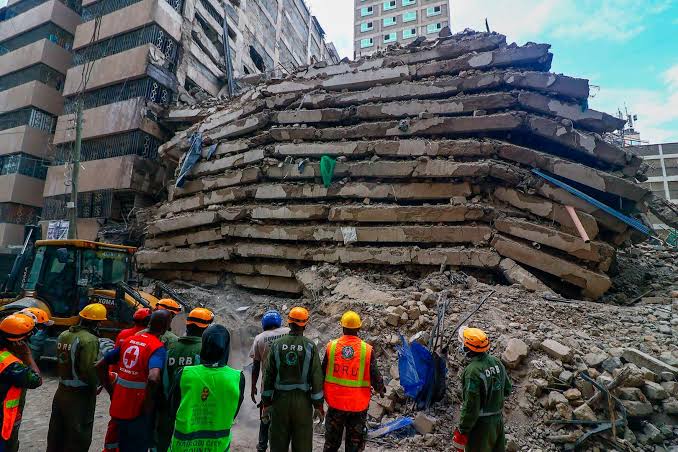
The Institution of Engineers of Kenya (IEK) has called for urgent national action to address persistent safety concerns in the country’s construction sector following two successive construction tragedies in Syokimau and Riverside on 13 and 14 November 2026, which reportedly claimed at least nine lives, injured several workers and left others unaccounted for.
The incidents have renewed scrutiny of construction practices, particularly the adequacy of engineering design, temporary works, excavation support systems and professional supervision at building sites.
In a statement issued on 14 November, IEK said the latest tragedies came less than a month after the building collapse in Eastleigh on 23 October, which resulted in eight confirmed fatalities. The Institution warned that repeated incidents point to systemic weaknesses that require more than post-incident investigations and expressions of sympathy.
“As a nation, we cannot continue counting casualties, issuing condolences and making promises while systemic weaknesses in the construction sector remain unaddressed,” the Institution stated.
IEK said it had deployed structural engineers to the affected sites immediately after the incidents to assess the situations and support rescue teams. It also commended emergency responders involved in rescue and recovery operations.
Different failures, separate technical investigations
Although the Syokimau and Riverside incidents occurred within a 24-hour period, IEK has emphasised that they involved different construction activities and must be investigated independently.
Preliminary technical observations by the Institution indicate that investigations into the Syokimau incident should examine the temporary works supporting the concrete slab. These include formwork, falsework and vertical props, together with their design, installation and pre-pouring inspection.
The procedures followed during concrete placement will also require examination.
Temporary works are essential components of construction, providing the support needed to maintain stability while permanent structural elements are being constructed. Their adequacy depends on proper design, appropriate materials, correct installation and inspection before and during the relevant construction activities.
In the Riverside incident, IEK has pointed to the support system used during excavation and the retaining walls, which reportedly failed while construction was underway. Investigators will need to establish whether the support system was adequate and whether the construction method provided the necessary stability throughout the excavation process.
These observations are preliminary and should not be interpreted as established causes of either incident. IEK has stressed that responsibility must be determined through independent, evidence-based investigations.
The distinction is important. Construction failures can involve several interacting factors, and determining what went wrong requires examination of the approved designs, site conditions, construction methods, materials, inspection records and the responsibilities of the various parties involved.
IEK outlines eight priority interventions
Beyond the immediate investigations, IEK has outlined eight priority interventions directed at the National and County Governments, the National Construction Authority (NCA), the Engineers Board of Kenya (EBK), the Directorate of Occupational Safety and Health Services, the National Building Inspectorate and relevant professional institutions.
The Institution wants transparent and comprehensive technical investigations into both incidents, alongside the preservation of critical evidence. It has also called for work in affected areas to remain suspended until the necessary safety clearance is granted.
It further wants appropriate action taken wherever negligence, professional misconduct or statutory non-compliance is established.
A significant part of its recommendations concerns the engagement and retention of registered professional engineers throughout the construction process.
IEK wants developers to engage registered professional engineers for both design and site supervision, with professional oversight maintained until the Occupation Certificate is issued. This is intended to address situations where professional involvement ends before construction is complete, potentially leaving subsequent activities without the necessary engineering oversight.
The Institution has also called for stronger compliance with Occupational Safety and Health requirements, including the employment of skilled workers and provision of appropriate personal protective equipment.
Other priorities include enforcement of approved designs, compliance with project registration requirements, proper professional site supervision and closer attention to geotechnical investigations, excavation safety, temporary works design and pre-concreting inspections.
At the national level, IEK is proposing coordinated, risk-based safety inspections and audits of high-risk construction projects, together with a review of construction safety regulations, inspection procedures and enforcement mechanisms. It wants the review to have clear implementation timelines and public reporting.
Professional oversight cannot end before construction is complete
One of the more significant aspects of the IEK statement is its position on the continuity of professional supervision.
The Institution has called on its members whose engagement on a project ends before construction is completed to promptly notify the NCA, EBK and the relevant County Government. The intention is to ensure that construction does not proceed without appropriate professional oversight.
This raises an important issue for developers, contractors and project owners. The involvement of a registered professional engineer at the design stage must be matched by adequate oversight during execution, particularly where construction activities introduce temporary structural and geotechnical risks.
Approved drawings and calculations provide the basis for construction, but their effectiveness depends on whether the work on site follows the approved designs and whether changes in construction conditions are properly assessed and authorised.
Temporary works, excavation support and concrete placement are particularly important stages requiring appropriate technical review and inspection. They may be temporary in nature, but failure at these stages can have consequences as severe as those associated with permanent structural elements.
For this reason, IEK’s call for professional supervision to continue until project completion deserves attention across the construction industry.
A coordinated response to construction safety
IEK has pledged to share its site observations with investigating agencies and support EBK in any disciplinary action against an engineer found culpable. It also intends to engage the Government, regulatory agencies and built-environment professional institutions in developing a coordinated national construction safety intervention.
The Institution, which has more than 14,000 members drawn from government institutions, consultancies, contracting firms, academia, design practices and manufacturing, occupies an important position in efforts to strengthen professional engineering practice in Kenya.
However, addressing construction safety will require coordinated action across the entire project delivery chain. Developers, consultants, contractors, regulators and county authorities all have responsibilities in ensuring that construction activities meet the required technical and statutory standards.
The latest incidents also reinforce the need for construction safety to be treated as an ongoing process rather than a regulatory exercise undertaken at the beginning of a project or following an accident.
Geotechnical investigations, structural design reviews, construction methodology, inspection of temporary works, occupational safety and continuous professional supervision must all receive appropriate attention throughout project execution.
For the industry, the immediate priority is to establish what happened in Syokimau and Riverside and ensure that the findings inform practical improvements. The longer-term challenge is to translate existing regulations and professional obligations into consistent enforcement and safer construction practices across the country.
IEK’s message is unequivocal: construction programmes and commercial interests must never take precedence over human life.
As investigations proceed, the effectiveness of the response will ultimately be measured not by the number of statements issued, but by whether the necessary changes are implemented to prevent similar tragedies.
-
Product on sale
 AWEBook Volume 2Original price was: KShs 3,500.00.KShs 3,000.00Current price is: KShs 3,000.00.