Last Updated 2 years ago by Kenya Engineer
by Daisy Gakuu
In Kenya road accidents are on the rise with approximately 3,000 deaths per year according to a report by the National Transport and Safety Authority (NTSA). As of 8th November 2013, a total of 2,683 lives had been lost in road traffic accidents, 5,485 had been seriously injured while 4,258 had been slightly injured since January 2013. Since the Kenyan Government took to establishing busses as the mode of Public transport they have been victims of the mayhem, but could this be countered? Is it a question of the quality of the Public Service Vehicles (PSVs) assembled and if improved, could they withstand such situations if they occur?
Yes. According to the Cabinet Secretary for Transport and Infrastructure, Eng. Michael Kamau: The number of fatalities resulting from road crash involving PSVs is on the rise partly due to weak vehicle bodies that collapse or shears-off on frontal, side or rollover impacts.
A case in point would be the Ntulele bus crash along Mai Mahiu-Narok road on August 29, 2013 which recorded the highest number of fatalities in the year. One of the causes of loss of many lives was poor building of the bus evidenced by the tearing off of the entire roof of the bus.
Vital safety features involved
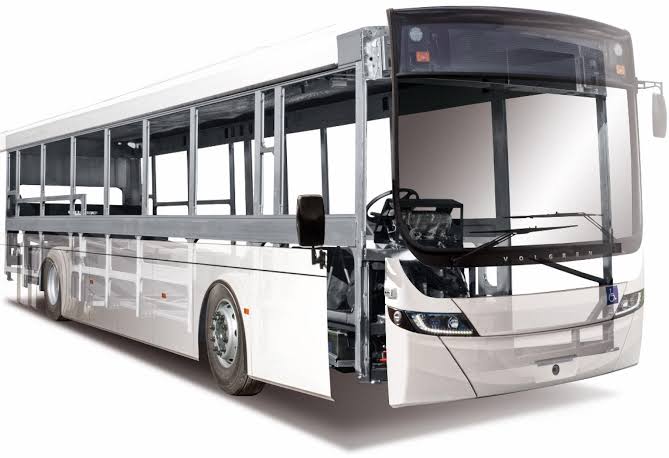
The critical safety features involved in bus building as stipulated in the Traffic Act and the Kenya Bureau of Standards (KEBS) bus standards compiled by Kenya Vehicle Manufacturers (KVM) Limited (one of the key assemblers in Kenya) include: roll over protection, front impact protection, side impact protection, Cross members, gangway and seat arrangement, side wall diagonals, passenger door, passenger seats, uppermost stair, front grille and rear overhang.
According to experts, a bus should always meet minimum standards which include: Roll over protection; Front impact protection; and side impact protection.
Roll over protection would include the use of gussets to reinforce the strength in between side walls and the roof and diagonals to prevent a passenger cabin from collapsing sideward.
Front impact protection involves two options; on one hand the use of a diagonal column to stabilize the roof through directing the impulse force into the lower body by making a column out of two strong tubes, using zig-zag interconnection in between bars ensuring there’s a correct angle from roof to column and another one from the column into the bus body. On the other hand, body builders could stabilize the roof through reinforced side pillars.
Side impact protection involves two recommended options; the use of triangular vertical reinforcement underneath the floor which gives structural strength against side impact and roll over; And triangular reinforcement in the longitudinal inside of floor level.
During a bus or coach rollover without the above minimum standards, the occupant will have a larger distance from the centre of rotation as compared to that of a car occupant. This is what makes a rollover accident extremely fatal and explains the huge number of accident fatalities in Kenya. The side windows get broken, the risk of passenger ejection and injury increases. The most common body regions injured in a rollover, when no ejection occurs, are the head, the neck and the shoulder.
Research from Crash analysis indicate that injury in rollover crashes can be caused by the impact of the occupants on the side panel, on the luggage rack and also by the effects of occupant interaction.
The number of cross members are meant to be enough for strength and safety according to the load class (which is a minimum of 4 for a 26-seater and a maximum of 8 for a 71-seater), They should not be more than necessary but be weight and cost relevant and the welding joints be first grade and verified.
With regards to the gangway and seat arrangement, the width of the gangway recommended is 450 mm (for Class IV, above 40 passengers) and 350 mm (for Class III, 26 – 40 passengers). This requires a 3 by 2 seat arrangement and a vehicle track width of 2250 mm or correctly curved side pillars.
The side wall diagonal setting safety concept would involve building a structural strength against rattling, cracks and bending which prevents share force in an accident.
The passenger door dimensions according to KEBS is a minimum height of 1650 mm with a minimum width of 650 mm and not above 700 mm and lastly, that the 1st step has a maximum height of 460 mm above ground. According to the European Safety regulations, in case of a panic after an accident the passengers want to press the door outward. The passenger door should swing outward or be a pantographic door otherwise it becomes a death trap in case of an emergency.
The uppermost stair should not be protruding into gangway which reduces the dangerous interference. In relation to interference, the passenger seat should have neither sharp corner nor protrusions, they should be made out of round tubes and the width of the seat frame be 400 mm per seat.
The Front grille gets lost and almost always gets locked and will endanger traffic. It should be fixed to the bus body through the hinges. While the Rear overhang should be a maximum of 60 % of the wheel base measured behind rear axle to rear bumper to ensure comfortable vehicle handling (stability on the road).
Way forward
However, according to Eng. Kamau there are new regulations on vehicle body building that have been developed by KEBS in order to address the challenge of making quality bus bodies which NTSA is set to implement. This he said during GM’s commissioning of the bus building technology centre in late October.
The Centre according to the East African Region assembler is set to “be used as a benchmark for safety, quality and technology in the industry.”
Eng. Kamau added that Compliance with KEBS regulations would enhance survival rates in the event of a crash. NTSA is also set to ensure that vehicle body builders adhere to the use of specified materials failure to which they will be deregistered.
NTSA has also recommended outlawing of mounting of carriers on the roof tops of public service vehicles. This is important to avoid instances where buses with load carriers on top are prone to tipping over when overloaded as happened in the case of Ntulele crash.
With improved bus body building technology, lives will be saved, there will be job creation and we won’t have to compromise design for safety for appearance only.
-
Product on sale
 AWEBook Volume 2Original price was: KShs 3,500.00.KShs 3,000.00Current price is: KShs 3,000.00.