
Last Updated 11 months ago by Kenya Engineer
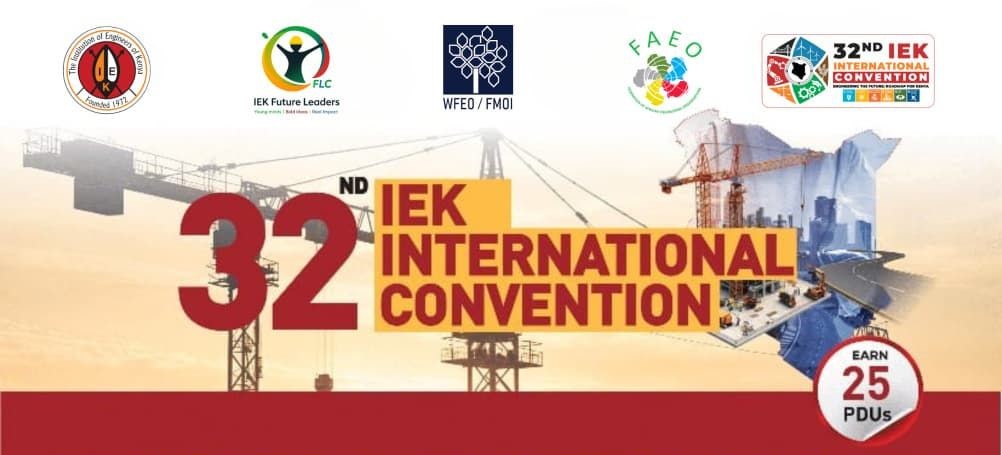
When engineers gather, nations shift. That is the quiet truth behind the Institution of Engineers of Kenya (IEK), an organization whose annual conventions have become crucibles for ideas, collaborations, and decisions that often outlive the event itself. This November, IEK will host its 32nd International Engineering Convention at the PrideInn Paradise Beach Resort in Mombasa, and the anticipation within the engineering fraternity is palpable.
For an institution that has shepherded Kenya’s engineering profession for nearly five decades, this year’s theme — “Engineering the Future: The Roadmap for Kenya” — feels less like a slogan and more like a national assignment.
A Theme That Speaks to the Moment
Kenya stands at a critical inflection point. The infrastructure gaps are evident; the pressure to industrialize is growing; and climate resilience, digital transformation, and sustainable energy have become strategic priorities, not side discussions.
IEK’s theme directly responds to this moment.
At its heart is a simple but powerful question:
What must Kenya’s engineers do today to shape the country that Kenya must become tomorrow?
The convention will attempt to answer this through several lenses:
-
Green and inclusive development
-
Digital transformation and frontier technology
-
Infrastructure modernization and maintenance
-
Policy, governance, and financing
-
Engineering ethics, education, and capacity building
For IEK, this is not merely about talking. It is about aligning engineering conversations with national frameworks such as Vision 2030, the Bottom-Up Economic Transformation Agenda (BETA), Agenda 2063, and the global SDGs.
Looking Back: Momentum from the 31st Convention
A feature story is incomplete without considering the journey so far.
Last year’s 31st Convention was a standout moment for the profession. Held under the theme “Industrialisation for Economic Transformation and Employment Creation,” it brought together policymakers, industry leaders, and engineers from across Africa and beyond.
Several defining moments from that gathering set the tone for this year:
The Rise of Inclusion & Future Leadership
The Women Engineers Summit and the Future Leaders Summit were among the most memorable sessions — positioning diversity and youth as critical pillars of the engineering agenda.
High-Level Government Support
The involvement of senior government officials signaled the growing recognition of engineering as a strategic national asset.
Field Visits & Real-World Engagement
Delegates toured industrial and infrastructure projects, grounding the discussions in tangible realities.
Practical Resolutions
The 31st Convention closed with strong commitments around industrialization, innovation adoption, financing, and collaboration between academia and industry.
This year’s event builds on that momentum — expanding the conversations while sharpening the focus on Kenya’s future.
What Awaits in Mombasa: A Deep, Strategic Programme
The 32nd Convention will be a convergence of ideas, research, sector dialogue, and hands-on engagement.
1. The 4th Future Leaders Summit
Young engineers will once again take centre stage. The summit will explore how emerging engineers can influence national development, bringing energy, fresh thinking, and digital-native skills to the profession.
2. Technical Sessions & Research Presentations
Abstracts submitted include work on:
-
AI and robotics for infrastructure
-
Renewable energy innovations
-
Smart cities and IoT
-
Geospatial technologies
-
Resilient urban infrastructure
-
Sustainable water and sanitation
-
Engineering entrepreneurship
This will not be theory for theory’s sake — IEK has increasingly emphasized actionable, solution-driven research.
3. Interactive Workshops
The workshops will delve into frontier areas such as:
-
AI & Digital Engineering
-
Green Building & Sustainable Design
-
Transportation & Smart Mobility
-
Energy Transition Technologies
-
Climate Resilience Engineering
4. Industrial & Technical Site Visits
Delegates will have opportunities to visit infrastructure landmarks, factories, and energy installations — connecting policy, research, and industry realities.
5. Excursions & Networking
Set against Mombasa’s coastal backdrop, IEK has curated a set of excursions including Wasini Island tours, marine experiences, and cultural interactions — reinforcing the softer but crucial side of conventions: human connection.
A Convention Powered by Partners: Sponsors & Collaborators
Conventions of this scale are powered by strong partnerships. IEK offers sponsorship categories ranging from Platinum, Gold, Silver, and Bronze, down to Utility Partner and specialized in-kind opportunities such as sponsoring the gala dinner or supporting student participation.
One of the standout initiatives is the “Adopt a Student/Graduate Engineer” program, which allows institutions and individuals to sponsor young engineers to attend. This has become one of IEK’s signature commitments to nurturing the next generation.
Sponsors not only gain visibility but also help shape the direction of Kenya’s engineering capabilities — a responsibility with long-term implications.
Why This Convention Matters — Beyond the Event
For Kenya, engineering is no longer a profession that simply executes designs. Engineers now sit at the crossroads of:
-
Economic growth
-
Sustainability
-
Governance
-
Urbanization
-
Digital transformation
-
Health & safety
-
Food security
-
Energy transition
The 32nd Convention recognizes this expanded mandate.
Its significance lies in uniting the voices that must speak together if Kenya is to build resilient cities, modern industries, robust infrastructure, and a competitive knowledge economy.
It is here that decisions, ideas, collaborations, and innovations converge to shape the Kenya of the next decade.
The Road Ahead: A Call to Reimagine Engineering
If previous conventions are anything to go by, the 32nd International Engineering Convention will not merely be a gathering — it will be a barometer of Kenya’s engineering ambitions.
The stakes are high.
Kenya’s future — from renewable energy systems to roads and bridges, from water networks to digital infrastructure — is being engineered right now. The people who will design it, maintain it, and influence its policies will meet in Mombasa this November.
And as they do, the question remains:
What future will Kenya’s engineers choose to build?
The answer may very well begin at IEK’s 32nd International Convention.
-
Product on sale
 AWEBook Volume 2Original price was: KShs 3,500.00.KShs 3,000.00Current price is: KShs 3,000.00.