
Last Updated 11 months ago by Kenya Engineer
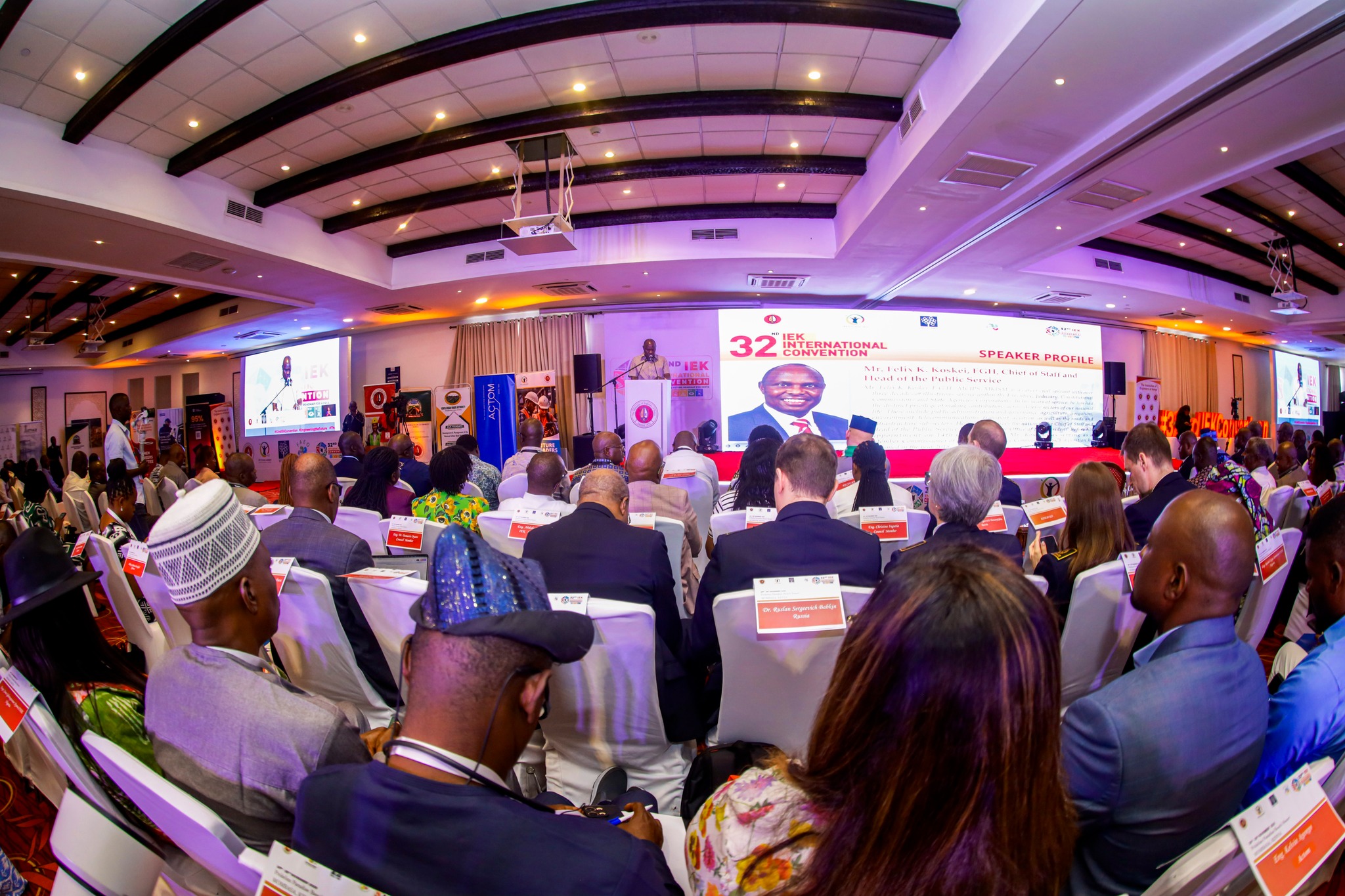
Engineering is no longer just a profession, it is a national imperative. As Kenya convenes for the 32nd IEK International Convention under the theme “Engineering the Future: The Roadmap for Kenya,” we gather at a defining moment in our nation’s development. Engineering the future means building energy systems that stimulate growth today and secure prosperity for generations to come. It means applying knowledge, innovation, and foresight to unlock Kenya’s full economic potential.
I join colleagues, policymakers, researchers, and innovators at this year’s convention with a deep sense of purpose. The conversations we have here will influence the policies we craft, the technologies we embrace, and the innovations we pursue.
Engineering has always been at the heart of national development. Whether in energy, roads, housing, water, ICT, or manufacturing, engineers turn national visions into tangible outcomes. In the energy sector where I have dedicated much of my career, we understand that reliable power is more than a utility; it is an enabler of transformation. It is the engine behind Vision 2030, the African Union’s Agenda 2063, and the Sustainable Development Goals.
As Kenya aspires to scale its manufacturing base, modernize agriculture, expand digital services, and industrialize equitably across regions, our energy systems must expand and evolve. Engineers sit at the center of this transformation. As the world shifts, so too must our tools, our competencies, and our approach to problem-solving.
The future of engineering is rapidly evolving. Digital tools are redefining how we design and manage infrastructure. Automation is accelerating project delivery. Artificial intelligence is enhancing precision and decision-making. Renewable energy integration is reshaping power systems globally. Cross-border interconnections and global quality standards are setting new benchmarks.
If Kenyan engineers are to remain globally competitive, we must embrace these changes not gradually, but boldly. Engineers must adopt the latest technologies, integrate AI and data-driven methodologies into their workflows, and commit to continuous learning. Those who master these tools will lead the next frontier of national development.
At KETRACO, we understand this responsibility clearly. We are intentionally investing in skills development to ensure our engineers are not merely keeping up with global trends, they are leading them.
An empowered engineering team is essential to delivering a stable, reliable, and future-ready electricity grid. And the results are visible. Thanks to the dedication, ingenuity, and resilience of our engineers, KETRACO has completed 43 transmission line projects across Kenya, delivering 6,015 kilometers of high-voltage circuit lines, 46 substations, and 33 bay extensions. This infrastructure has added 6,487 MVA of transformation capacity, power that irrigates farms, runs factories, processes harvests, and preserves food quality post-harvest.
KETRACO’s ongoing work to establish a National System Control Centre (NSCC) and modernize SCADA, telecoms and EMS systems will give operators real-time visibility of the entire grid and dramatically improve restoration speeds. Behind this transformation is a community of engineers whose innovations are redefining what is possible in Kenya’s energy future.
Beyond national borders, KETRACO plays a crucial role in regional energy integration. As a member of the Eastern Africa Power Pool (EAPP), we are constructing and operating high-voltage transmission lines that link Kenya’s grid to those of our neighbours. Our partnership with Ethiopia illustrates the power of engineering diplomacy. Through the 500kV Eastern Electricity Highway, Kenya now imports reliable and affordable hydropower, strengthening our clean energy mix while supporting industrial and agricultural expansion. This is engineering in the service of national stability, environmental sustainability, and regional cooperation.
Yet none of this progress is possible without investing in people. Organizations must prioritize the development of their engineers because it is these men and women who carry the weight of national aspirations. As Kenya explores innovative financing models such as Public–Private Partnerships (PPPs), it is critical that local engineers remain central to project execution. They must be empowered with opportunities, resources, exposure, and trust. At KETRACO, we continue to ensure that our engineers gain the experience and competencies needed to lead both local and international projects.
The theme of this year’s convention Engineering the Future is not abstract. It is practical. It is urgent. And it is deeply tied to our ability to prepare the next generation of Kenyan engineers for a world that is fast-changing and unforgiving to complacency. We must cultivate professionals who are technically exceptional, globally connected, ethically grounded, and technologically adaptive.
The vision for KETRACO is simple but ambitious; to build a world-class engineering institution that powers a world-class economy. Our engineers will continue to ensure that Kenya’s energy future is secure, efficient, and aligned with global sustainability goals.
Let us embrace disruptive technologies, strengthen policy frameworks, and deepen collaboration across disciplines and borders.
Engineering is the heartbeat of progress. And for Kenya, the future will be engineered by us, for us, and for generations to come.
-
Product on sale
 AWEBook Volume 2Original price was: KShs 3,500.00.KShs 3,000.00Current price is: KShs 3,000.00.