Last Updated 4 hours ago by Kenya Engineer
Liberia is strengthening the infrastructure and institutions supporting its petroleum sector as international companies advance offshore exploration and the country prepares to launch a new direct negotiation licensing round.
The developments span offshore seismic work, port modernization, petroleum storage and regulatory capacity, positioning the country for a new phase of exploration across the Liberia and Harper basins.
Among the companies advancing technical work offshore are TotalEnergies and BluEnergies, which are working on Blocks LB-26, LB-30 and LB-31 in the Harper Basin.
Their 2026 work programme includes the reprocessing of 6,167 square kilometres of 3D seismic data, together with seabed and geochemical studies. BluEnergies said in July that more than half of the seismic reprocessing had been completed, with the work intended to improve the definition of existing prospects and help identify potential drilling locations.
Ports prepare for increased offshore activity
Liberia’s port infrastructure is being developed in parallel with the exploration programme.
The National Port Authority (NPA), which manages the country’s principal ports including Monrovia, Buchanan, Harper and Greenville, is implementing its RESET Strategic Plan for 2025–2030. The plan focuses on revenue optimization, operational efficiency, safety and security, environmental sustainability and technological modernization.
The port authority has also expanded international cooperation. In July, the NPA and France’s HAROPA PORT signed a memorandum of understanding covering port modernization, smart technologies, infrastructure development, capacity building and maritime trade.
The agreement provides a framework for the two institutions to exchange knowledge and technical expertise as Liberia works to modernize its port and logistics infrastructure.
Buchanan is particularly relevant to Liberia’s industrial logistics network, while the country’s four-port system provides access to the Atlantic coastline and supports the movement of bulk commodities and other cargo.
For an offshore petroleum industry, such infrastructure can provide the logistics base required for marine operations, equipment handling, storage and other support services as exploration activity develops.
Petroleum storage capacity also expanding
Liberia is simultaneously increasing its petroleum storage capacity.
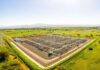
The Liberia Petroleum Refining Company (LPRC) began construction of a 17,000 cubic metre gasoline storage tank and a modern petroleum laboratory at its Product Storage Terminal in Monrovia in 2024. The additional tank is designed to increase LPRC’s gasoline ullage capacity from about 20,000 metric tonnes to 37,000 metric tonnes, while overall storage capacity is expected to reach approximately 63,838 metric tonnes.
The government is now considering a substantially larger expansion. In June 2026, President Joseph Boakai reviewed a proposal from LPRC for a 50,000-metric-tonne tank farm at the Product Storage Terminal.
According to the Executive Mansion, the proposed facility is intended to increase petroleum storage capacity, strengthen fuel security and support the country’s petroleum distribution system.
Although these facilities primarily address Liberia’s domestic petroleum supply requirements, the expansion adds to the country’s downstream infrastructure as activity in the wider petroleum sector develops.
Regulatory capacity being strengthened
Institutional capacity is another part of Liberia’s preparations.
In June, the Liberia Petroleum Regulatory Authority (LPRA) and Ghana’s Petroleum Commission signed an MoU covering regulatory governance, institutional capacity building, technical knowledge exchange and stakeholder engagement.
The agreement is intended to allow the two regulators to share experience in petroleum oversight, policy implementation and technical matters as both countries manage their hydrocarbon sectors. LPRA Director General Marilyn T. Logan said the cooperation would help strengthen petroleum governance and regulatory capacity.
The LPRA is responsible for administering Liberia’s petroleum rights under the country’s petroleum legislation. Its licensing framework provides for direct negotiation of petroleum agreements, with prospective investors required to progress through a defined qualification and negotiation process.
New licensing round moves towards launch
The infrastructure and institutional developments come as Liberia prepares its next offshore licensing cycle.
The LPRA is preparing a 2026 Offshore Direct Negotiation Licensing Round covering 29 offshore blocks across the Liberia and Harper basins. The authority has been promoting the round to international investors and opened prequalification in August.
The acreage is supported by a large subsurface data package, including more than 50,000 line-kilometres of 2D seismic and more than 31,000 square kilometres of 3D seismic data, according to the LPRA and its investment partners.
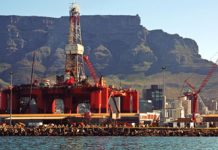
The licensing round is scheduled to be showcased in Cape Town on October 14 during African Energy Week 2026. The event will give prospective investors an opportunity to examine the available acreage, licensing framework and technical data ahead of the next phase of Liberia’s upstream development.
For Liberia, the combination of offshore technical work, port modernization, petroleum storage expansion and regulatory cooperation marks a broader effort to prepare the supporting infrastructure around the country’s petroleum ambitions.
The immediate objective remains exploration and licensing rather than production. The work being undertaken by TotalEnergies and BluEnergies is focused on improving subsurface understanding and identifying prospects that could ultimately support drilling decisions.
As Liberia moves into its next licensing cycle, the development of ports, storage facilities and regulatory institutions will therefore be an important part of the infrastructure required to support any future expansion of offshore petroleum activity.
-
Product on sale
 AWEBook Volume 2Original price was: KShs 3,500.00.KShs 3,000.00Current price is: KShs 3,000.00.