
Last Updated 11 mins ago by Kenya Engineer
Every time someone sends money through mobile banking, streams a video, accesses a government service online or uses artificial intelligence to complete a task, a complex digital infrastructure system helps make that activity possible. Behind these everyday experiences are servers, fibre-optic networks, electrical installations, cooling systems and highly specialized buildings designed to operate reliably around the clock.
As Kenya’s digital economy expands, AI-ready data centers in Kenya are becoming an important part of the country’s infrastructure development story. These facilities provide the physical environment required to store information, operate cloud platforms, process large datasets and support increasingly demanding artificial intelligence applications. Their development connects the technology sector with civil engineering, construction management, electrical engineering, mechanical engineering and environmental design.
Unlike conventional commercial buildings, data centers must accommodate concentrated electrical loads, heat-producing computing equipment, strict environmental controls and demanding reliability requirements. A failure in an ordinary office building might interrupt business activities, but a major failure in a data centre can disrupt digital services used by thousands or even millions of people.
Kenya is already attracting investment in this specialized infrastructure. The Ministry of Information, Communications and the Digital Economy has identified data centers, cloud services, connectivity and artificial intelligence as important areas for digital development. The government has also highlighted Kenya’s renewable energy potential and expanding connectivity as factors supporting investment in the sector. Read the ministry’s statement on data centres and cloud services.
However, building an AI-ready facility involves far more than installing powerful computers inside a large building. It requires careful site selection, geotechnical investigations, structural design, high-capacity electrical infrastructure, specialized cooling, redundant connectivity, fire protection and long-term maintenance planning. For Kenyan civil engineers and construction professionals, this emerging sector presents an opportunity to apply established engineering principles to one of the fastest-developing areas of modern infrastructure.
What Makes an AI-Ready Data Centre Different?
A data centre is a specialized facility that houses servers, storage systems, networking equipment and the supporting infrastructure required to operate them. Organizations use these facilities to host applications, manage databases, run cloud services and process digital information.
An AI-ready data centre is designed or equipped to support the demanding computing requirements of artificial intelligence. Depending on its intended workload, this may involve graphics processing units (GPUs), high-density server racks, advanced power distribution, specialized cooling equipment and high-speed network connections.
Traditional enterprise computing may distribute electrical and thermal loads across relatively moderate-density server racks. AI workloads, particularly those involving model training and large-scale inference, can concentrate much greater power consumption and heat generation within a smaller physical area.
This creates additional demands for the building’s structural capacity, electrical distribution system and cooling design. Engineers must coordinate these systems from the earliest stages of planning rather than treating them as separate installations added after construction.
The distinction is important for Kenya’s construction industry because a data centre cannot be designed using the same assumptions as an ordinary office block or warehouse. The facility must accommodate heavy equipment, continuous operation, controlled environmental conditions and carefully planned maintenance access.
Designers also need to consider future expansion. Computing technology changes rapidly, and a facility intended to serve businesses for many years should have sufficient flexibility to accommodate new equipment and changing rack densities where technically and economically practical.
The ICT Authority’s ICT standards portal provides access to Kenya’s public-sector Data Centre Standard 2023 and Cloud Computing Standard 2023. These are useful starting points for understanding infrastructure and operational requirements in the public sector, although the precise standards applicable to a particular private project will depend on its scope and contractual requirements.
Civil Engineering Begins With the Right Data Centre Site
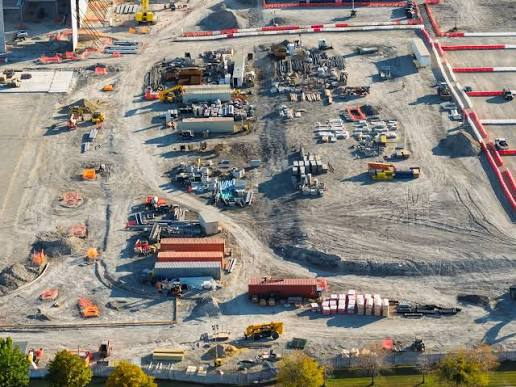
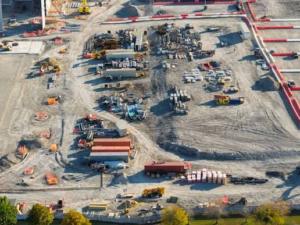
Before the first foundation is excavated, engineers must determine whether the proposed site can support the facility’s technical requirements. Site selection is one of the most important stages in data centre construction in Kenya because the location influences foundation design, access to electricity, fibre connectivity, water availability, drainage and long-term operating costs.
Nairobi and its surrounding industrial and commercial areas are attractive locations for digital infrastructure because of their business networks and connectivity. However, a suitable site must be evaluated on its actual engineering characteristics rather than its proximity to the city alone.
Civil engineers work with land surveyors, geotechnical specialists, architects and electrical engineers to assess the proposed development. Topographical surveys establish site levels, boundaries and existing features, while geotechnical investigations help determine soil strength, groundwater conditions and the suitability of the ground for heavy structures.
These investigations may involve boreholes, trial pits, standard penetration tests, soil classification and laboratory analysis. The findings inform foundation selection, earthworks design and the need for ground improvement. Where weak or compressible soils are present, engineers may consider soil stabilization, raft foundations or piled foundations, subject to the investigation results and structural requirements.
Site drainage also requires careful planning. A data centre must protect critical equipment from flooding, surface runoff and water ingress. Engineers therefore assess catchment characteristics, existing drainage channels, finished floor levels and the capacity of storm water infrastructure.
Access roads, loading areas and service yards must also accommodate construction equipment, delivery vehicles, generators and maintenance operations. Poor site circulation can complicate equipment replacement and emergency response, while inadequate external drainage can expose the facility to avoidable risks. In Kenya’s construction industry, the lesson is clear: a reliable data centre begins with a detailed understanding of the site. Good geotechnical and civil engineering decisions reduce uncertainty before construction costs become difficult to recover.
Structural Engineering in Designing Buildings for High-Density Computing
An AI-ready data centre may look like a large industrial building from the outside, but its internal requirements can be considerably more demanding than those of a conventional warehouse. The structure must support computing equipment, electrical distribution systems, cooling infrastructure and other mechanical installations while maintaining safe access for technicians.
Structural engineers determine how the building will resist dead loads, imposed loads, equipment loads, wind actions and other relevant design conditions. They assess the strength and serviceability of structural members, including columns, beams, floor slabs, roof structures and foundations.
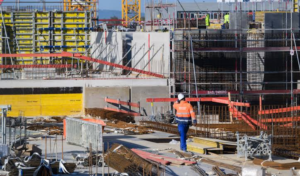
Floor loading is particularly important because server racks, battery systems and associated equipment can impose substantial concentrated loads. Engineers must evaluate both distributed and localized loads, including the effects of equipment placement and any future changes to the rack configuration. Floor flatness, vibration control and deflection limits may also influence design decisions. Sensitive equipment and heavy rotating machinery require suitable support conditions, and the structural design must account for the requirements of the installed systems.
Reinforced concrete and structural steel may both be used, depending on the design, construction programme, local material availability and project specifications. In either case, structural calculations, detailing, quality control and construction inspections must be coordinated carefully.
Another important consideration is future expansion. A data centre designed for an initial computing capacity may later require additional server halls, cooling equipment or electrical infrastructure. Engineers should therefore coordinate structural provisions with the facility’s expansion strategy wherever this is part of the project brief.
The use of appropriate engineering standards and qualified professionals is essential. The Engineers Board of Kenya provides information on professional registration and the regulation of engineering practice. For developers, engaging competent structural and civil engineers is an important part of protecting the investment and the people who will work in or around the facility.
Electrical Engineering and the Challenge of Uninterrupted Power
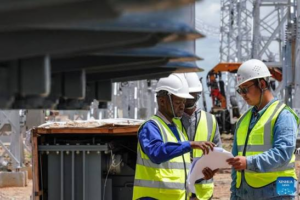
Artificial intelligence requires substantial computing capacity, and computing equipment depends on a reliable electrical supply. For this reason, power infrastructure is one of the defining features of AI-ready data centers. A facility’s electrical design may include utility connections, substations, transformers, switch gear, uninterruptible power supply systems, backup generators, power distribution units and monitoring equipment. The arrangement depends on the required capacity, redundancy strategy and operating model.
Electrical engineers calculate the expected load and determine how electricity will be distributed safely from the utility connection to the server racks. They also assess short-circuit protection, earthing, bonding, cable sizing, power quality and the coordination of protective devices. Redundancy is critical because a single equipment failure should not necessarily interrupt the entire facility. Depending on the design objective, systems may incorporate redundant power paths, standby generators, parallel UPS modules or other resilience measures.
The meaning of redundancy must be understood in practical terms. A facility with two power sources is not automatically resilient if both depend on the same vulnerable component or route. Engineers must identify common points of failure and coordinate the electrical design with the facility’s operational requirements.
Kenya’s electricity mix is also relevant to the sustainability discussion. Geothermal, hydroelectric, wind and solar generation contribute to the country’s power system. Access to electricity with a relatively high renewable share can offer an advantage to data centre operators seeking to reduce the carbon intensity of their operations, although the actual environmental performance depends on the electricity supply, backup arrangements and operating practices.
Civil engineers contribute by coordinating the building layout, substation foundations, equipment plinths, underground ducts, cable trenches and access for maintenance. These elements must be incorporated into the site plan early enough to prevent costly clashes with drainage, structural foundations and other services. The successful delivery of an AI-ready data centre therefore depends on close coordination between civil, structural, mechanical and electrical engineering teams.
Cooling Systems in Managing the Heat Generated by AI
Every server converts electrical energy into heat. As computing intensity increases, removing that heat becomes a major engineering challenge. AI workloads can generate high thermal loads, particularly when servers contain large numbers of GPUs or other specialized processors. If cooling capacity is insufficient, equipment may overheat, reduce performance or shut down to protect itself. Cooling failures can therefore affect both service availability and operating costs.
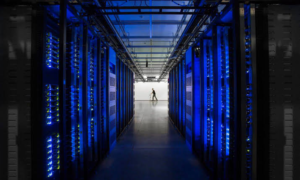
Mechanical engineers design systems that maintain suitable temperature and humidity conditions. Depending on the facility, these may include precision air-conditioning, computer-room air-handling systems, containment arrangements, indirect evaporation or adiabatic cooling, and liquid-cooling technologies. High-density computing may require a different approach from traditional server rooms. In some configurations, direct-to-chip liquid cooling transfers heat away from processors through coolant circulated in dedicated loops. Other systems use rear-door heat exchangers or specialized air-management arrangements.
The appropriate solution depends on rack density, climate, water availability, equipment requirements and the operator’s efficiency targets. Engineers must evaluate the entire thermal system rather than selecting cooling equipment based only on its rated capacity. Civil engineering remains relevant because cooling equipment needs appropriate foundations, plant rooms, maintenance access, drainage and structural support. Where liquid cooling is used, designers must also coordinate pipe routes, leak detection, equipment placement and protection of critical electrical and computing areas.
Water consumption is another important consideration. Evaporative and adiabatic cooling can improve efficiency under suitable conditions, but their water requirements must be assessed against local availability and operating constraints. Alternative systems may reduce direct water use while requiring different amounts of electricity. The aim is to achieve a balance between thermal performance, reliability, energy efficiency and environmental responsibility. A well-designed cooling system protects expensive computing equipment while helping the facility operate economically over its service life.
Fibre Connectivity and Network Infrastructure
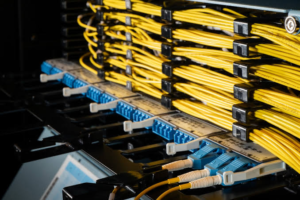
Even a highly powered and efficiently cooled data centre cannot deliver its full value without dependable connectivity. Fibre-optic networks link facilities to internet service providers, cloud platforms, businesses and other data centers. Kenya’s position as a regional connectivity hub makes network infrastructure an important part of data centre development. However, reliable connectivity depends not only on the number of available providers but also on physical network diversity, route planning and the resilience of the supporting infrastructure.
Civil and telecommunications engineers coordinate fibre entry points, underground ducts, cable chambers, manholes, internal pathways and equipment rooms. These components must be protected against water ingress, physical damage and interference with other utilities. Route diversity is particularly important for critical facilities. Two fibre connections that follow the same trench for most of their journey may share the same vulnerability. Independent routes can reduce the likelihood that one excavation accident or infrastructure failure will disconnect both connections.
Inside the building, network architecture must accommodate equipment racks, cable trays, patch panels and maintenance access. Careful planning reduces congestion and makes future upgrades easier. For AI applications, network performance may also affect how quickly data can be transferred between computing systems and storage infrastructure. Large-scale AI workloads can require high-bandwidth connections and low-latency communication, making network design an integral part of facility planning.
Sustainable Construction and Energy Efficiency
The rapid growth of AI infrastructure raises an important question: how can Kenya build more computing capacity without placing unnecessary pressure on energy, water and other resources? Sustainable data centre construction begins during site selection and design. Engineers can assess building orientation, equipment efficiency, cooling strategies, material selection, drainage and opportunities to reduce construction waste.
Energy efficiency is often measured using Power Usage Effectiveness (PUE), which compares the total energy consumed by a data centre with the energy used by its IT equipment. A lower PUE generally indicates that less additional energy is being consumed by supporting infrastructure, although PUE alone does not measure every aspect of environmental performance.
Water use, carbon emissions, equipment lifecycle and the source of electricity also matter. A facility may achieve a favourable PUE while still requiring careful management of water consumption or backup generation. Kenya’s renewable energy resources provide opportunities to support more sustainable digital infrastructure. Nevertheless, developers should evaluate the actual electricity supply, energy procurement arrangements and operational requirements of each project rather than assuming that every facility is automatically low-carbon.
Civil engineers can contribute through durable construction materials, efficient site layouts, stormwater management and design choices that reduce avoidable maintenance. Mechanical and electrical engineers can improve the efficiency of cooling and power systems, while facility operators monitor performance and identify opportunities for improvement. Sustainability must be assessed across the entire life cycle of the facility, from construction and commissioning to operation, refurbishment and eventual decommissioning.
Fire Safety, Security and Operational Resilience
A data centre stores valuable equipment and supports services that organizations may depend on continuously. Fire protection, physical security and operational resilience must therefore be integrated into the design from the beginning. Fire safety planning involves compartmentalization, detection systems, alarm arrangements, emergency access and appropriate suppression technologies. The selected system must be suitable for the building, the equipment and the applicable safety requirements. Electrical rooms, battery installations and server halls may have different hazards that require coordinated solutions.
Engineers also need to consider emergency lighting, escape routes, ventilation controls and the safe isolation of electrical equipment. Fire protection cannot be treated as an isolated installation because it affects the building layout, mechanical systems and operating procedures. Physical security may include controlled access points, surveillance systems, perimeter protection and secure equipment areas. These measures must be coordinated with site circulation, emergency response and the facility’s operational needs.
Resilience also extends to disaster recovery. Data centre operators may use separate facilities, replicated data, backup systems and tested recovery procedures to reduce the effects of major incidents. The appropriate strategy depends on the criticality of the hosted services and the service-level commitments made to customers. In Kenya, projects must be assessed against the applicable building, occupational safety, fire safety, electrical and environmental requirements. Developers should verify the relevant approvals with the responsible authorities and qualified professionals before construction and operation.
Kenya’s Data Centre Expansion and the Opportunity for Engineers
Kenya’s ambitions for artificial intelligence and cloud computing are supported by policy initiatives and private-sector investment. The Kenya National AI Strategy 2025–2030 identifies AI digital infrastructure as one of the country’s strategic priorities, alongside data governance and AI research, innovation and commercialisation.
The strategy discusses expanding AI-ready infrastructure, broadband connectivity and high-performance computing capacity. This direction creates opportunities for professionals who can plan, design, construct, commission and maintain the physical systems required by modern computing. Existing and planned projects illustrate the scale and technical complexity of this development. For example, iXAfrica’s NBOX1 campus specifications describe a Nairobi facility designed for hyperscale and AI-ready workloads, with dedicated electrical and cooling infrastructure. These are operator-published specifications and should be understood as information about that particular project, not as a universal design template.
The government has also announced a major data centre project by Nxtra Airtel Africa in Tatu City. In its September 2025 announcement, the Ministry of Information, Communications and the Digital Economy reported that the proposed facility was designed with a capacity of 44 MW and targeted completion in the first quarter of 2027. That target is a published project schedule, not confirmation of the facility’s present completion status.
Such developments demonstrate why data centre construction should be viewed as an interdisciplinary engineering field. Civil engineers, structural engineers, electrical engineers, mechanical engineers, quantity surveyors, project managers, telecommunications specialists and safety professionals all have important roles. For Kenya’s engineering workforce, this presents opportunities to develop specialized expertise in mission-critical infrastructure, high-capacity electrical installations, thermal management, commissioning and sustainable facility design.
Skills Kenyan Engineers Need to Build AI-Ready Data Centers
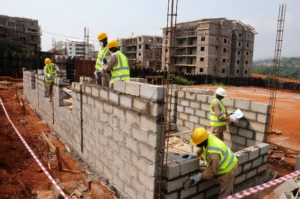
Engineers seeking to enter this field need a strong foundation in their respective disciplines and an understanding of how different building systems interact. Civil engineers benefit from experience in geotechnical investigation, reinforced concrete design, structural coordination, drainage, construction supervision and quality assurance.
Knowledge of Building Information Modelling (BIM) can be valuable because data centres contain dense networks of structural elements, cable trays, pipes, ducts and mechanical equipment. Coordinated digital models can help identify clashes before they lead to delays or costly changes on site.
Project management skills are also essential. Data centre projects involve specialised equipment with long procurement periods, detailed commissioning procedures and strict coordination requirements. Delays in one system can affect the installation and testing of several others.
Engineers should also understand commissioning, which verifies that installed systems function according to the design intent and project requirements. Testing may include electrical load tests, generator operation, cooling performance, alarm systems and integrated system response under simulated failure conditions.
Professional registration, appropriate technical training and compliance with relevant standards remain important. Engineers must work within their competence and collaborate with specialists when a project requires knowledge outside their discipline.
For graduates and early-career professionals in Kenya, developing digital skills alongside practical construction experience can provide a useful foundation for entering this specialised infrastructure market.
Data Protection, Reliability and the Future of Kenya’s Digital Economy
Data centres do more than provide space for computers. They help support financial services, e-commerce, healthcare systems, public administration, telecommunications and other digital activities. Their reliability and security therefore have implications beyond the buildings themselves. Data centre operators and the organizations using their services must consider the legal and operational requirements associated with personal information. Kenya’s Data Protection Act, 2019 establishes a framework for processing personal data and protecting the rights of data subjects.
Physical infrastructure contributes to this wider responsibility by supporting access control, environmental stability, reliable power and secure equipment spaces. However, building security alone does not guarantee data protection. Organisations must also manage software security, access permissions, encryption, incident response and their legal obligations.
As AI adoption grows, demand for computing capacity may increase across financial services, agriculture, logistics, healthcare and government. This could create additional demand for data centre capacity, network connectivity and specialist engineering services. The challenge will be to ensure that new infrastructure is technically sound, commercially viable, environmentally responsible and appropriately regulated. Expansion should be guided by realistic demand forecasts, available power and connectivity, skilled labour and long-term operating requirements.
Conclusion: Civil Engineering Is Becoming Part of Kenya’s AI Revolution
The engineers behind Kenya’s digital economy are helping create the physical infrastructure required for cloud computing, artificial intelligence and modern digital services. Their work begins with site selection and geotechnical investigations and continues through structural design, power distribution, cooling, connectivity, fire protection and commissioning. Building AI-ready data centers in Kenya requires close cooperation between civil engineers and specialists in mechanical, electrical and telecommunications systems. It also requires careful attention to energy efficiency, water use, construction quality, professional standards and data security.
As Kenya pursues its ambitions in artificial intelligence and digital innovation, data centre infrastructure offers an important opportunity for the country’s engineering and construction sectors. The facilities that support the next generation of digital services will depend not only on advanced processors and software, but also on safe foundations, resilient buildings, reliable power and carefully designed cooling systems. Ultimately, Kenya’s digital future will be built both in code and in concrete. The quality of its engineering decisions will help determine how reliably, sustainably and competitively the country can support the next generation of AI-powered services.

-
Product on sale
 AWEBook Volume 2Original price was: KShs 3,500.00.KShs 3,000.00Current price is: KShs 3,000.00.