

Last Updated 1 hour ago by Kenya Engineer
Egypt is moving to link renewable-energy generation with industrial manufacturing in a way that could have implications beyond its electricity system.
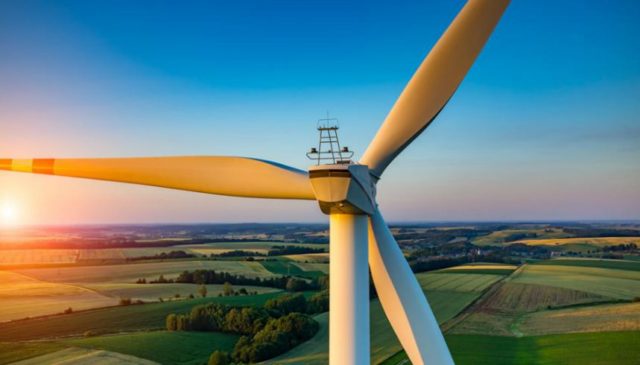
In June, Egypt signed a memorandum of understanding with China’s SANY Renewable Energy to develop a 2,000 MW wind power project in the Gulf of Suez while establishing the country’s first wind turbine manufacturing facility. The proposed factory is expected to have an annual production capacity of up to 2 GW and is intended to supply equipment and components for Egypt’s growing pipeline of wind projects, with surplus production potentially exported to markets in Africa and the Middle East.
The significance of the announcement therefore lies in the combination of two projects that are often treated separately. Egypt is not only seeking to add another large block of renewable generation to its electricity system; it is attempting to develop some of the industrial capability needed to build that generation domestically.
For an African continent that remains heavily dependent on imported energy equipment, that development is important.
From buying turbines to making them
Wind development in Africa has generally depended on equipment manufactured elsewhere. Turbine manufacturers, specialist component suppliers and engineering companies based largely outside the continent have supplied much of the equipment required for new projects.
Egypt’s agreement with SANY takes a different approach. The proposed facility would manufacture wind turbines with an annual capacity of 2 GW, while the associated wind project would provide an immediate large-scale application for the technology. The factory is expected to be completed within two years after final agreements are signed, while the 2,000 MW wind project is planned for connection to Egypt’s national grid within 23 months.
That creates a potentially important relationship between manufacturing capacity and project demand.
A factory producing wind turbines needs a market large enough to sustain production. A country developing several gigawatts of wind generation needs a reliable supply chain capable of delivering turbines and components at scale. Bringing the two together can reduce the distance between the equipment manufacturer and the power project, while potentially creating opportunities for local suppliers of steel structures, electrical equipment, logistics, civil works and maintenance services.
The Egyptian government has also linked the initiative to increasing the use of locally manufactured components, expanding electrical-equipment manufacturing and using local currency to implement renewable-energy projects.
The manufacturing plant is therefore more than a factory attached to a wind farm. It is being positioned as part of a broader industrial strategy.
Why the Gulf of Suez?
The location is not accidental. The Gulf of Suez is already one of Egypt’s most important wind-energy regions. Strong and relatively consistent wind resources have supported the development of multiple large wind projects in the area, making it one of the country’s established renewable-energy zones.
Egypt has built substantial experience there. The 262.5 MW Ras Ghareb wind project, for example, is one of the country’s major early utility-scale renewable-energy developments in the Gulf of Suez region.
The region also sits close to major industrial and transport infrastructure, including the Suez Canal corridor. That matters when the objective moves beyond generating electricity to manufacturing large machines.
Wind turbines are difficult products to move over long distances. Towers, blades, nacelles and other major components are large, heavy and logistically demanding. Locating manufacturing relatively close to wind-development zones can reduce some transport requirements and create opportunities for local fabrication and assembly.
For Egypt, the Gulf of Suez therefore offers both the resource and an established industrial setting in which to develop the next stage of its wind industry.
The scale is significant
A 2,000 MW wind project is substantial even before the manufacturing component is considered.
Egypt already has one of Africa’s more developed wind sectors. IRENA’s 2025 country statistics put Egypt’s installed wind capacity at about 2.2 GW at the end of 2024, alongside 2.6 GW of solar capacity and 2.8 GW of hydropower.
The proposed 2 GW project would therefore represent an addition comparable in scale to the country’s existing installed wind fleet.
It also comes as Egypt accelerates a broader renewable-energy programme. The government has set a target of obtaining 42% of its electricity from renewable sources by 2030, although different statements and policy documents have reflected revisions to the timetable and ambition of that target. Reuters reported in January that Egyptian officials were still working towards the 42% objective while noting the need for additional international support.
In April, Egypt’s prime minister also announced an ambition to reach a 45% renewable share by 2028, bringing forward the timetable previously associated with the 2030 target.
The numbers illustrate why domestic manufacturing is becoming relevant. If Egypt is going to add several gigawatts of renewable generation within a relatively short period, the country will need more than individual power projects. It will need an industrial supply chain capable of supporting them.
The engineering challenge goes beyond the turbine
A wind turbine is only one part of a utility-scale wind project.
A 2,000 MW development requires roads and foundations, electrical collection systems, substations, transformers, transmission infrastructure, protection and control systems, communications, forecasting, operations and maintenance capability.
The variability of wind generation also creates system-level requirements. As the proportion of variable renewable generation increases, grid operators need sufficient flexibility to balance changes in generation and demand.
This makes the development of Egypt’s wind industry a grid-engineering story as much as a turbine-manufacturing story.
The country has already been investing in other technologies that address this problem. In January, Egypt signed renewable-energy agreements involving Scatec and Sungrow worth a combined $1.8 billion, including a 1.7 GW solar project supported by 4 GWh of battery storage. Sungrow is also developing a battery manufacturing facility in the Suez Canal Economic Zone.
Taken together, the projects point towards an energy system increasingly being built around renewable generation, storage and domestic equipment manufacturing.
The local-content question
The most interesting part of the Egyptian strategy may ultimately be what happens inside the supply chain.
Building a factory does not automatically create a domestic wind industry.
The depth of localisation matters. There is a considerable difference between assembling imported components locally and manufacturing major turbine systems using a network of domestic suppliers, engineering firms and skilled technicians.
The Egyptian government has explicitly identified technology transfer and increased use of locally manufactured components among the objectives of the SANY agreement. The intention is also to expand electrical-equipment manufacturing and eventually use Egypt’s trade relationships to export renewable-energy products to African and Middle Eastern markets.
That raises several engineering and industrial questions.
How much of a turbine will actually be manufactured locally? Which components will be sourced from Egyptian suppliers? Will local companies develop capabilities in generators, power electronics, bearings, gearboxes, towers, control systems and specialised electrical equipment? How much engineering knowledge will remain in the country once the initial project is completed?
Those questions will determine whether the project becomes a manufacturing platform or primarily a local assembly operation.
The export opportunity
Egypt’s location gives the proposed factory an additional dimension.
The country has established trade links with both African and Middle Eastern markets, while the Suez Canal provides a major international logistics route.
If the plant reaches its planned production capacity, Egypt could potentially supply turbines and components not only for its own wind programme but also for projects elsewhere in Africa and the Middle East.
That could change the commercial proposition considerably.
A factory serving only one national market may struggle to achieve the production volumes required for competitive manufacturing. A facility serving several regional markets has a much larger potential customer base.
This is particularly relevant in Africa, where renewable-energy demand is expected to grow but individual national markets can be relatively small.
The African renewable-energy market therefore presents a paradox. The continent has enormous renewable resources and a large future requirement for electricity, yet individual countries can struggle to create sufficient demand to support specialised manufacturing industries.
Regional markets could change that equation.
Africa’s manufacturing gap
The opportunity is significant because Africa still captures only a small share of global renewable-energy investment.
IRENA reported that Africa accounted for just 11.3 GW, or 1.6%, of the 692 GW of new renewable capacity installed globally in 2025. By contrast, China, the United States and the European Union together accounted for 550 GW, or nearly 80% of global additions.
The figures illustrate both the scale of the gap and the size of the potential market.
If African countries are going to install substantially more solar and wind capacity, the continent will need not only generation assets but also engineers, manufacturers, component suppliers, maintenance companies, testing facilities, logistics operators and grid specialists.
Egypt is attempting to move into several of those layers simultaneously.
It is not starting from zero. The country already has significant renewable-energy experience, a large domestic electricity market, industrial zones, ports and established electrical-equipment manufacturing capabilities.
The SANY project could therefore be viewed as an attempt to use an existing industrial base to capture more of the value created by renewable-energy investment.
Technology transfer will be the test
There is, however, an important distinction between attracting a foreign manufacturer and building domestic technological capability.
The Associated Press reported on Wednesday that energy experts see Egypt’s combination of scale, local manufacturing and technology transfer as potentially significant, while also cautioning that the project is still at an early stage. One expert specifically raised the question of whether cooperation with SANY would result in meaningful technology transfer or simply establish another form of dependence on an overseas manufacturer.
That is a question familiar to infrastructure projects across Africa.
Foreign technology and capital can accelerate infrastructure development enormously. But the long-term industrial benefit depends partly on what remains after the project has been delivered.
The difference can be measured in capabilities: local design and engineering expertise, trained technicians, component manufacturing, testing and certification, research and development, maintenance knowledge and the ability of domestic companies to participate in future projects without relying entirely on the original foreign supplier.
For Egypt, the proposed factory creates an opportunity to build those capabilities around a real and expanding domestic market.
Financing remains part of the equation
The other question is finance.
Renewable-energy projects require substantial upfront capital, while African developers often face higher financing costs than projects in mature markets.
The SANY agreement is notable because the 2,000 MW wind project is intended to be implemented in Egyptian pounds. Egyptian officials have presented local-currency financing and locally manufactured components as part of the wider effort to reduce dependence on imported inputs and strengthen domestic industrial participation.
That structure may help address one of the problems encountered by renewable projects in emerging markets: revenues and costs can be exposed to different currencies.
But financing alone cannot solve the project-development challenge. Land, transmission access, permitting, procurement, construction capacity, grid connection and long-term power-purchase arrangements all have to align.
The 23-month grid-connection target will therefore be an important measure of execution.
A different way of looking at renewable energy
The Egyptian project points to a broader change in how renewable energy can be viewed.
For much of the first generation of African renewable-energy projects, the central question was how to add megawatts.
The next question may be how much of the economic activity associated with those megawatts can remain on the continent.
A wind farm creates demand for civil engineering, electrical engineering, transport, construction, operations and maintenance. A turbine factory adds manufacturing, machining, fabrication, quality control, logistics and technical training. A mature supply chain can eventually support research, component development and exports.
That is a considerably larger industrial footprint than a power project considered simply as a generation asset.
It also changes the strategic value of renewable energy.
The wind resource itself cannot be moved. But the engineering and manufacturing capability required to exploit it can become a national and regional asset.
What the rest of Africa should watch
Egypt’s project is still an MoU rather than a completed industrial operation. The eventual outcome will depend on agreements that follow, financing, construction, technology transfer, local-content requirements and the ability to build a sustainable regional market.
But there are several elements that other African countries can watch closely.
The first is scale. A manufacturing facility needs sufficient demand to operate efficiently, and regional export markets can be important where a domestic market is not large enough.
The second is the relationship between energy policy and industrial policy. Renewable-energy targets create demand for equipment, but industrial policy determines how much of the resulting value chain can be developed locally.
The third is technology transfer. The real test is not simply whether turbines are assembled locally, but whether domestic engineering and manufacturing capabilities deepen over time.
The fourth is grid development. A country can manufacture turbines and still struggle to connect the resulting generation if transmission capacity, substations and system flexibility do not keep pace.
And the fifth is finance. The ability to structure projects in a way that matches local revenues, local manufacturing and long-term power demand may be as important as the quality of the wind resource itself.
These issues are relevant to Kenya as it considers how to expand renewable generation while developing domestic engineering and manufacturing capacity. Kenya already has experience with geothermal development, wind power and increasingly complex grid integration. The next industrial question is how much equipment, engineering expertise and supporting supply-chain activity can be developed around those assets.
The opportunity is bigger than 2,000 MW
Egypt’s proposed wind project will eventually be measured by the electricity it delivers.
The manufacturing facility will need a different set of measures.
How many components are produced locally? How many Egyptian companies enter the supply chain? How much engineering knowledge is transferred? How competitive are the turbines in regional markets? Can the factory supply projects outside Egypt? And can the industrial base survive beyond the initial project pipeline?
Those questions will determine whether Egypt has simply added another large renewable-energy project or taken a step towards becoming a regional renewable-energy manufacturing centre.
For Africa, that distinction could become increasingly important.
The continent does not lack renewable-energy resources. What it has lacked in many markets is the combination of capital, infrastructure, manufacturing capacity and project execution needed to convert those resources into sustained industrial development.
Egypt’s approach is an attempt to address several of those constraints at once.
The 2,000 MW wind farm will generate electricity. The factory could generate something less visible but potentially just as important: industrial capability.
If Egypt can turn the two into a functioning domestic and regional supply chain, the country’s wind strategy may ultimately be measured not only in megawatts added to the grid, but in how much of the engineering behind those megawatts is built in Africa.
-
Product on sale
 AWEBook Volume 2Original price was: KShs 3,500.00.KShs 3,000.00Current price is: KShs 3,000.00.