

Last Updated 50 mins ago by Kenya Engineer
Maputo is preparing to become the meeting point for Africa’s gas industry in November, but the timing of the Africa Gas & LNG Summit could make the gathering more consequential than a conventional industry conference.
The three-day event, scheduled for 11–13 November 2026 at the Joaquim Chissano International Conference Centre, comes as Mozambique’s LNG industry enters a new phase of project execution. The country’s long-delayed Mozambique LNG project has restarted construction activities, while the Rovuma LNG development has advanced into new engineering and procurement work. Coral North FLNG is also progressing towards its planned 2028 start of production.
Against that backdrop, the summit’s central question is becoming increasingly practical: as billions of dollars flow into African gas projects, how much of the resulting engineering, industrial and commercial activity will remain within African economies?
That is the issue behind the summit’s emphasis on investment and local value.
Held under the patronage of Mozambique’s President Daniel Chapo and the Ministry of Mineral Resources and Energy, AfGLNG 2026 is being hosted by the Associação de Conteúdo Local de Moçambique, with Empresa Nacional de Hidrocarbonetos (ENH) and the Instituto Nacional de Petróleo (INP) as strategic partners. Its programme is built around investment, project development, financing, LNG infrastructure, gas-to-power, industrialisation and local participation.
For Mozambique, the discussions come at a particularly important moment.
The projects are moving again
Mozambique’s gas story has already experienced a dramatic change in direction.
The country’s northern LNG developments were disrupted by the security crisis in Cabo Delgado, with TotalEnergies declaring force majeure on its Mozambique LNG project in 2021.
In January 2026, however, TotalEnergies and the Mozambican government announced the full restart of activities both onshore and offshore. TotalEnergies said more than 4,000 workers had already been mobilised at the Afungi site, including more than 3,000 Mozambican nationals.
Mozambique LNG is a roughly US$20 billion development based on the Golfinho-Atum fields, with planned LNG production of about 13.1 million tonnes per year.
The restart changes the industry’s immediate outlook. A project that had been largely discussed in terms of delays, security and financing is again becoming an active construction and engineering programme.
Rovuma LNG is following a similar trajectory.
On 10 September, ExxonMobil announced that the Area 4 partners had selected a consortium led by Saipem and Jan De Nul for upstream engineering, procurement, construction and installation work. The project is planned around an 18.6 million-tonne-per-year onshore LNG development. ExxonMobil also announced shore-base service contracts with two Mozambican companies.
A separate August announcement had already seen the SMDC joint venture, comprising Saipem, McDermott Energy Solutions, Daewoo Engineering & Construction and China Petroleum Engineering & Construction Corporation, selected for limited engineering and procurement activities associated with the Rovuma LNG midstream development.
Importantly, the final EPC award remains subject to a positive Final Investment Decision and the necessary government and regulatory approvals.
The distinction is significant.
In an industry where project announcements can persist for years before construction begins, engineering contracts, procurement activity and FID decisions provide a much clearer indication of whether capital is actually moving towards physical infrastructure.
Coral North adds another major project to the pipeline
Mozambique’s LNG expansion is not confined to the large onshore projects.
Coral North FLNG, led by Eni and its Area 4 partners, reached FID in October 2025. The project is designed to produce 3.55 million tonnes of LNG per year from six subsea wells, with first production targeted for 2028. The project is valued at approximately US$7.2 billion.
The floating facility is being developed as a replica of Coral South, which began LNG production in 2022. The replication approach is intended to build on the engineering and operational experience of the first FLNG project. The hull for Coral North was launched at Samsung Heavy Industries’ shipyard in South Korea in January 2026, marking another step into the construction phase.
Coral South itself is important because it demonstrated that Mozambique could become an LNG exporting country without waiting for its large onshore developments to be completed.
It began production in 2022 and has a production capacity of approximately 3.55 million tonnes per year.
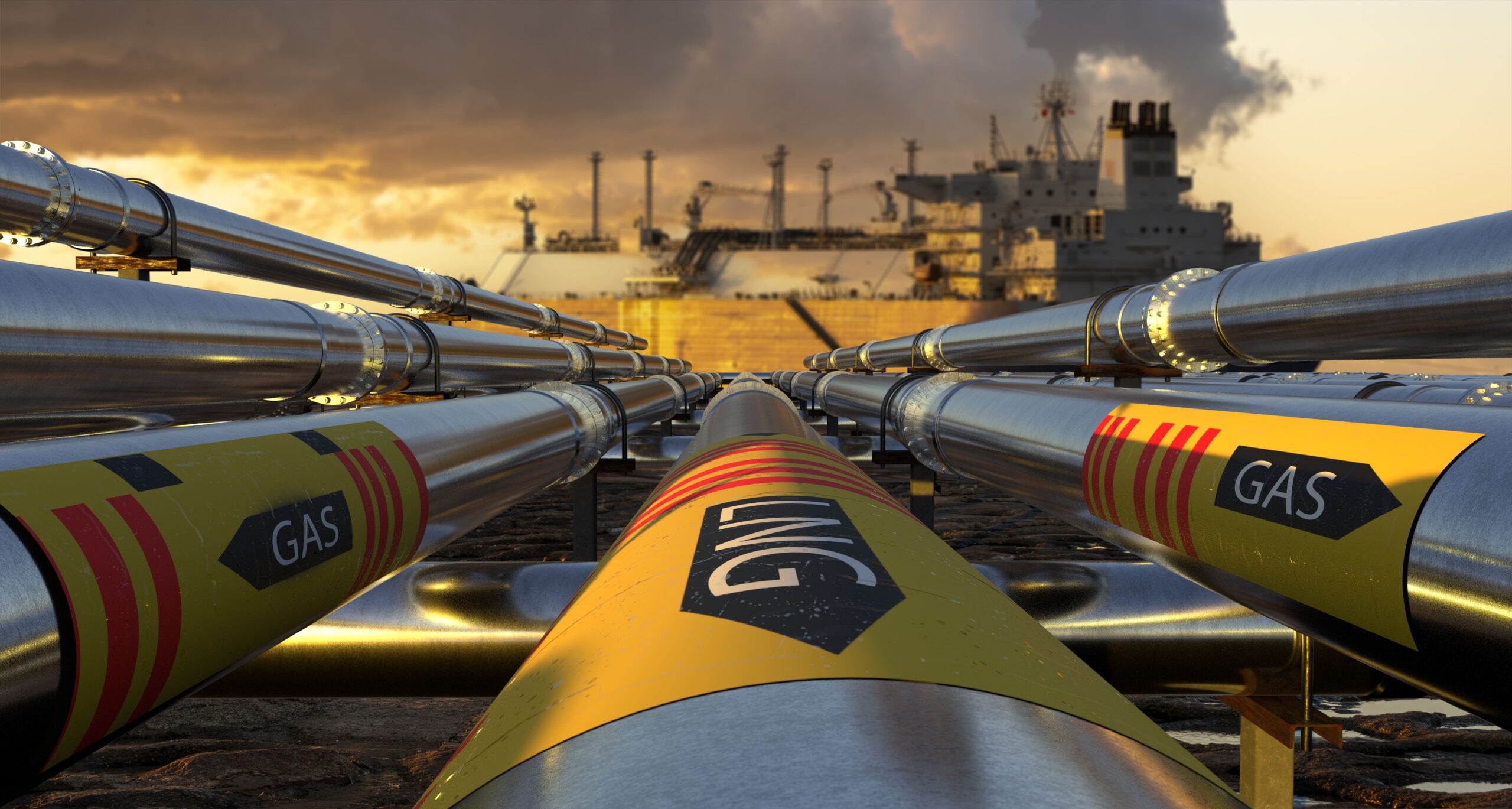
The result is a gas industry developing through several different engineering models at once: large onshore LNG facilities, floating liquefaction, subsea production systems, pipelines, shore bases and supporting infrastructure.
That diversity creates opportunities beyond the LNG plants themselves.
The engineering value chain is much larger than the liquefaction plant
An LNG project is sometimes presented as a single large industrial facility.
In reality, the engineering system extends across the entire gas value chain.
Offshore production requires subsea wells, gathering systems, flowlines, risers, offshore structures and specialised vessels. Gas must then be processed, compressed and transported. Onshore developments require storage, utilities, power generation and distribution, water systems, roads, ports, accommodation, communications, fire protection, instrumentation and control systems.
The liquefaction process itself introduces another layer of complexity involving cryogenic equipment, refrigeration systems, compressors, heat exchangers, storage tanks, loading systems and marine infrastructure.
And none of this operates without electrical, mechanical, civil, process, instrumentation, telecommunications and control engineers.
The wider supporting economy is equally substantial.
Maintenance contractors need workshops and equipment. Logistics companies need vehicles, warehouses and specialised handling capabilities. Fabricators require standards and quality-control systems. Local companies need access to finance to acquire equipment and achieve the certifications required by international operators.
This is where the local-content discussion moves beyond employment numbers.
The more consequential question is whether African companies can progressively participate in these higher-value activities.
Local content is entering a more difficult phase
Mozambique has already built a local-content framework around its petroleum industry.
The challenge now is implementation at the scale of projects such as Mozambique LNG and Rovuma LNG.
The Africa Gas & LNG Summit has made local participation one of its central themes, including a dedicated session for SMEs and entrepreneurs addressing supplier development, financing and opportunities for African businesses.
That is important because the biggest local-content gains do not necessarily come from simply counting the number of Mozambican workers on a project.
There is a substantial difference between employing local labour and developing local industrial capability.
A construction worker may be employed for the duration of a project. A Mozambican engineering company capable of designing, inspecting, maintaining or fabricating equipment can continue participating across multiple projects.
The same applies to manufacturers.
A company supplying basic consumables captures one level of value. A company capable of producing certified pressure equipment, electrical assemblies, instrumentation components or specialised fabrication captures another.
The progression from labour participation to services, engineering, fabrication, manufacturing and eventually technology development is therefore one of the central questions facing gas-producing African economies.
Rovuma offers an early indication of that transition
The recent Rovuma announcements provide an interesting example.
ExxonMobil said the project is expected to create opportunities for approximately 7,500 Mozambicans during construction and generate around US$6 billion in economic activity in Mozambique. The company also announced contracts with Mozambican companies for shore-base services.
These are meaningful forms of local participation.
But they also illustrate the scale of the challenge.
Large LNG projects require highly specialised engineering and construction capabilities, and many of the companies with the necessary experience operate internationally. The question is therefore how local companies can move into the supply chain without compromising the technical, safety and quality requirements associated with major LNG facilities.
That requires more than regulation.
It requires training, access to capital, certification, technology transfer, partnerships with international contractors and, crucially, a pipeline of future projects large enough to justify investment in local capability.
Gas-to-power could determine how much value stays at home
Another important strand of the Maputo discussions will be what happens to gas that does not leave Africa as LNG.
The summit programme includes dedicated discussions on gas-to-power and industrialisation.
This is potentially one of the most consequential questions for gas-producing countries.
Exporting LNG generates foreign exchange and government revenues, but using part of the resource domestically can support electricity generation, industrial heat, fertiliser production, petrochemicals and other energy-intensive activities.
The engineering implications are substantial.
Gas-to-power requires pipelines, processing facilities, power stations, substations and transmission infrastructure. Industrial use requires reliable gas delivery and electricity networks as well as factories capable of converting relatively inexpensive energy into higher-value products.
The result can be an industrial chain rather than a single export commodity.
But domestic gas use also has to be weighed against export economics, contractual commitments, infrastructure costs and national energy policy. There is no single formula that applies across Africa’s gas producers.
The technical question is therefore inseparable from the commercial one.
Infrastructure may become the next constraint
As gas projects advance, infrastructure outside the LNG facilities themselves becomes increasingly important.
Ports need to handle specialised equipment and construction materials. Roads must carry heavy loads. Airports and logistics networks need to support large workforces. Power systems have to serve industrial facilities. Telecommunications networks have to support remote operations and increasingly digitalised industrial processes.
There is also a security dimension.
Northern Mozambique’s LNG developments are located in Cabo Delgado, where the security situation contributed directly to the suspension of Mozambique LNG activities. The project’s restart has therefore involved not only engineering and financing but continued government measures addressing security and cooperation with Rwanda.
For large infrastructure projects, security is consequently part of project engineering and project economics.
A technically sound LNG plant cannot operate in isolation from the physical and institutional environment around it.
Africa’s gas story extends well beyond Mozambique
The Maputo summit is deliberately continental in scope.
Its programme includes sessions examining gas investment opportunities in North Africa, West Africa and Southern Africa, with specific attention to markets including Senegal, Mauritania, Nigeria, Congo, Angola and Tanzania.
This reflects a wider shift in the African gas industry.
Senegal and Mauritania have begun developing LNG production through the Greater Tortue Ahmeyim project. Nigeria is pursuing new LNG and pipeline investments. Angola remains an established LNG producer while seeking additional upstream and gas-processing opportunities. Tanzania continues to develop its own large offshore gas ambitions.
The individual projects differ considerably in geology, infrastructure, financing, domestic markets and regulatory environments.
Yet they face a common question.
How can gas development create a sufficiently broad industrial ecosystem rather than becoming an enclave industry in which capital-intensive facilities are built with limited connections to the domestic economy?
That question is particularly relevant because LNG projects are among the most technically complex infrastructure developments undertaken in Africa.
FID has become one of the industry’s most important words
The summit’s dedicated Final Investment Decision session is therefore particularly relevant.
FID is the point at which a project moves from development planning towards committed capital expenditure, subject to the project’s contractual and regulatory structure.
Before FID, a project may have reserves, licences, feasibility studies, preliminary engineering and prospective buyers. After FID, major contracts, financing and construction can begin to move into a different phase.
The recent progression of Mozambique’s projects demonstrates why.
Coral North reached FID in 2025 and is now under construction. Mozambique LNG resumed activities in 2026 after its force-majeure period. Rovuma LNG has advanced into new engineering and procurement activities while its final EPC award remains dependent on FID and approvals.
For investors and contractors, these milestones matter because they determine when opportunities move from a project pipeline into actual procurement.
For African engineering companies, they determine something else: when there is a real opportunity to enter the supply chain.
The bigger question is what happens after the gas leaves the plant
There is an understandable focus on LNG production capacity because tonnes per year provide a straightforward measure of scale.
But production capacity does not by itself measure the economic depth of an energy project.
A country can export large quantities of gas while importing much of the equipment, specialised services and technology required to produce it.
The more difficult development objective is to build domestic capability alongside production.
That might mean engineering firms becoming capable of meeting international standards. It might mean local fabrication yards developing specialised capacity. It might mean universities and technical institutions aligning training with the needs of LNG and process industries. It might mean financial institutions developing products that allow local suppliers to purchase equipment and fulfil large contracts.
It could also mean using gas infrastructure to support industries beyond hydrocarbons.
These are slower processes than building an LNG train, but they determine whether an energy boom leaves behind a durable industrial base.
Maputo’s timing is therefore significant
When the Africa Gas & LNG Summit opens in November, the discussion will take place against a markedly different backdrop from the one that surrounded Mozambique’s gas industry several years ago.
Coral South is already producing. Coral North is under construction. Mozambique LNG has restarted after a prolonged suspension. Rovuma LNG has moved further into engineering and procurement activity.
The question is no longer simply whether Africa has gas resources capable of attracting international capital.
It clearly does.
The more difficult question is what Africa builds around those resources.
The answer will depend partly on the physical infrastructure — pipelines, LNG facilities, power plants, ports, roads and transmission systems — but also on the less visible infrastructure of skills, standards, finance, regulation and local industrial capability.
That is what makes the local-content agenda particularly relevant to an engineering audience.
Gas may be extracted offshore and liquefied for export, but the economic value generated along the way depends on how much of the engineering and industrial chain can take root on the continent.
For Mozambique, the next phase of its LNG story is therefore not simply about bringing more gas to market.
It is about whether the infrastructure being built today can become the foundation for a broader industrial economy tomorrow.
And that is a question that extends well beyond the three days scheduled for Maputo in November.
-
Product on sale
 AWEBook Volume 2Original price was: KShs 3,500.00.KShs 3,000.00Current price is: KShs 3,000.00.